

Crypto capital gains tax is the tax you owe when you sell cryptocurrency for more than you paid. As of 2026, the IRS taxes crypto gains at rates ranging from 0% to 37%, depending on your holding period and income level. Long-term holders can pay as little as zero federal tax on their gains, while short-term traders may owe more than a third of their profits.
So what rate will you actually pay? That depends on three factors: how long you held the asset, your total taxable income, and your filing status.
This article is part of our 2026 Crypto Tax Guide, which covers everything from taxable events to filing deadlines. Start there if you want the full picture.
Short-Term vs. Long-Term: The Holding Period That Changes Everything
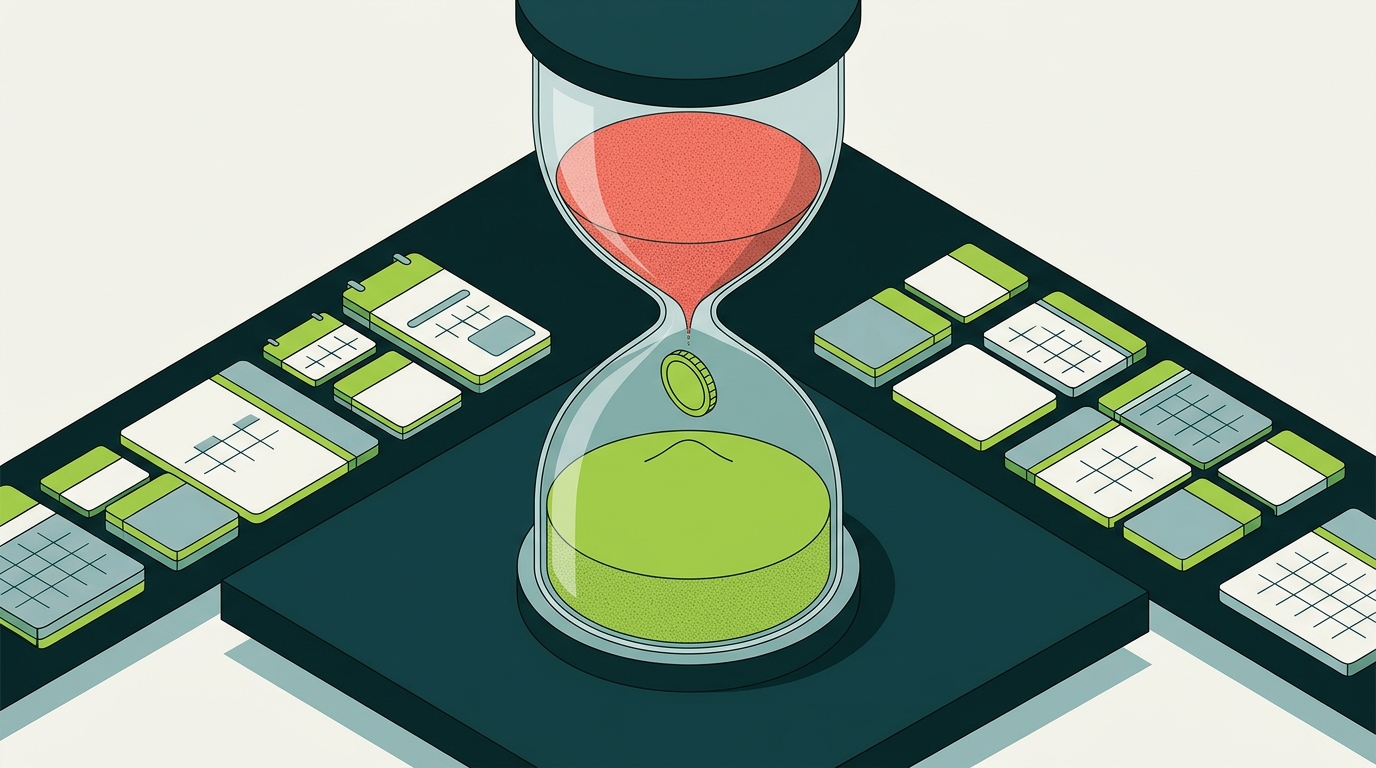
The IRS splits crypto capital gains into two categories based on how long you held the asset before selling.
Short-term capital gains apply when you hold crypto for 365 days or fewer. These gains are added directly to your ordinary income and taxed at your marginal income tax rate. For high earners, that means up to 37% federal tax on profits.
Long-term capital gains apply when you hold crypto for more than 365 days (366 days or longer). These gains receive preferential tax rates of 0%, 15%, or 20%. The difference is substantial. A single filer earning $100,000 who sells crypto at a $10,000 gain would pay $2,200 in federal tax on a short-term gain but only $1,500 on a long-term gain.
The IRS counts your holding period starting the day after you acquire the asset. If you bought Bitcoin on January 1, 2026, the earliest you can sell it for long-term treatment is January 2, 2027.
2026 Short-Term Capital Gains Tax Brackets
Short-term crypto gains are taxed at ordinary income tax rates. Here are the 2026 federal brackets for single filers and married couples filing jointly.
Single Filers
| Taxable Income | Tax Rate |
|---|---|
| $0 to $12,400 | 10% |
| $12,401 to $50,400 | 12% |
| $50,401 to $105,700 | 22% |
| $105,701 to $201,775 | 24% |
| $201,776 to $256,225 | 32% |
| $256,226 to $640,600 | 35% |
| Over $640,600 | 37% |
Married Filing Jointly
| Taxable Income | Tax Rate |
|---|---|
| $0 to $24,800 | 10% |
| $24,801 to $100,800 | 12% |
| $100,801 to $211,400 | 22% |
| $211,401 to $403,550 | 24% |
| $403,551 to $512,450 | 32% |
| $512,451 to $768,700 | 35% |
| Over $768,700 | 37% |
These brackets are marginal, meaning only the income within each range is taxed at that rate. Your crypto gain gets “stacked” on top of your other income, so the rate depends on your total taxable income for the year.
2026 Long-Term Capital Gains Tax Brackets
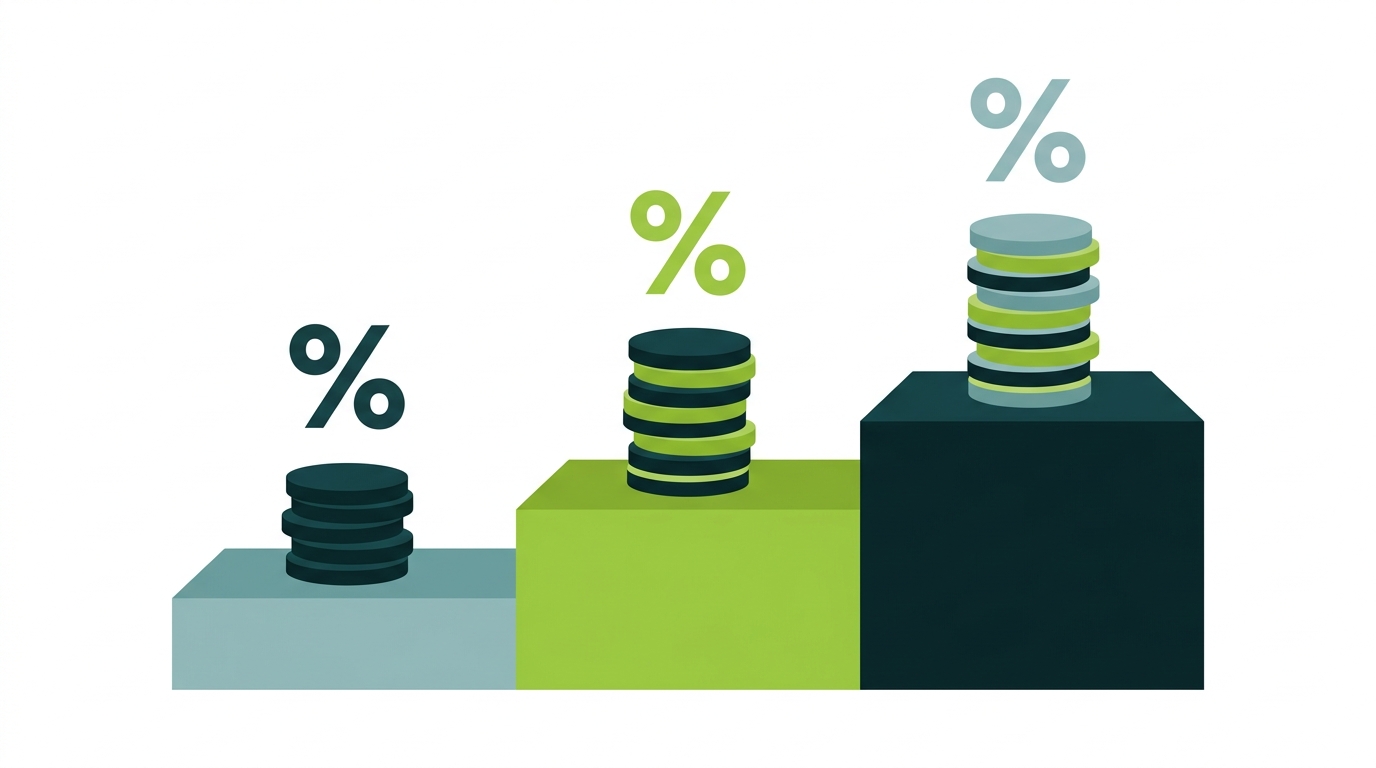
Long-term capital gains use a separate, more favorable rate structure. The IRS publishes these thresholds annually, adjusted for inflation.
Single Filers
| Taxable Income | Tax Rate |
|---|---|
| $0 to $49,450 | 0% |
| $49,451 to $545,500 | 15% |
| Over $545,500 | 20% |
Married Filing Jointly
| Taxable Income | Tax Rate |
|---|---|
| $0 to $98,900 | 0% |
| $98,901 to $613,700 | 15% |
| Over $613,700 | 20% |
That 0% bracket is real. If your total taxable income (including the gain) stays below $49,450 as a single filer, you owe zero federal capital gains tax on crypto held longer than a year.
Real Calculation: $50,000 Income
Let’s walk through the math for a single filer earning $50,000 in wages who sells crypto at a $10,000 profit.
Short-Term Gain (held 200 days)
Total taxable income: $50,000 + $10,000 = $60,000
The $10,000 gain is stacked on top of wages. Short-term gains are taxed as ordinary income. Under the 2026 brackets, the first $400 of the gain falls in the 12% bracket, and the remaining $9,600 falls in the 22% bracket.
Federal tax on the $10,000 gain: $2,160. Math: $400 × 12% = $48, plus $9,600 × 22% = $2,112, for a total of $2,160.
Long-Term Gain (held 400 days)
Total taxable income: $60,000. With $50,000 in wages already exceeding the $48,350 zero-rate threshold, the full $10,000 gain is taxed at the 15% long-term rate.
Real Calculation: $100,000 Income
Now consider a single filer earning $100,000 in W-2 wages with a $25,000 crypto gain.
Short-Term Gain
Total taxable income: $100,000 + $25,000 = $125,000
The $25,000 gain stacks into two brackets:
- $5,700 taxed at 22%: $1,254
- $19,300 taxed at 24%: $4,632
Federal tax on the $25,000 gain: $5,886
Long-Term Gain
The entire $25,000 gain falls in the 15% long-term bracket (total income of $125,000 is well below the $545,500 threshold). That covers a year of professional crypto tax preparation several times over.
Real Calculation: $500,000+ Income
Here is where the numbers get serious. A single filer earning $500,000 in ordinary income sells crypto for a $100,000 gain.
Short-Term Gain
Total taxable income: $500,000 + $100,000 = $600,000
Since $500,000 is already in the 35% bracket, the full $100,000 gain fits within the remaining room up to the $626,350 threshold. The entire gain is taxed at 35%.
Long-Term Gain (+ NIIT)
Total income of $600,000 exceeds the $545,500 threshold. The gain splits: $45,500 taxed at 15%, plus $54,500 taxed at 20%. The 3.8% NIIT adds another $3,800. Even with the NIIT surcharge, long-term treatment saves nearly $13,000. Math: $45,500 × 15% = $6,825; $54,500 × 20% = $10,900; NIIT = $3,800; total = $21,525.
The 3.8% Net Investment Income Tax (NIIT)
The NIIT is an additional tax that applies to investment income, including crypto capital gains. It hits when your modified adjusted gross income exceeds these thresholds:
| Filing Status | NIIT Threshold |
|---|---|
| Single | $200,000 |
| Married Filing Jointly | $250,000 |
| Married Filing Separately | $125,000 |
The 3.8% applies to the lesser of your net investment income or the amount by which your MAGI exceeds the threshold. These thresholds have not been adjusted for inflation since the NIIT was introduced in 2013.
For high-income crypto investors, the NIIT effectively creates a top long-term rate of 23.8% (20% + 3.8%) and a top short-term rate of 40.8% (37% + 3.8%). You can find the full details in IRS Topic No. 559.
Holding Period Rules: Why 366 Days Matters
The IRS uses a precise day count for determining long-term vs. short-term treatment. Here are the rules crypto investors need to know.
Day one starts the day after acquisition. If you buy ETH on March 1, 2026, your holding period begins March 2, 2026. You must sell on or after March 2, 2027, to qualify for long-term rates.
Swaps reset the clock. Trading BTC for ETH is a taxable disposal of BTC and a new acquisition of ETH. Your holding period for the ETH starts fresh. This applies to all crypto-to-crypto trades, not just fiat conversions. For more on what counts as a taxable event, see our guide on taxable vs. non-taxable crypto events.
Transfers between your own wallets do not reset the clock. Moving Bitcoin from Coinbase to a hardware wallet is not a taxable event. Your holding period continues uninterrupted.
Staking rewards and airdrops have a new holding period. These are treated as new property received, so the holding period starts when you receive them. The cost basis is generally the fair market value when you gain dominion and control over the rewards. IRS Revenue Ruling 2023-14 addresses staking rewards and uses the dominion-and-control standard.
Strategies to Minimize Your Crypto Capital Gains Tax
You cannot eliminate capital gains tax entirely (legally). But several strategies can reduce what you owe.
1. Hold for 366+ days whenever possible. This is the most straightforward way to cut your rate. The difference between short-term and long-term treatment is often 10 to 20 percentage points.
2. Harvest losses to offset gains. Crypto capital losses offset gains dollar-for-dollar. If your losses exceed your gains, you can deduct up to $3,000 against ordinary income per year. Unlike stocks, cryptocurrency is not currently subject to the wash sale rule, though proposed legislation could change this. Read more in our crypto tax-loss harvesting guide.
3. Choose the right cost basis method. FIFO and specific identification can produce dramatically different tax outcomes. Strategies such as HIFO generally rely on specific identification and require detailed records showing which units were sold. Selecting the highest-cost lots first (HIFO or Spec ID) reduces your gain on each sale. Our FIFO vs. HIFO vs. Spec ID comparison breaks down the math.
4. Use the 0% bracket strategically. If your taxable income is below $48,350 (single) or $96,700 (married filing jointly), you can realize long-term gains at a 0% federal rate. This is particularly useful in lower-income years, such as during a career transition or early retirement.
5. Consider qualified opportunity zones and charitable donations. Donating appreciated crypto held longer than a year to a qualified charity allows you to deduct the full market value without paying capital gains tax on the appreciation.
The difference between a 37% short-term rate and a 0% long-term rate is not a rounding error. It is the entire gain.
State Tax Considerations
Federal tax is only part of the picture. Most states also tax crypto capital gains, and rates vary widely.
No state income tax: Alaska, Florida, Nevada, New Hampshire (limited), South Dakota, Tennessee, Texas, Washington, Wyoming. If you live in one of these states, your federal rate is your total rate. Washington has a separate state capital gains tax on certain long-term capital gains, so residents should not assume their federal rate is their total rate.
Highest state rates for crypto gains:
| State | Top Rate |
|---|---|
| California | up to 13.3% |
| New York | up to 10.9% (including NYC surcharge) |
| New Jersey | up to 10.75% |
| Oregon | up to 9.9% |
| Minnesota | up to 9.85% |
A California resident in the top federal bracket could face that 54.1% combined rate on short-term crypto gains: 37% federal, plus 3.8% NIIT, plus 13.3% state. That is more than half the profit going to taxes.
State residency rules matter, and they are complex. Changing your state of residence purely for tax purposes requires genuine relocation, not just a mailing address. Work with a qualified crypto tax accountant before making any residency-based decisions.
How Crypto Losses Work With Capital Gains
Losses are the counterbalance to gains in the tax code. Here is how they interact.
Direct offset. If you have $30,000 in crypto gains and $20,000 in crypto losses during the same tax year, you only pay tax on the net $10,000 gain.
$3,000 ordinary income deduction. If your losses exceed your gains, you can deduct up to $3,000 of the excess against wages and other ordinary income ($1,500 if married filing separately).
Unlimited carryforward. Any remaining losses carry forward to future tax years indefinitely. A $50,000 net loss in 2026 can offset gains in 2027, 2028, and beyond until fully used.
Short-term losses offset short-term gains first. The IRS applies losses against gains of the same type before crossing over. This ordering can affect your net rate.
Tracking these losses requires accurate records of every transaction. Professional crypto accounting services can ensure nothing slips through the cracks.
Bottom Line: What to Do Next
Your 2026 crypto capital gains tax rate depends on three things: holding period, income level, and filing status. Long-term treatment (366+ days) almost always produces a lower rate. The 0% bracket is available to moderate-income filers. And high earners should plan for the additional 3.8% NIIT.
Here is your action plan:
-
Check your holding periods. Review every position and flag any assets approaching the 366-day mark. Do not sell early.
-
Estimate your total taxable income. Your crypto gains stack on top of wages, so the combined number determines your bracket.
-
Review your cost basis method. If you have been using the default FIFO, consider whether HIFO or Specific Identification would reduce your tax bill.
-
Harvest losses before year-end. Offset gains with losing positions while the strategy is still available without wash sale restrictions.
Need help running the numbers for your specific situation? Our team specializes in crypto tax planning for investors and traders at every level. Schedule a consultation to get a clear picture of your 2026 tax liability before it becomes a surprise.
For the complete overview of crypto tax rules, deadlines, and reporting requirements, head to our 2026 Crypto Tax Guide.
Frequently Asked Questions
What is the crypto capital gains tax rate for 2026?
Long-term crypto gains (held over 1 year) are taxed at 0%, 15%, or 20% depending on your taxable income. Short-term gains (held under 1 year) are taxed at your ordinary income rate, which ranges from 10% to 37%.
How long do I need to hold crypto to get long-term rates?
You must hold cryptocurrency for more than 365 days (366+ days) to qualify for long-term capital gains rates. The IRS counts from the day after acquisition.
What is the 3.8% Net Investment Income Tax?
The Net Investment Income Tax (NIIT) is an additional 3.8% tax on investment income (including crypto gains) for single filers earning above $200,000 or married couples above $250,000.
Can crypto losses offset my gains?
Yes. Crypto capital losses directly offset capital gains dollar-for-dollar. If losses exceed gains, you can deduct up to $3,000 against ordinary income per year, with unlimited carryforward.
Do I pay state tax on crypto gains?
It depends on your state. Texas, Florida, and several other states have no state income tax. California taxes crypto gains at up to 13.3%. Check your state's rules.