
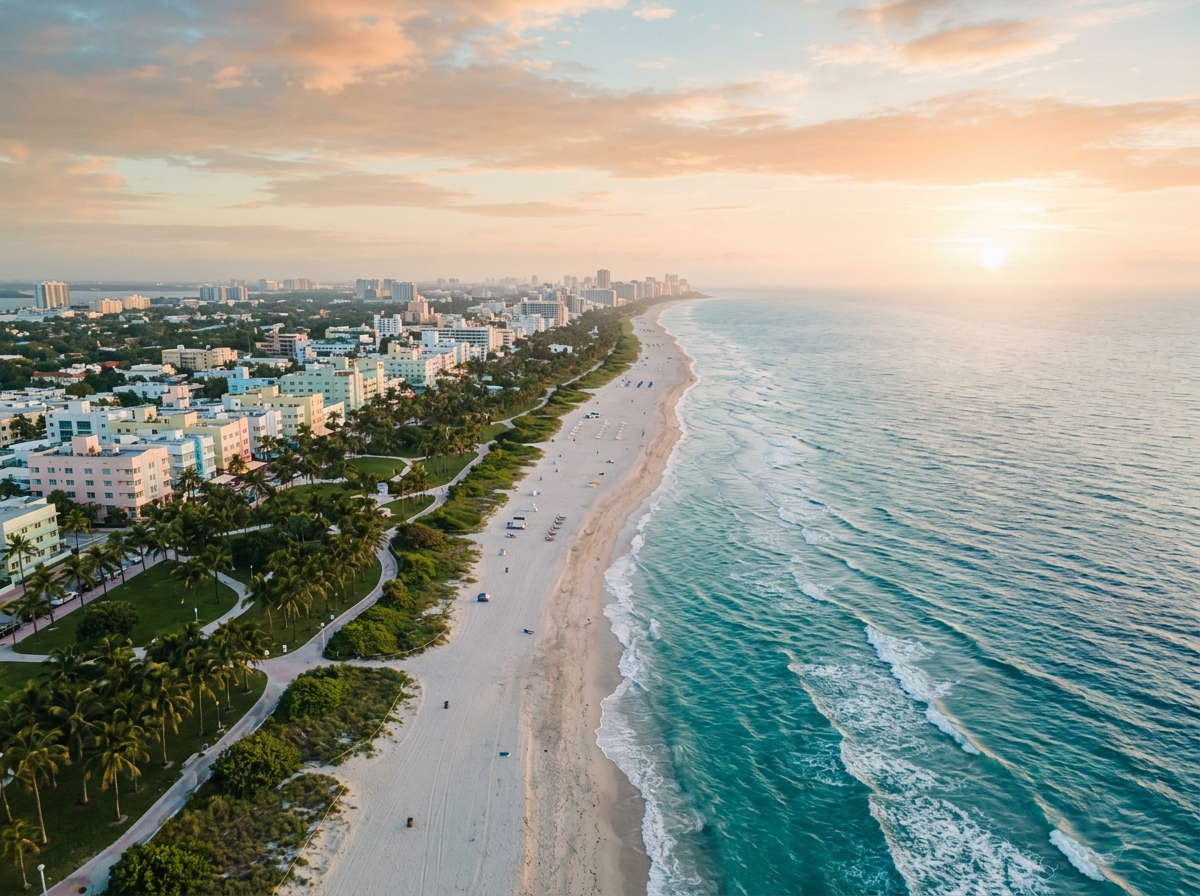
Key Facts About Crypto Tax in Miami
Florida has no state income tax, and Miami became the loudest crypto city in America because of it. The catch: most Miami investors arrived from somewhere else, and the state they left cares exactly when each lot was sold. Clean records before and after the move are what make the zero actually zero.
- Florida has no state income tax, so Miami crypto investors pay only federal tax on gains: up to 23.8% long-term including NIIT.
- A $500,000 long-term crypto gain costs about $119,000 in Miami versus roughly $185,500 in San Francisco and $192,880 in New York City.
- Moving to Miami does not erase prior state exposure: New York and California audit whether crypto was sold before or after the move.
- Miami hosted the world's largest Bitcoin conference from 2021 through 2023, and Mayor Francis Suarez took a paycheck in bitcoin in 2021.
- The Miami-Fort Lauderdale-West Palm Beach metro holds about 6.2 million people and one of the densest crypto founder communities in the country.
- Count On Sheep delivers CPA-ready 8949, Schedule D, and Schedule 1 inputs for Miami investors. Your CPA files, or you file with TurboTax.
Miami crypto investors pay zero state income tax, so a $500,000 long-term gain costs about $119,000 in federal tax versus $185,500 in San Francisco or $192,880 in New York City. The savings hold only when lot-level records prove each sale happened after Florida residency was established. Count On Sheep, a USA-based team with former Big 4 leadership, rebuilds wallet, exchange, and DeFi history into CPA-ready Form 8949, Schedule D, and Schedule 1 inputs for Miami investors, including the move-year split that New York and California audit hardest. We do not file. Your CPA files, or you file with TurboTax.
Phone: (858) 434-7547
Why Miami crypto investors need a specialist
Miami's crypto story is a migration story. The city sold itself as the escape hatch from high-tax states, and tens of thousands of investors took the deal. The tax work that makes the deal stick is documentation: what you sold, when, and where you actually lived.
The local scene is real, not marketing. Miami hosted the world's largest Bitcoin conference from 2021 through 2023, launched MiamiCoin in 2021, and watched Mayor Francis Suarez take a paycheck in bitcoin. Brickell and Wynwood now hold one of the densest crypto founder and fund communities in the country, running venture token positions, locked allocations, and DeFi books that consumer software cannot classify.
Migration is the mechanical problem underneath. Most Miami crypto wealth arrived from New York, New Jersey, or California, and the move year splits the return in two. Gains realized while still a resident of the old state stay taxable there, and New York in particular audits domicile changes aggressively. The zero-tax benefit only applies to what you sold after the move was real.
The federal layer never left. Form 1099-DA broker reporting started with the 2025 tax year, the digital asset question sits on top of Form 1040, and many Miami portfolios include offshore exchange history and multi-year backlogs from before the relocation. No state tax does not mean no tax work. It means the federal work carries all the weight.
The work product is the same wherever you came from: per-lot Form 8949 detail, Schedule D totals, Schedule 1 items for staking and airdrops, and a move-year timeline when you need one. Your Miami CPA files from it, or you load the totals into TurboTax. Either way the record shows what was sold, when, and under which state's residency, which is the entire game for a new Floridian.
What crypto gains actually cost in Miami
Miami residents pay no state or city income tax on crypto. The Florida constitution prohibits a personal income tax, so the only layer is federal: up to 20% long-term capital gains plus the 3.8% net investment income tax, or ordinary rates up to 37% plus NIIT for short-term gains, staking, and mining.
What a $500,000 long-term crypto gain costs by city
| City | State + local tax | Federal (LTCG + NIIT) | Total tax | Extra cost vs Miami |
|---|---|---|---|---|
| Miami | $0 | $119,000 (23.8%) | $119,000 | Baseline |
| San Francisco | $66,500 (13.3%) | $119,000 (23.8%) | $185,500 | +$66,500 |
| New York City | $73,880 (14.776%) | $119,000 (23.8%) | $192,880 | +$73,880 |
Illustrative math at top marginal rates. Federal assumes the 20% long-term rate plus 3.8% net investment income tax. The Miami numbers apply only to lots sold after Florida residency is established and documented. Gains realized while still a New York or California resident remain taxable to the former state.
Federal conformity in Florida
With no income tax there is no conformity question at the state level. Federal rules apply in full: property treatment, per-lot cost basis, and the digital asset question on Form 1040.
What this means in practice: Florida residency turns the state row of the table to zero, but only for disposals that happen after the move is real. The federal row never changes, and 1099-DA matching now checks it. A Miami investor's highest-leverage documents are the residency timeline and the per-lot ledger, one proving where you lived, the other proving what each coin cost. We build the second and give your CPA the dates for the first.
What we untangle for Miami crypto investors
Four steps, start to finish
From anywhere in Florida.
Connect
You connect read-only access to your exchanges and share wallet addresses. CSV exports work too.
Reconcile
We pull and reconcile every wallet, exchange, and DeFi interaction into one ledger with cost basis, holding period, and proceeds per lot.
Specialist Review
A senior crypto tax professional reviews edge cases. Manual basis splits, DeFi classifications, bridge events, restaking, NFTs.
CPA-Ready Reports
You get CPA-ready Form 8949, Schedule D, Schedule 1 inputs (and Schedule C for mining), plus full workpapers. Hand to your CPA, or load into TurboTax.
Clean files, ready for your CPA
When the crypto tax work is done, you receive a tidy package: Form 8949 detail, Schedule D totals, Schedule 1 inputs for staking and airdrops, and the workpapers behind every number. That goes straight to your CPA, or into TurboTax.

Talk through your crypto tax situation first.
Every wallet, exchange, and DeFi history is different. Start with a consultation so we can understand the work, confirm what your CPA needs, and outline the cleanest path forward for your Florida return.
Common questions, Miami edition
Do you have an office in Miami?
No. Count On Sheep is headquartered in San Diego and serves Miami clients remotely through a secure portal, video calls, and read-only exchange access. The deliverable is the same CPA-ready package we build for clients in all 50 states.
Do I owe Florida state tax on my crypto?
No. Florida has no personal income tax, so crypto gains are taxed only at the federal level. Form 8949, Schedule D, and the digital asset question on Form 1040 still apply in full, which is where our work goes.
I moved from New York. Does New York still tax my crypto?
It can. Anything you sold while still a New York resident is New York taxable, and statutory residency can reach you after the move if you keep a New York home and spend 183 days there. We produce the per-lot sale dates that let your CPA draw the line cleanly.
When should I sell after moving to Miami?
The tax answer favors selling after your Florida residency is established and documented, because the old state can still tax disposals made before the move was real. Your CPA advises on timing. We deliver the lot-level record that makes whatever you did defensible.
What is the total tax on a long-term crypto gain in Miami?
Federal only: up to 20% long-term capital gains plus the 3.8% net investment income tax, roughly $119,000 on a $500,000 gain at top brackets. Short-term gains and staking income are taxed at ordinary federal rates instead.
Are staking rewards tax-free in Florida?
No. They are free of state tax because Florida has none, but federally they are ordinary income at fair market value when received. We price each reward event and compile the Schedule 1 input your CPA or TurboTax needs.
Do you handle offshore exchange history?
Yes, on the data side. We reconstruct trading history from non-US venues, including ones with poor exports or closed doors. Reporting obligations like FBAR and Form 8938 stay with your CPA, who works from our complete dataset.
Can my Miami CPA use your reports?
Yes. The package drops straight into a standard workflow: 8949 detail, Schedule D totals, Schedule 1 items, and workpapers behind every number, including the move-year split if you relocated.
What do I need to get started?
Exchange access or CSVs, wallet addresses for every chain, prior returns that touched crypto, and your move date plus former state if you relocated. We scope the work on a free consultation call.
About the Count On Sheep team
Count On Sheep is a USA-based team of crypto tax professionals. Former Big 4 accountants and CPA leadership, now crypto-native blockchain tax experts. We do hands-on crypto tax work for high-volume investors, funds, founders, and active traders, including Florida residents from Miami, Fort Lauderdale, Tampa and beyond.
We don't file taxes. We don't replace your CPA. Most CPAs don't do crypto, that's the gap we fill. We bridge DeFi and TradFi to produce the 8949, Schedule D, and Schedule 1 inputs your CPA can drop into your return.
Ready to get your crypto tax handled and CPA-ready?
Book a free scoping call or call us directly. We serve Miami investors remotely, wherever your wallets live.