

Key Facts About Crypto Tax in North Carolina
North Carolina's flat 4.5% rate (stepping down) combined with the Research Triangle's tech presence makes it one of the more dynamic crypto-investor states in the Southeast.
- North Carolina taxes crypto gains at a flat 4.5% (stepping down).
- North Carolina uses rolling IRC conformity.
- Research Triangle tech employees often combine RSUs and crypto, requiring combined basis tracking.
- Charlotte banking professionals frequently run high-volume trading strategies.
- Count On Sheep produces CPA-ready 8949 and Schedule D inputs, your CPA files.
Phone: (858) 434-7547
From Charlotte to every metro in North Carolina
North Carolina crypto investors in Charlotte, Raleigh, Durham, Greensboro and surrounding metros, served remotely from anywhere in the state.
North Carolina crypto investors in Charlotte, Raleigh, Durham, and Greensboro face a flat state rate stepping down. Research Triangle tech employees and Charlotte banking professionals dominate the crypto tax work profile. We pull every wallet, exchange, and DeFi protocol into one ledger and hand off CPA-ready 8949, Schedule D, and Schedule 1 inputs. Count On Sheep is your crypto tax professional for North Carolina. Your CPA stays your CPA. We handle the crypto work, they manage the filing.
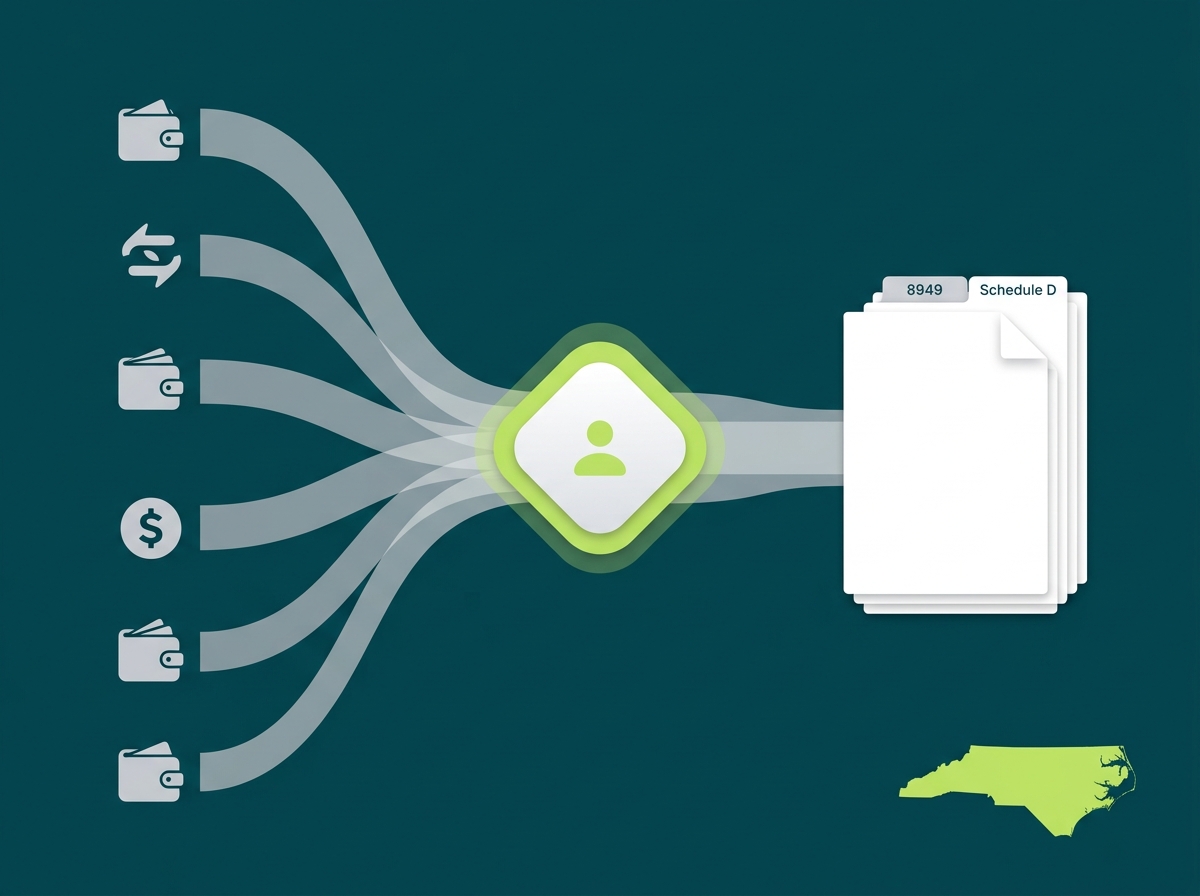
Keep your CPA. We do the crypto.
Your CPA handles your business return, your W-2, your K-1s, your real estate. We are the crypto tax professionals who handle the wallet, exchange, and DeFi side, for North Carolina residents and beyond.
Former Big 4 + CPA leadership
Our team came up inside Big 4 firms and CPA leadership roles, then went deep into crypto. Same audit-grade discipline that ran public-company engagements, applied to your wallet history.
USA-based, hands-on team
A senior crypto tax professional reviews every engagement. No offshore data-entry pipeline, no automated black box. Every edge case, basis split, and DeFi classification is handled by humans here.
We stay in our lane
We don't file your taxes. We don't replace your CPA. We do the part most CPAs and most software can't, the crypto. Then your CPA files, or you file with TurboTax.
How North Carolina treats crypto for tax
Federal Crypto Tax Treatment (applies in North Carolina)
Reportable on Form 8949, Schedule D, Schedule 1 (or Schedule C for mining as a trade or business). Count On Sheep produces these inputs from your complete on-chain history.
What we untangle for North Carolina crypto investors
Four steps, start to finish
From anywhere in North Carolina.
Connect
You connect read-only access to your exchanges and share wallet addresses. CSV exports work too.
Reconcile
We pull and reconcile every wallet, exchange, and DeFi interaction into one ledger with cost basis, holding period, and proceeds per lot.
Specialist Review
A senior crypto tax professional reviews edge cases. Manual basis splits, DeFi classifications, bridge events, restaking, NFTs.
CPA-Ready Reports
You get CPA-ready Form 8949, Schedule D, Schedule 1 inputs (and Schedule C for mining), plus full workpapers. Hand to your CPA, or load into TurboTax.
Clean files, ready for your CPA
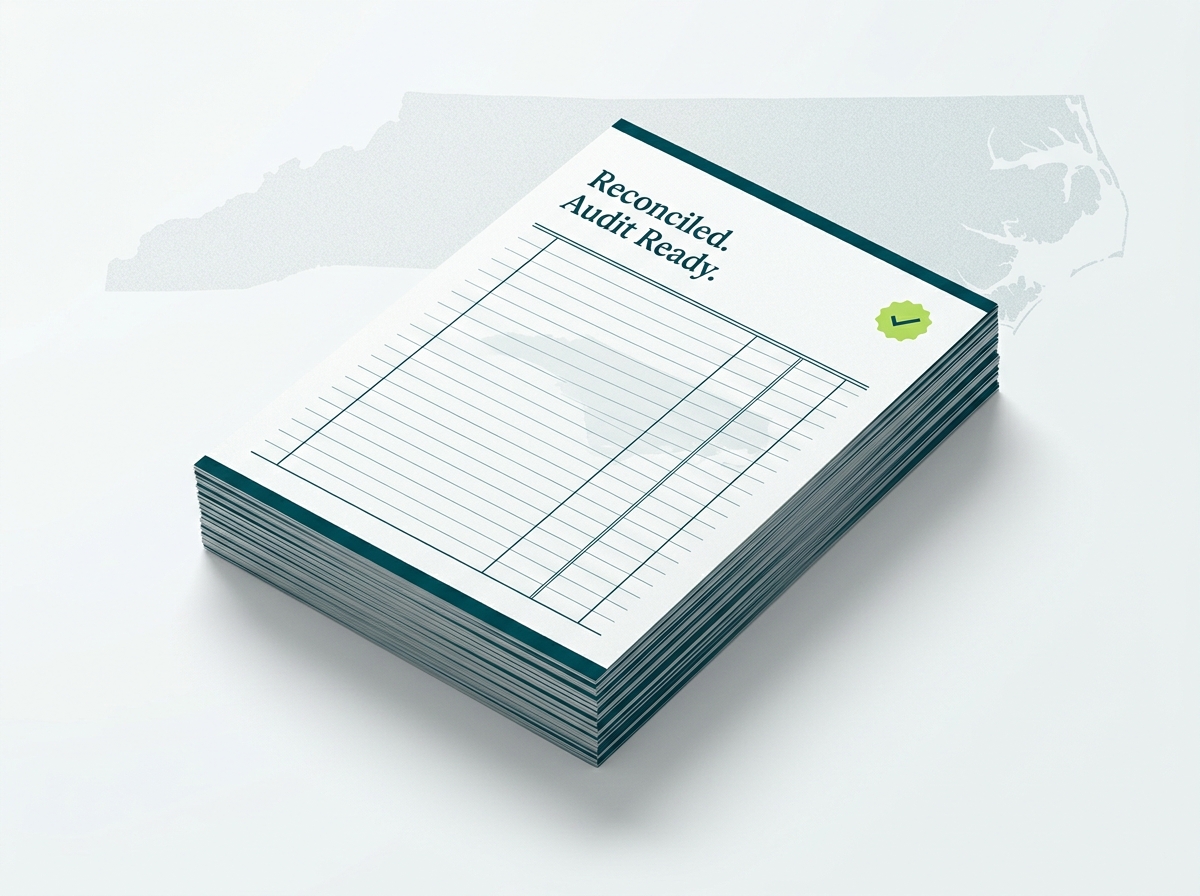
When the crypto tax work is done, you receive a tidy package: Form 8949 detail, Schedule D totals, Schedule 1 inputs for staking and airdrops, and the workpapers behind every number. That goes straight to your CPA, or into TurboTax.

Talk through your crypto tax situation first.
Every wallet, exchange, and DeFi history is different. Start with a consultation so we can understand the work, confirm what your CPA needs, and outline the cleanest path forward for your North Carolina return.
Common questions, North Carolina edition
How do RSUs and crypto get handled together for an NC tech employee?
They're separate basis problems but they share an income year. We rebuild the on-chain crypto ledger; your CPA already has the RSU detail. Together, the federal return reflects both correctly. Our job is the part most CPAs aren't equipped to do, the on-chain crypto tax work.
What's the North Carolina income tax rate on crypto gains?
North Carolina's top marginal income tax rate is 4.5%. Flat 4.5% rate (reduced from 4.75% in 2024; declining toward 3.99% by 2027). Crypto gains are reported as ordinary income or capital gains depending on holding period; North Carolina generally follows the federal characterization. Count On Sheep produces the federal 8949 and Schedule D inputs your CPA needs to complete the North Carolina return. We don't file the return ourselves.
Do you file my taxes?
No. That's deliberate. Count On Sheep is a team of crypto tax professionals. Former Big 4 and CPA leadership, now crypto-native blockchain tax experts. We produce CPA-ready 8949, Schedule D, and Schedule 1 inputs. Your CPA files. Or you file with TurboTax. Staying out of preparation keeps the engagement conflict-free and the audit trail clean.
Can my CPA use your reports?
Yes. That is exactly the point. Our deliverable drops directly into the workflow your CPA already uses. Schedule D totals, 8949 detail, Schedule 1 inputs for staking and airdrops, and reconciliation workpapers behind every number.
Does this work with TurboTax?
Yes. If you self-file, the Count On Sheep deliverable plugs into TurboTax. You enter the 8949 totals (or import where supported), and our workpapers back up every line if you ever need to defend it.
How does a remote engagement work?
Everything is remote. We serve North Carolina residents from anywhere in the state. You grant read-only API access to your exchanges, share wallet addresses for on-chain history, and we handle the rest. No travel, no in-person meetings required.
What do I need to start?
Exchange account access or CSV exports, wallet addresses for every chain you have transacted on, any prior-year tax returns that touched crypto, and a brief on your DeFi activity. We scope from there.
How is the engagement priced?
Book a meeting to walk us through your account. We will review the scope and provide a written quote before any work begins.
About the Count On Sheep team
Count On Sheep is a USA-based team of crypto tax professionals. Former Big 4 accountants and CPA leadership, now crypto-native blockchain tax experts. We do hands-on crypto tax work for high-volume investors, funds, founders, and active traders, including North Carolina residents from Charlotte, Raleigh, Durham and beyond.
We don't file taxes. We don't replace your CPA. Most CPAs don't do crypto, that's the gap we fill. We bridge DeFi and TradFi to produce the 8949, Schedule D, and Schedule 1 inputs your CPA can drop into your return.
Ready to get your crypto tax handled and CPA-ready?
Book a free scoping call or call us directly. We serve North Carolina residents remotely.