
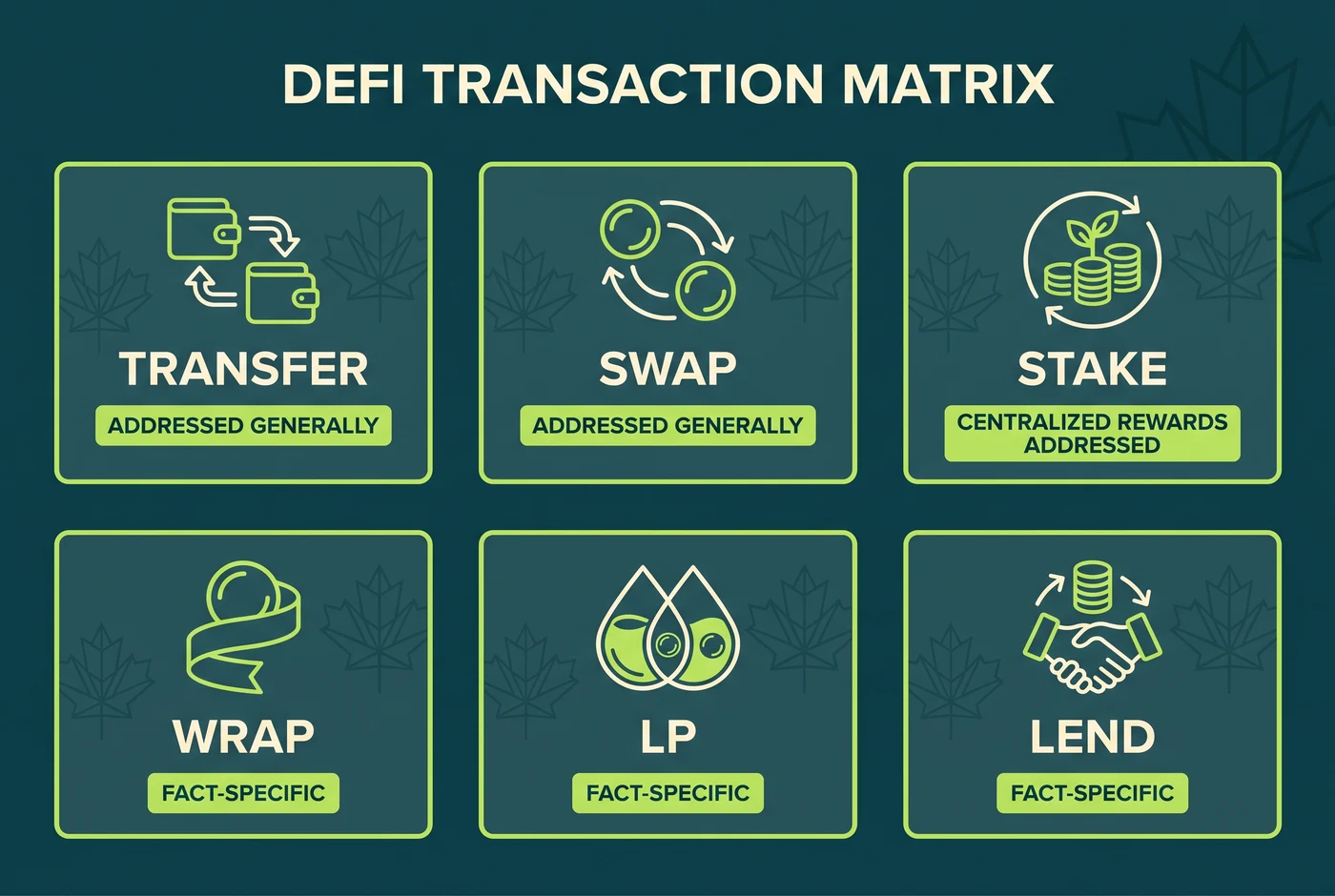
CRA clearly says crypto swaps can be dispositions, same-owner wallet transfers are not dispositions by themselves, and centralized-exchange staking rewards are generally income when credited. CRA's published guidance does not give a universal answer for every token wrap, LP deposit, lending receipt token, or decentralized reward. Reconstruct each event and assess the rights exchanged.
Last reviewed July 25, 2026. Critical rules checked against current CRA and Department of Finance sources.
How is DeFi taxed in Canada?
Start with the transaction, not the protocol label
"DeFi" can describe swaps, deposits, withdrawals, loans, rewards, collateral, liquidations, bridge movements, and tokenized claims. Those events do not share one tax result. Begin with what left the wallet, what arrived, what rights changed, what value was transferred, and what obligation remained.
A protocol's interface may call an action "deposit," "stake," or "bridge" even when the smart contracts exchange one token for another. The label is evidence about product design, not a conclusion under Canadian tax law. Preserve transaction hashes and protocol documents that describe the legal and economic rights.
Ask whether beneficial ownership or property rights changed
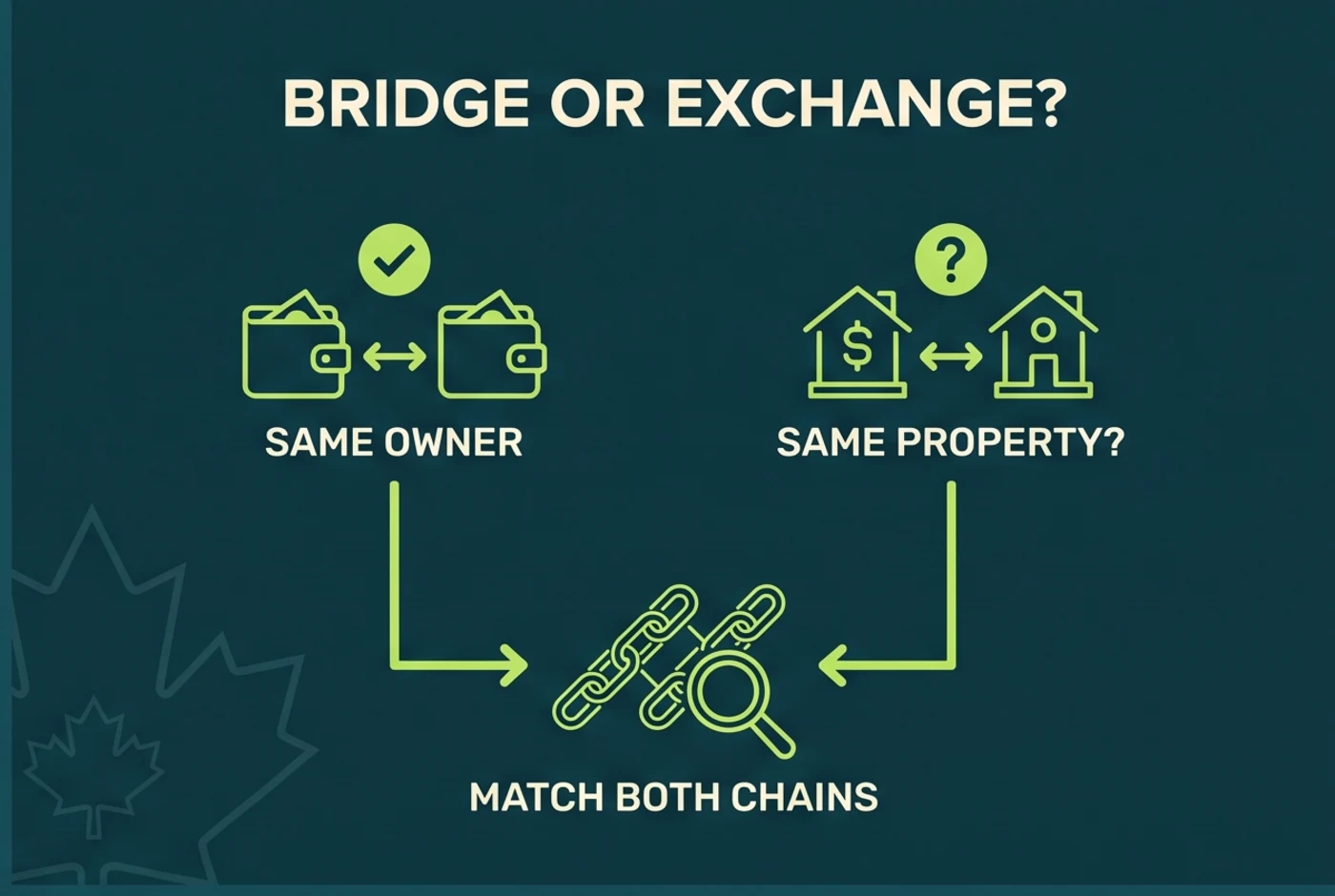
Same-owner movement is not a disposition by itself. The harder question is whether the user continued to own the same property or instead received a new claim, receipt token, pool interest, wrapped asset, or contractual right. Redemption terms, control, insolvency risk, transferability, and exposure to underlying assets can all help describe the change.
Measure fair market value in Canadian dollars
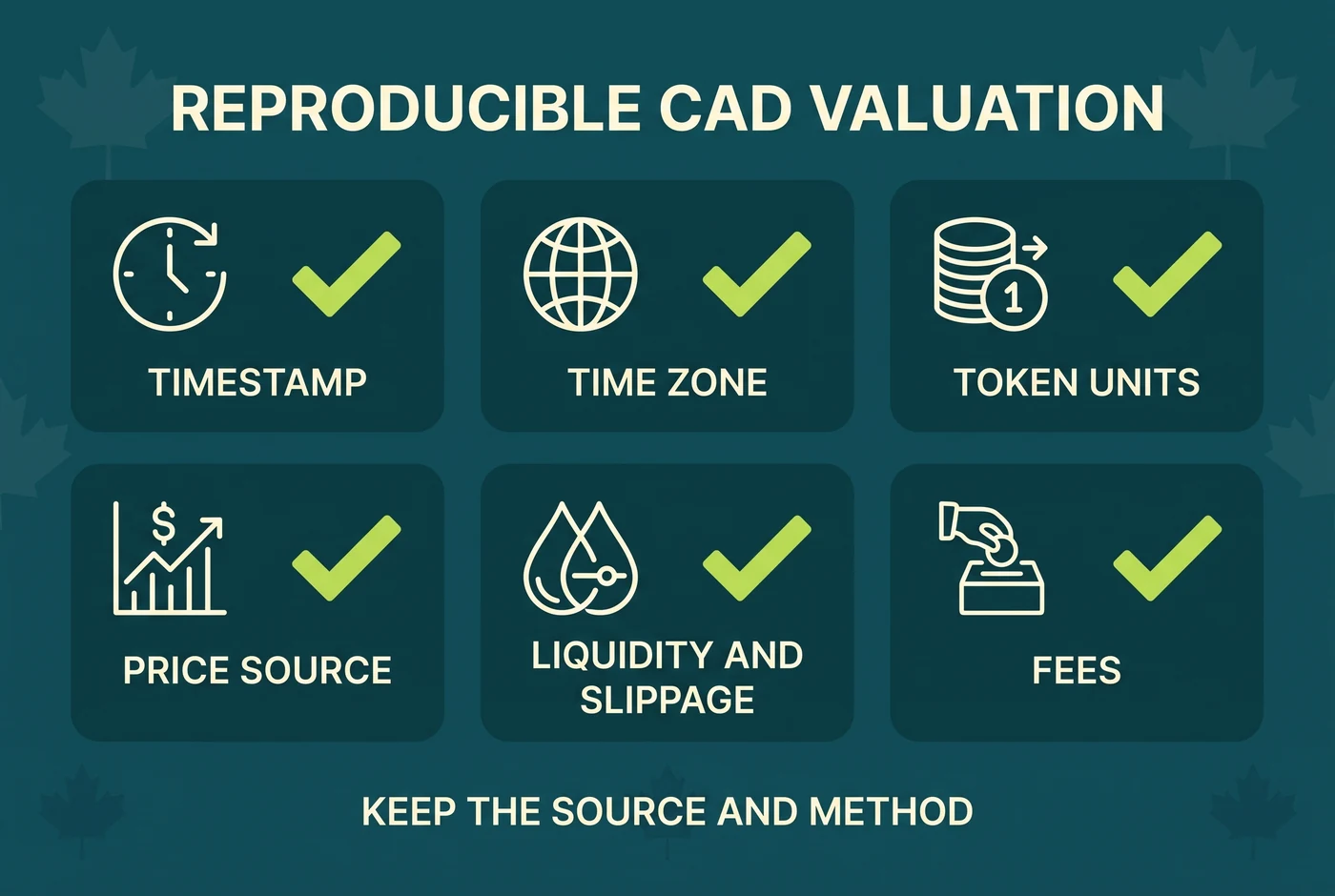
Canadian tax calculations use Canadian-dollar values. Record the exact time, time zone, units, token contract, price source, liquidity, fees, and slippage. For a thin token, a quoted spot price may not reflect the value that could actually be realized. Keep the method reproducible.
Separate initial income from a later disposition
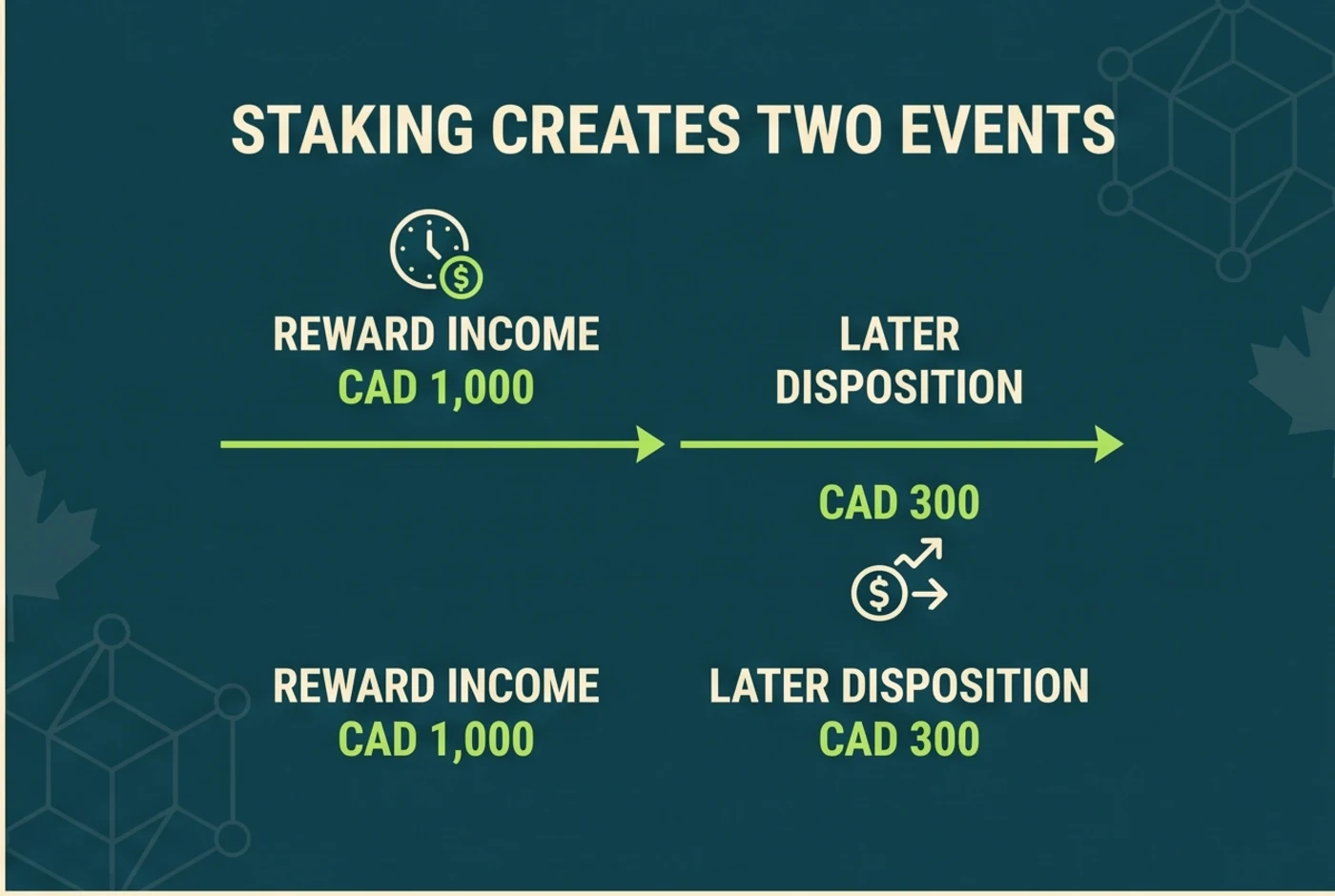
A reward can create income when received or credited and a separate gain or loss when the reward units are later sold or swapped. The amount included as income is relevant to the cost of those units. Omitting the first event can make the later gain appear too large, while omitting the later disposition leaves the file incomplete.
| DeFi event | Questions to answer | Possible result | CRA-specific status |
|---|---|---|---|
| Same-owner wallet move | Same beneficial owner and same property? | No disposition by itself | Addressed generally |
| Token swap | Different asset received? | Possible disposition | Addressed generally |
| Centralized staking reward | Credited and controlled? | Generally income | Addressed |
| Wrap or unwrap | New legal or property right? | Fact-specific | Universal result unverified |
| LP deposit or withdrawal | Rights relinquished or LP token received? | Fact-specific | Universal result unverified |
| Loan or receipt token | Ownership retained or new property created? | Fact-specific | Universal result unverified |
How are staking rewards taxed in Canada?
Centralized-exchange rewards
CRA says rewards from centralized crypto-exchange staking are generally income when credited to the wallet. Record the asset, units, credit time, Canadian-dollar value, platform statement, and any restriction on withdrawal. The amount is an income input, not necessarily the final tax payable.
Validator and decentralized staking arrangements
The reviewed CRA source does not establish one treatment for every validator or decentralized arrangement. Identify who controls the keys, when a reward is earned or controlled, whether it can be withdrawn, what services the taxpayer performs, and whether the activity has a business character. Do not copy the centralized-exchange conclusion without checking those facts.
Liquid staking and restaking
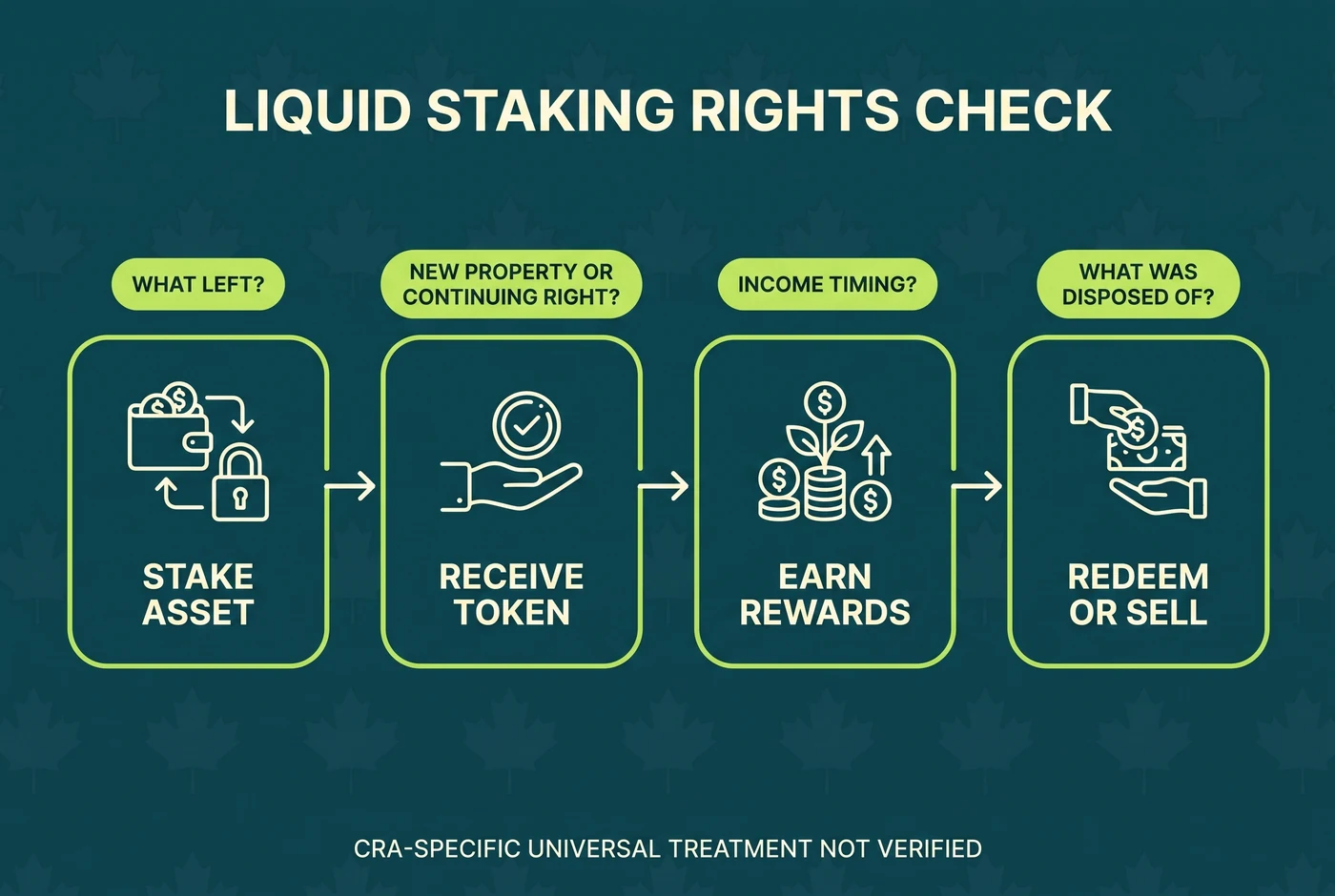
Liquid staking can add a token exchange or receipt-token question before rewards are considered. Restaking can add another contract, risk layer, or reward source. Determine whether the taxpayer surrendered property, retained beneficial ownership, received materially different rights, and later redeemed or sold a token. CRA-specific universal treatment for these structures remains unverified.
Establishing cost for a later sale
The Canadian-dollar value already included as income is generally relevant to the cost of the reward units. Later proceeds are compared with the appropriate cost under the taxpayer's capital or business method. Rewards should be tagged by asset and time so they enter the correct pool or inventory record.
Is wrapping crypto taxable in Canada?
Why a wrapper may or may not represent a different property
A wrapper can issue a new token on the same chain or a representation on another chain. Some structures preserve a fixed redemption right to the underlying asset. Others introduce a custodian, bridge, contract risk, governance right, or different economic exposure. Those differences may affect whether property was disposed of.
Beneficial ownership and redemption rights
Document who owns the underlying asset after the wrap, whether the user can demand return of the same type and quantity, whether the receipt can be independently traded, and what happens if the contract fails. Continuous price parity does not, by itself, prove continuous beneficial ownership.
CAD value and fees
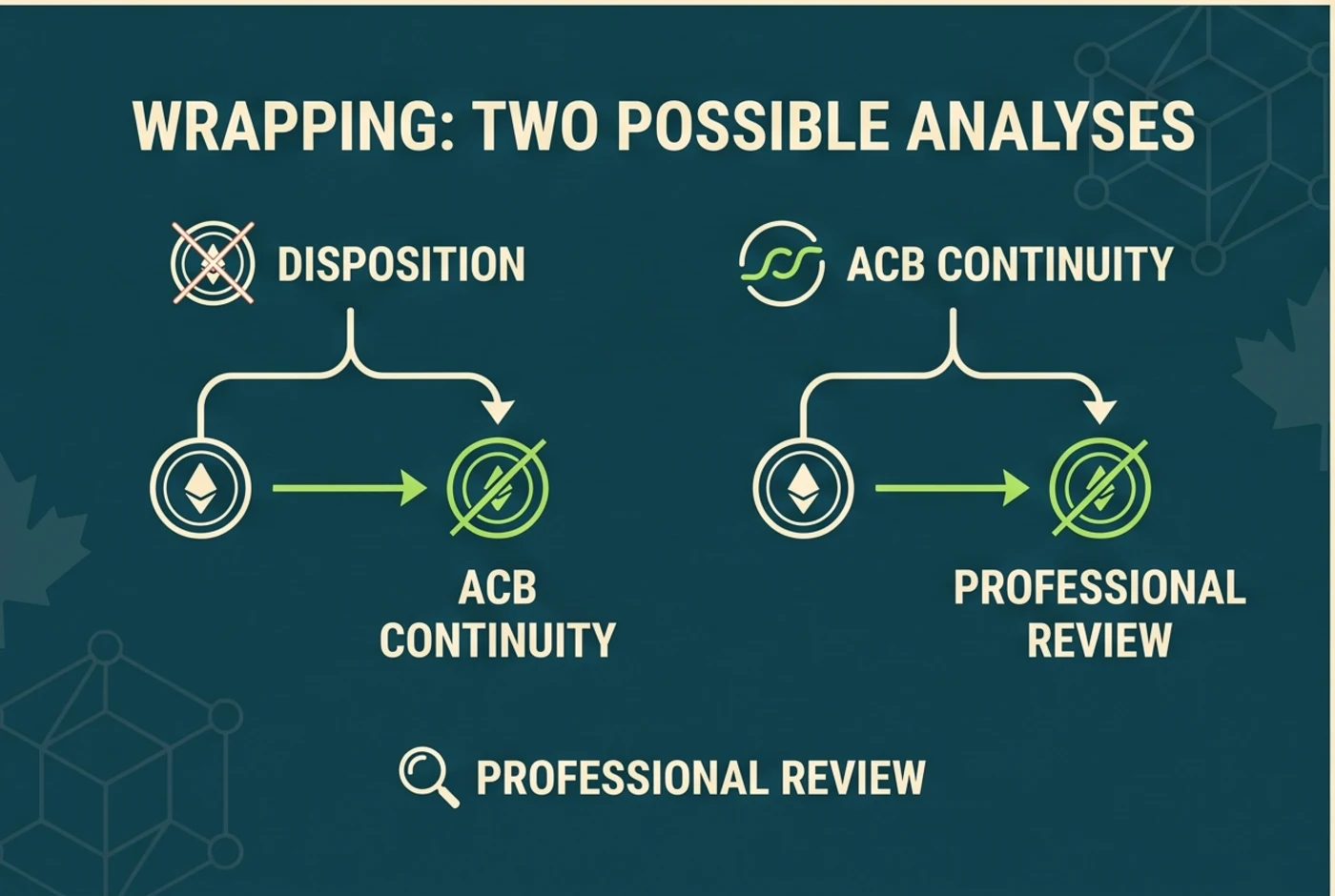
If the wrap is treated as a disposition, establish the Canadian-dollar fair market value of what was received and compare it with allocated ACB and eligible outlays. If it is treated as a non-disposition, document ACB continuity, units, network fees, and the ownership basis for that position.
How to document an unresolved position
Preserve the protocol terms, smart-contract addresses, transaction hash, redemption mechanics, token units, CAD values, fees, and both possible calculations. Flag the issue for the Canadian tax professional rather than letting software silently classify the event as a taxable swap or a transfer.
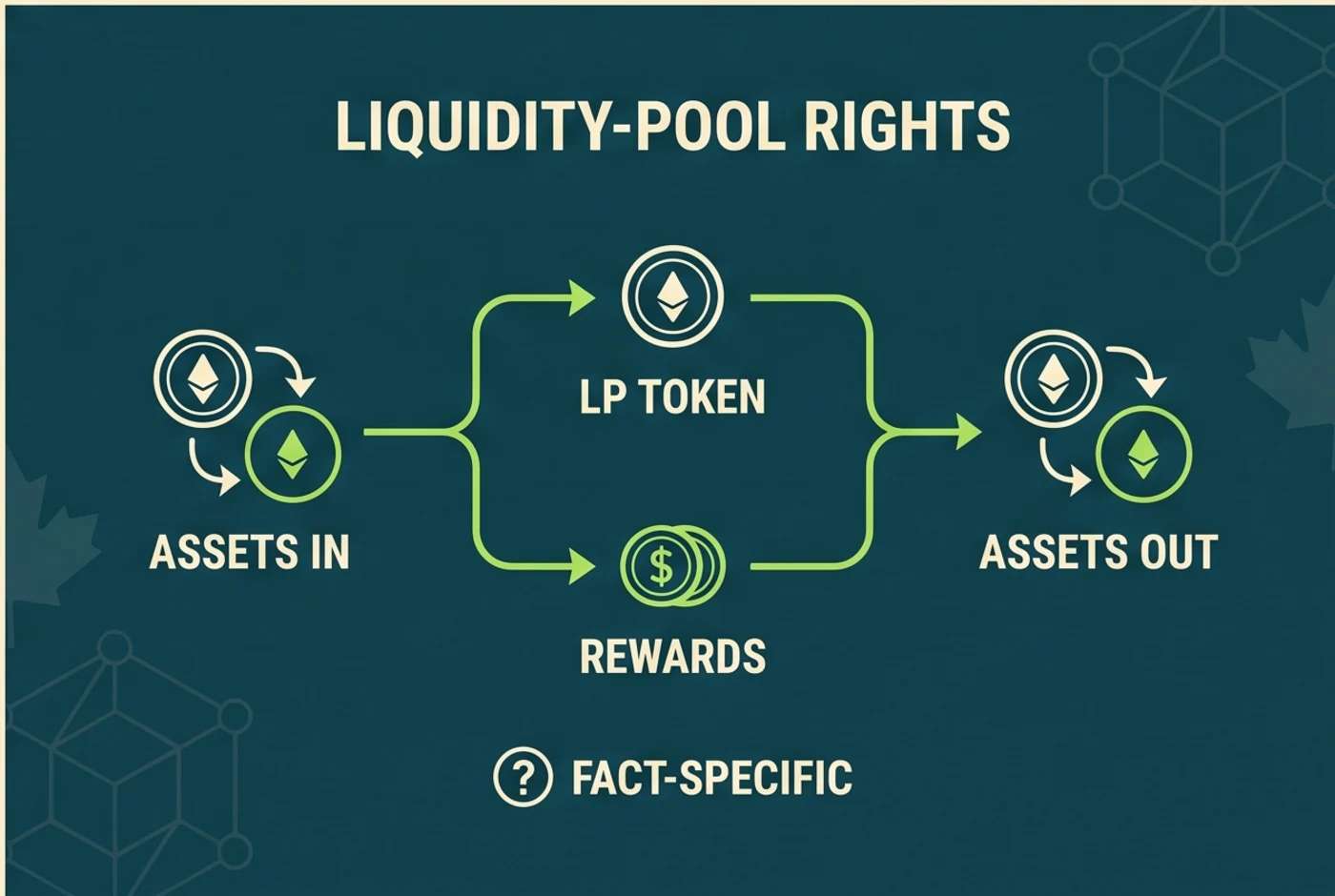
Are liquidity-pool deposits and withdrawals taxable?
Depositing two assets and receiving an LP token
An automated market maker may take two assets and issue an LP token or accounting position. One possible analysis is that the user disposed of the deposited assets in exchange for a different property. Another is that the user retained a beneficial interest in the contributed property. The contract and legal rights decide which analysis is supportable. CRA has not published a universal LP rule in the sources reviewed.
Earning fees and incentive tokens
Pool fees can accrue inside the position, change the redemption value, or be separately claimable. Incentive tokens may be credited, vested, locked, or immediately transferable. Record when each amount becomes earned or controlled, its Canadian-dollar value, and whether it changes the LP token's value or creates a separate asset.
Withdrawing a different asset mix
A withdrawal may return different quantities from the original deposit because of trading activity, fees, and price movement. Compare the property surrendered and received, determine whether the LP token or claim was disposed of, and preserve the Canadian-dollar value of every leg.
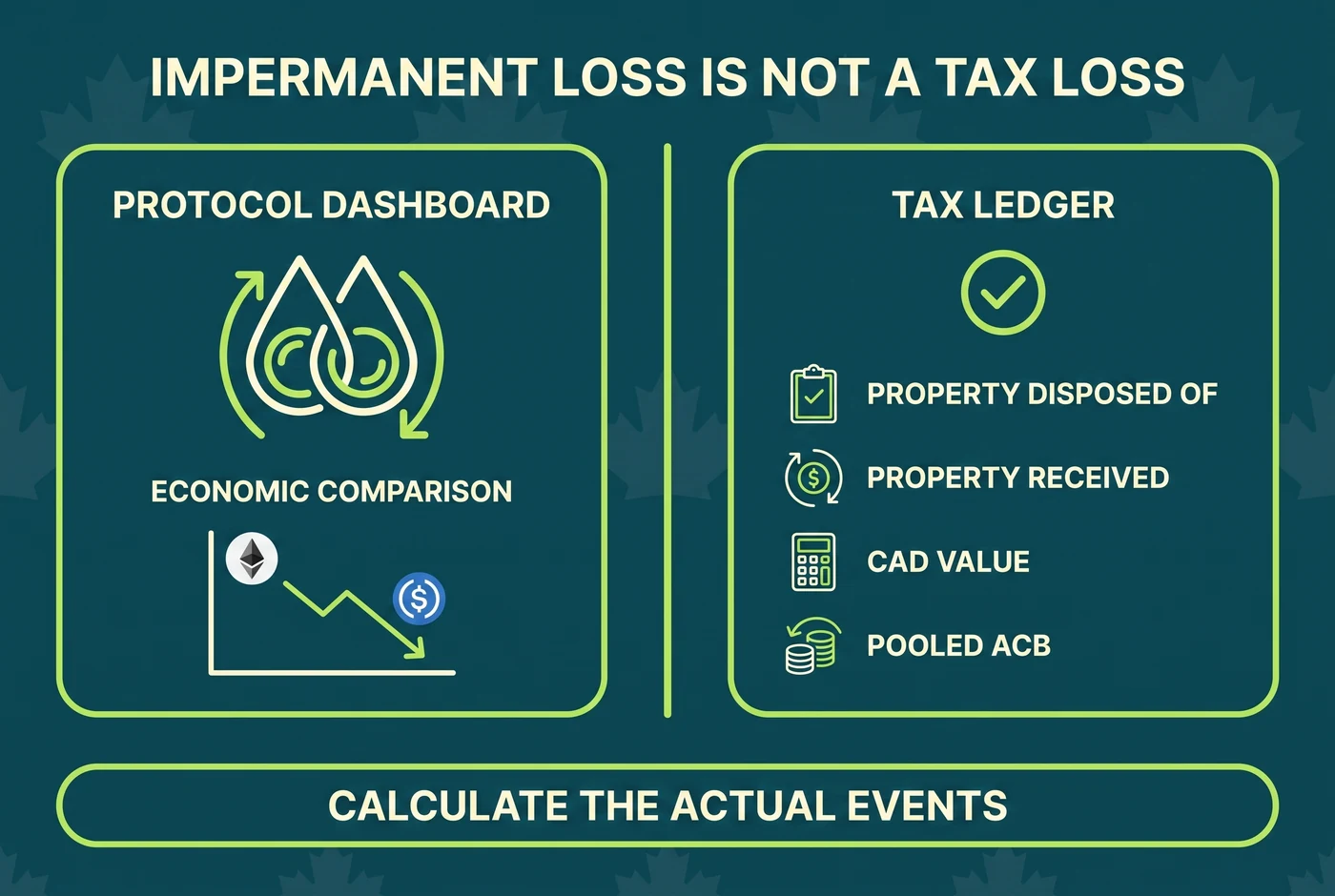
Impermanent loss is not automatically a tax loss
Impermanent loss is an economic comparison between providing liquidity and holding the original assets. It is not a Canadian tax category. A tax loss requires an applicable realization or business accounting event, a supported cost, proceeds or value, and the correct classification.
Protocol records needed to calculate the result
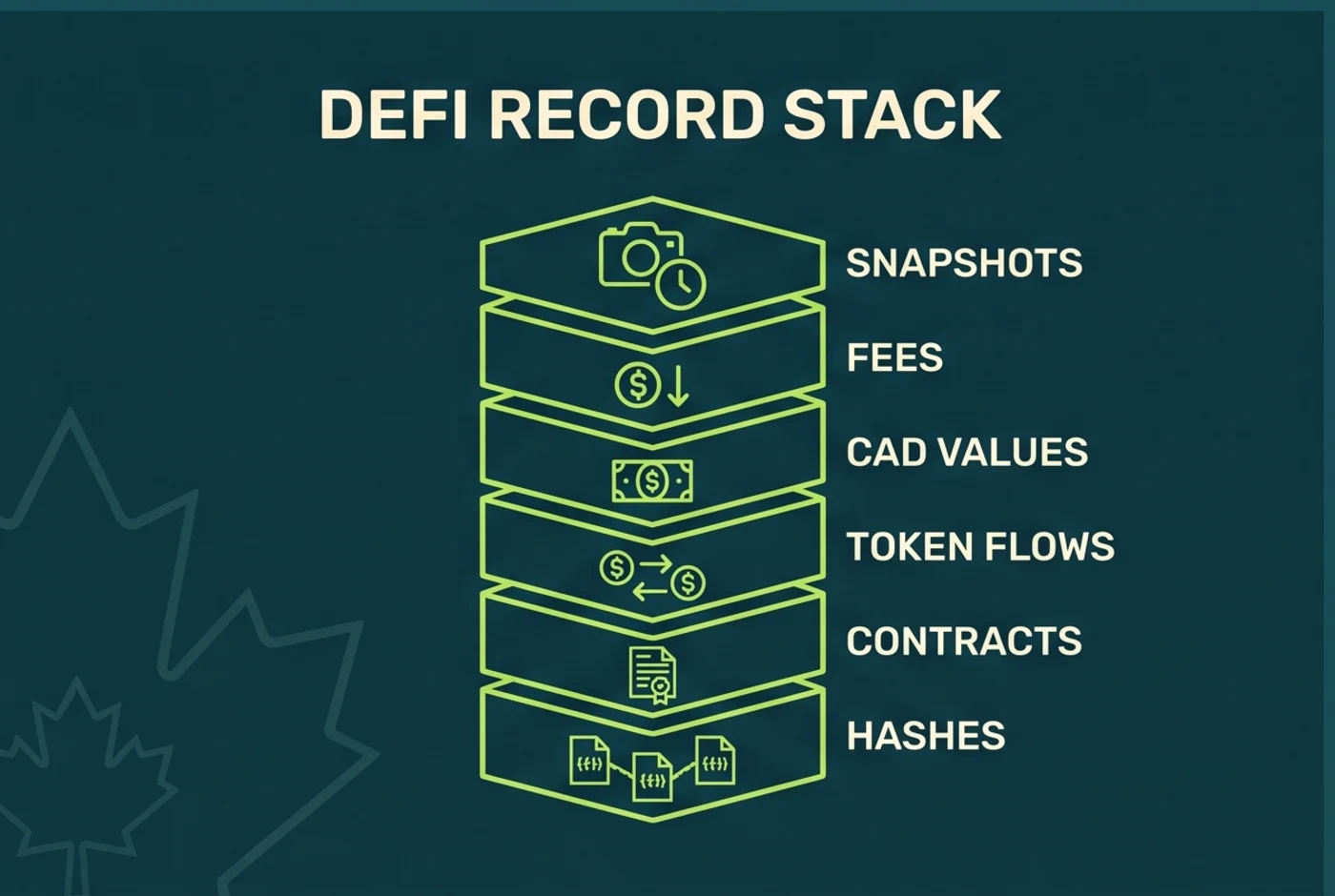
Keep pool and contract addresses, token IDs, deposit and withdrawal hashes, position snapshots, fee accruals, reward claims, token units, CAD valuations, and protocol terms. If the platform provides only a current dashboard, take dated exports or snapshots before the position closes.
How are DeFi lending and borrowing taxed?
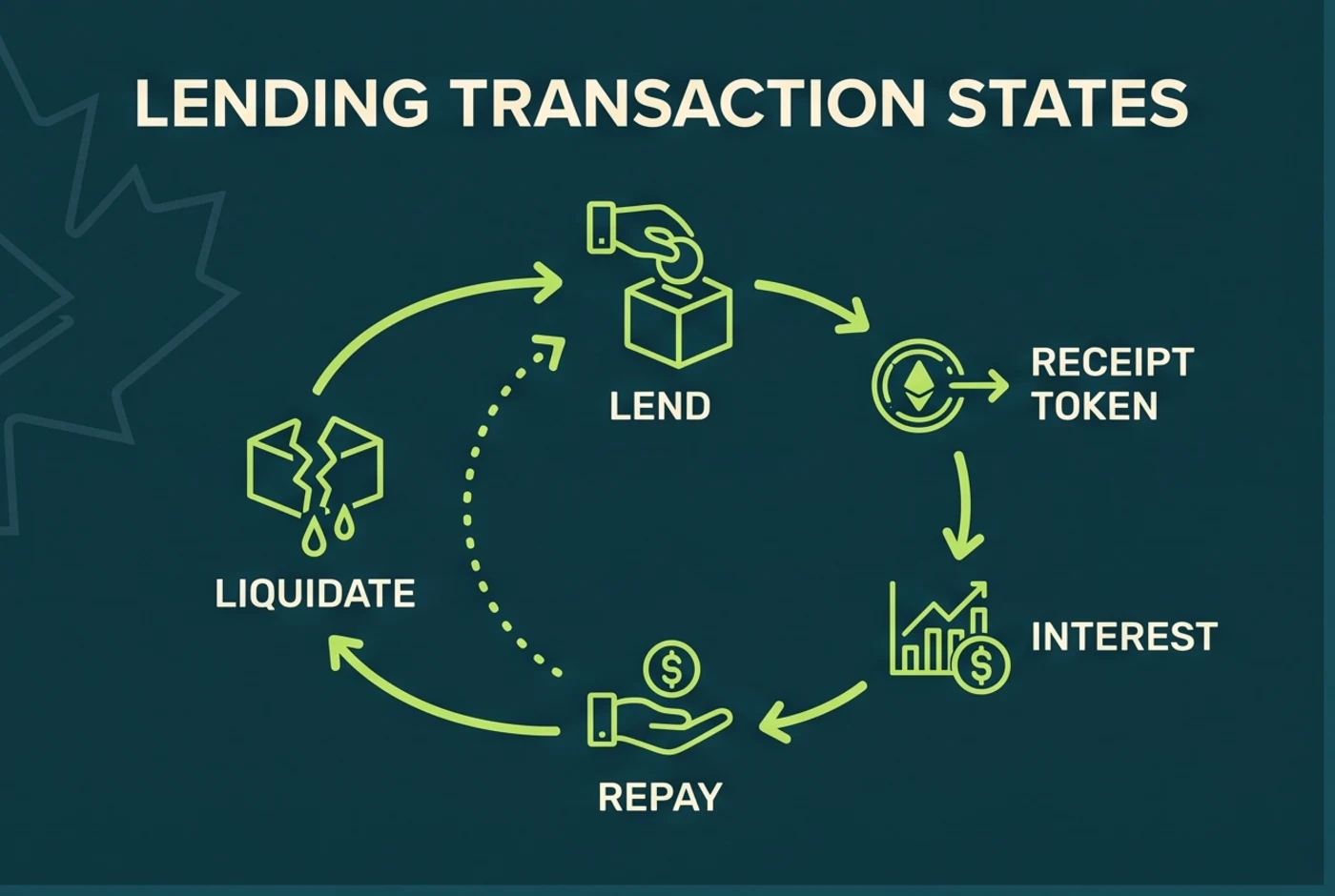
Lending assets and receiving a claim or receipt token
Lending can transfer control of tokens while leaving the user with a contractual claim. A receipt token may be transferable, redeemable, interest-bearing, or exposed to protocol losses. Determine whether the user retained ownership of the original property or acquired a new property. Universal CRA treatment for these arrangements was not verified.
Interest and protocol rewards
Separate interest-like returns from token price changes and incentive rewards. Record when an amount accrues, is credited, becomes claimable, or is received. The timing and category depend on the arrangement and the taxpayer's business or property-income facts.
Borrowing against collateral
Receiving loan proceeds is not generally the same as selling the collateral, but the complete arrangement matters. Track the borrowed asset, Canadian-dollar value, liability, collateral units, interest, repayment, and any receipt token. A later swap of borrowed tokens can be a separate disposition.
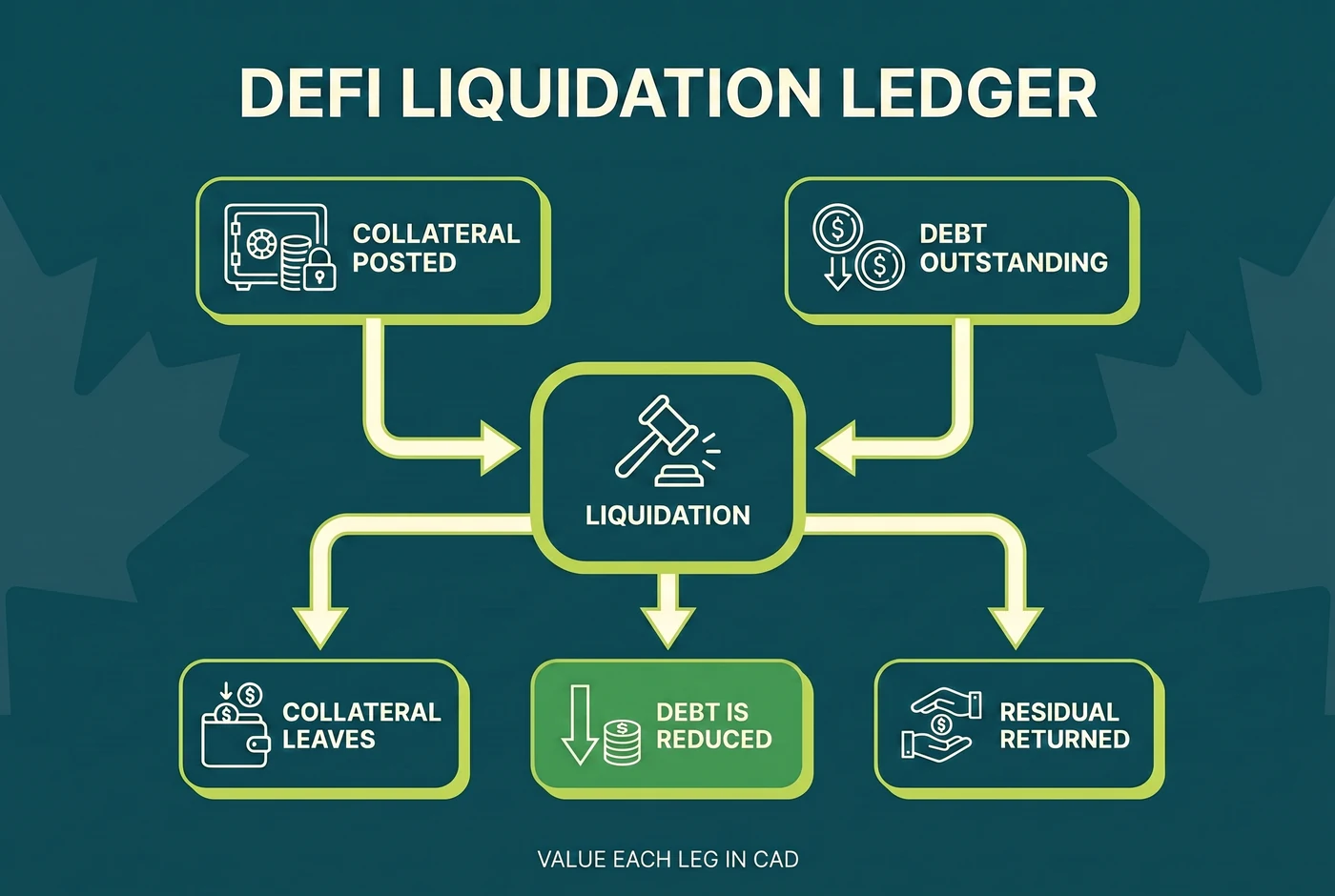
Liquidations
A liquidation can transfer collateral to satisfy debt and may create a disposition or business result. Preserve the protocol trigger, debt repaid, collateral removed, penalties, fees, market values, and any residual amount. Do not record only the wallet's net change.
Bad debt and protocol failure
A frozen claim, exploit, insolvency, or worthless receipt token does not automatically create a deductible loss on the incident date. Ownership, recovery rights, disposition or deemed-disposition rules, capital or business classification, and evidence of value all need professional review.
Are bridges and wallet transfers taxable?
Same-owner transfer
CRA says a movement between wallets owned by the same person is not a disposition by itself. Match the outgoing and incoming units, addresses, time, and hash. Preserve the fee separately so the receiving record does not appear to be an unexplained acquisition.
Cross-chain representation or token exchange
Some bridges lock an asset and issue a representation. Others burn, mint, swap through liquidity, or route across several contracts. Determine whether the destination token is the same property or a materially different right. The interface word "bridge" cannot answer that question.
Gas fees and failed transactions
Record gas in its original token and Canadian-dollar value. A fee can relate to acquisition, disposition, income production, a failed attempt, or a personal movement. Treatment depends on the purpose and transaction. A failed call can still consume gas without moving the intended asset.
Matching both sides of the movement
Use transaction hashes, bridge message IDs, source and destination addresses, units before and after, wrapped-token contracts, and timestamps. Matching prevents a false sale on the source chain and an unsupported zero-cost acquisition on the destination chain.
Once a bridge or protocol event is classified as a disposition, use the guide to calculate Canadian crypto gains using adjusted cost base for proceeds, pooled ACB, fees, and Canadian-dollar values.
How to value DeFi transactions in Canadian dollars
Timestamp and time-zone consistency
Preserve block time and the time zone used in the tax ledger. A token can move sharply during one day, and a UTC transaction may fall on a different local date. Use one documented policy rather than switching between daily close, minute price, and platform value without explanation.
Thin-liquidity tokens
A quoted price can be misleading when only a small pool supports it. Check actual execution, pool depth, route, spread, and whether the quantity could have traded near the displayed price. Document any reasonable adjustment instead of treating a dashboard number as exact.
Oracle, exchange, and market-price evidence
Save the source and the path to CAD. An oracle may reflect the protocol's accounting but not an executable market. An exchange price may relate to a different contract or chain. A market aggregator may average venues. Explain why the selected source fits the event.
Fees and slippage
Record fees in the token actually paid and convert them to CAD. Separate protocol fee, gas, slippage, and price movement. Avoid counting the same cost in both the disposed asset and acquired asset without a stated allocation.
Reproducible valuation notes
A reviewer should be able to reproduce the value from the timestamp, token contract, units, source, quote currency, conversion rate, and method. When a value is estimated, mark it as an estimate and show the sensitivity or range that matters to the result.
DeFi records the CRA may expect
CRA asks crypto users to keep units and asset type, date and time, Canadian-dollar value, transaction nature and counterparty, wallet addresses, balances, and costs. DeFi reconstruction needs those basics plus the protocol context that a wallet export often omits.
Wallet addresses and transaction hashes
List every owned address by chain and preserve hashes for deposits, withdrawals, claims, approvals, liquidations, and transfers. Address ownership notes help distinguish same-owner movements from payments or gifts.
Protocol, pool, vault, and contract identifiers
Record the application, chain, contract address, pool pair, vault, market, position ID, and relevant terms. A familiar token symbol can represent different contracts with different rights.
Token units before and after each event
Capture the gross inputs, gross outputs, fees, and balance changes. Net wallet movement can hide an LP token, debt token, accrued reward, or internal protocol transfer.
CAD fair market values
Store event-time CAD values with source and method. Maintain both the raw native-token amount and converted value so future reviewers can update a rate without losing the source transaction.
Rewards, gas, and fees
Separate reward credits, claims, auto-compounding, protocol charges, performance fees, and network gas. Their timing and purpose may differ even when the wallet shows one combined transaction.
Position snapshots and source exports
Keep beginning and ending balances, protocol statements, dashboards, APIs, subgraph exports, and archived terms. CRA generally requires crypto supporting records to be retained for at least six years.
Public-chain visibility and CRA data access are covered in our guide to how the CRA can obtain crypto data.
How COS reconciles complex DeFi activity
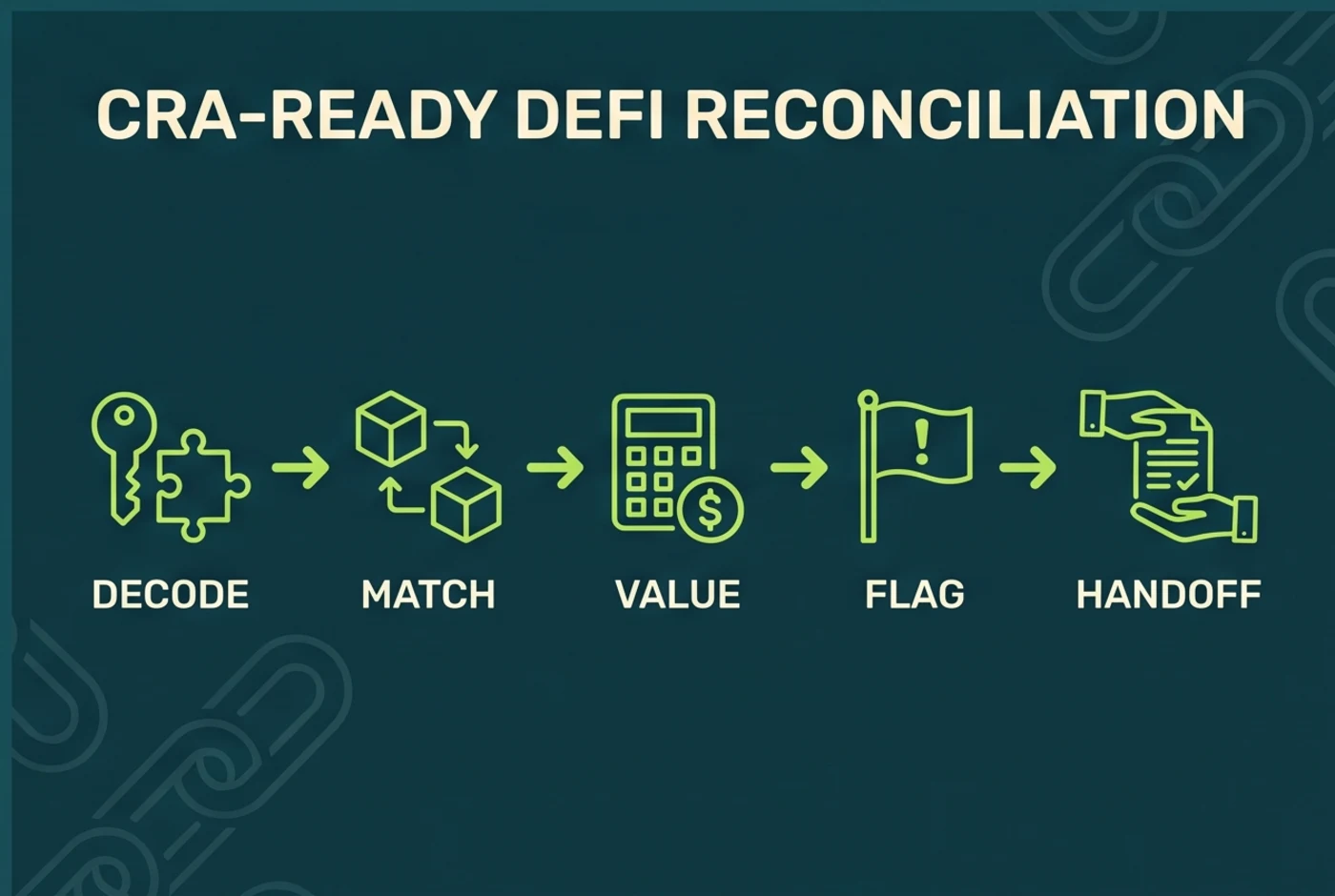
Decode on-chain events
We map wallets, contracts, pools, vaults, bridges, NFTs, and protocol interactions into readable events while preserving the original hashes and source data.
Match transfers and remove duplicates
Same-owner movements are linked across addresses and chains. Duplicate imports are removed without deleting their source trail. Missing bridge legs and unmatched transfers remain visible.
Create tax-event candidates
Events are tagged as potential income, dispositions, internal transfers, loans, collateral, fees, or unresolved property-right questions. These are evidence-backed candidates, not silent legal conclusions.
Calculate CAD values and ACB
We apply reproducible Canadian-dollar values, build asset-level ACB roll-forwards, and calculate candidate proceeds, gains, losses, and income schedules according to the accepted classification.
Flag unresolved legal and classification questions
Wrapping, LP, lending, receipt-token, staking-control, and business-versus-capital issues appear in an exception log with the affected transactions and amounts. Missing data is not silently assigned zero basis.
Hand CRA-ready figures to the client's Canadian tax professional
The client's Canadian tax professional reviews unresolved positions, accepts or adjusts the figures, and prepares the return. Count On Sheep provides reconciliation and workpapers. We do not file Canadian tax returns. See the full CRA-ready crypto reconciliation for your Canadian tax professional workflow.
Get CRA-ready figures for your Canadian tax professional
Count On Sheep reconciles complex digital-asset activity into CRA-ready figures and workpapers for your Canadian tax professional. We do not file Canadian tax returns.
Get help with Canadian DeFi reconciliationCanada crypto tax FAQs
Do you pay tax on DeFi in Canada?
DeFi activity can produce income, capital gains or losses, business results, or non-disposition transfers. The answer depends on the transaction and the rights exchanged. CRA has general crypto rules but has not published one universal treatment for every DeFi protocol event.
Are staking rewards taxable in Canada?
CRA says rewards from centralized-exchange staking are generally income when credited to the wallet. The Canadian-dollar amount included in income is relevant to the cost of those units for a later disposition. Validator, liquid-staking, restaking, and decentralized arrangements remain fact-specific.
Is wrapping ETH a taxable event in Canada?
The reviewed CRA sources do not provide a universal rule for token wrapping. If the wrap is a disposition into materially different property, a gain or loss may arise. If beneficial ownership and property rights continue, a non-disposition position may be supportable. The protocol rights need professional review.
Are liquidity-pool deposits taxable in Canada?
CRA-specific universal treatment was not verified. A deposit that relinquishes assets in exchange for an LP token may be analyzed as a disposition, while a structure preserving beneficial ownership may support another result. Document the rights, CAD values, token flows, and withdrawal mechanics.
Is moving crypto between my wallets taxable?
CRA says a transfer between wallets owned by the same person is not a disposition by itself. A bridge or wrapper may do more than move the same property, so match both sides and assess whether a different token or legal right was received.
Can the CRA track DeFi wallets?
Public chains can expose wallet, contract, pool, token, and transaction data. Exchange KYC, banking records, taxpayer disclosures, and legal information requests may help attribute activity to a person. The reviewed sources do not support a claim that CRA always identifies every wallet.