
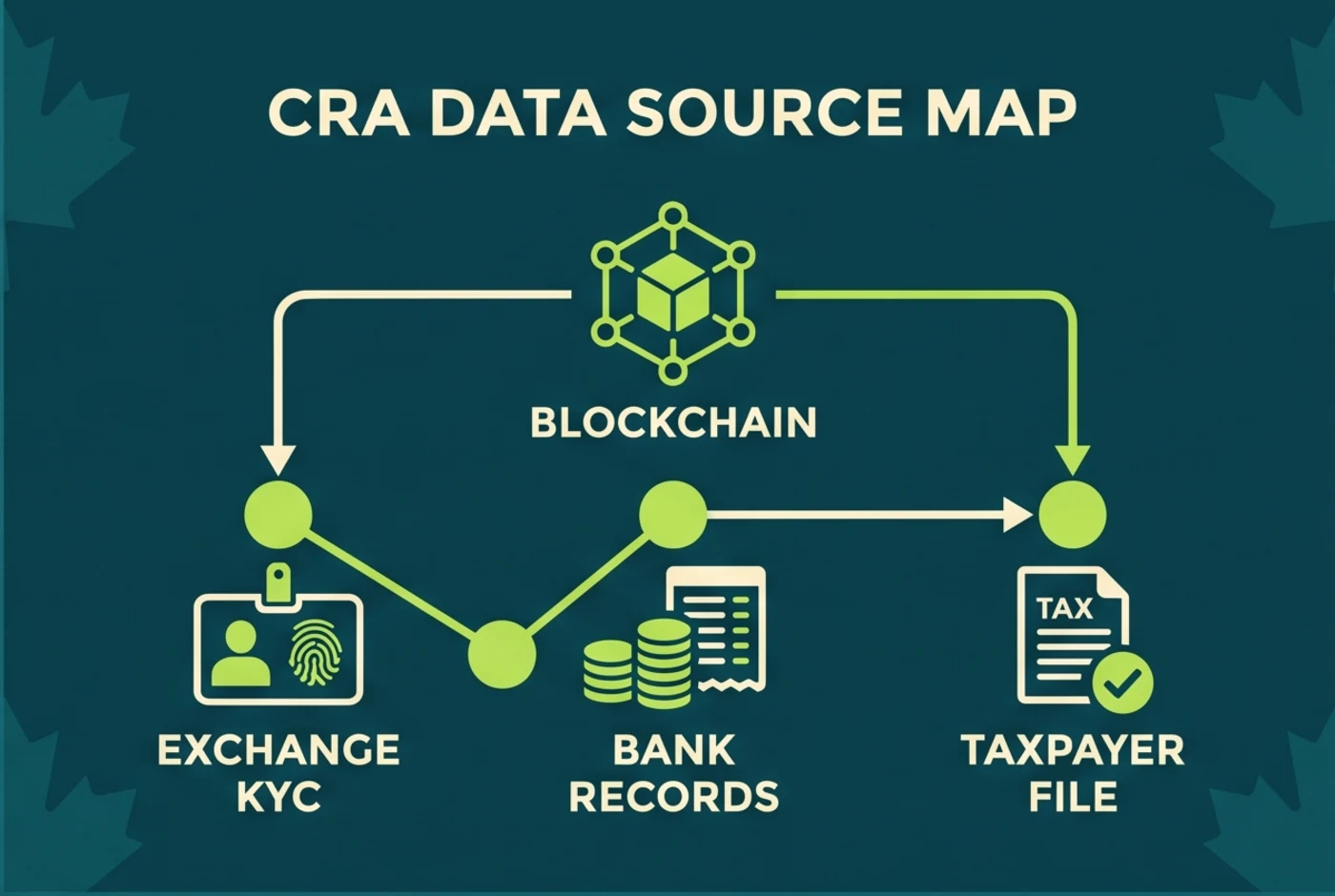
CRA can obtain crypto information through exchange records, legal information demands, KYC and banking links, taxpayer records, and audit work. The 2021 Coinsquare order is a documented example. Public blockchain activity may be visible, but that does not mean CRA automatically knows the owner of every wallet or receives every transaction from every exchange.
Last reviewed July 25, 2026. Critical rules checked against current CRA and Department of Finance sources.
How can the CRA find crypto activity?
Exchange account and KYC records
A centralized exchange can hold names, addresses, identity documents, account identifiers, device or access information, deposit and withdrawal histories, wallet addresses, and trade records. What is collected depends on the platform and period. Those records can connect activity that appears only as blockchain addresses to an identified customer.
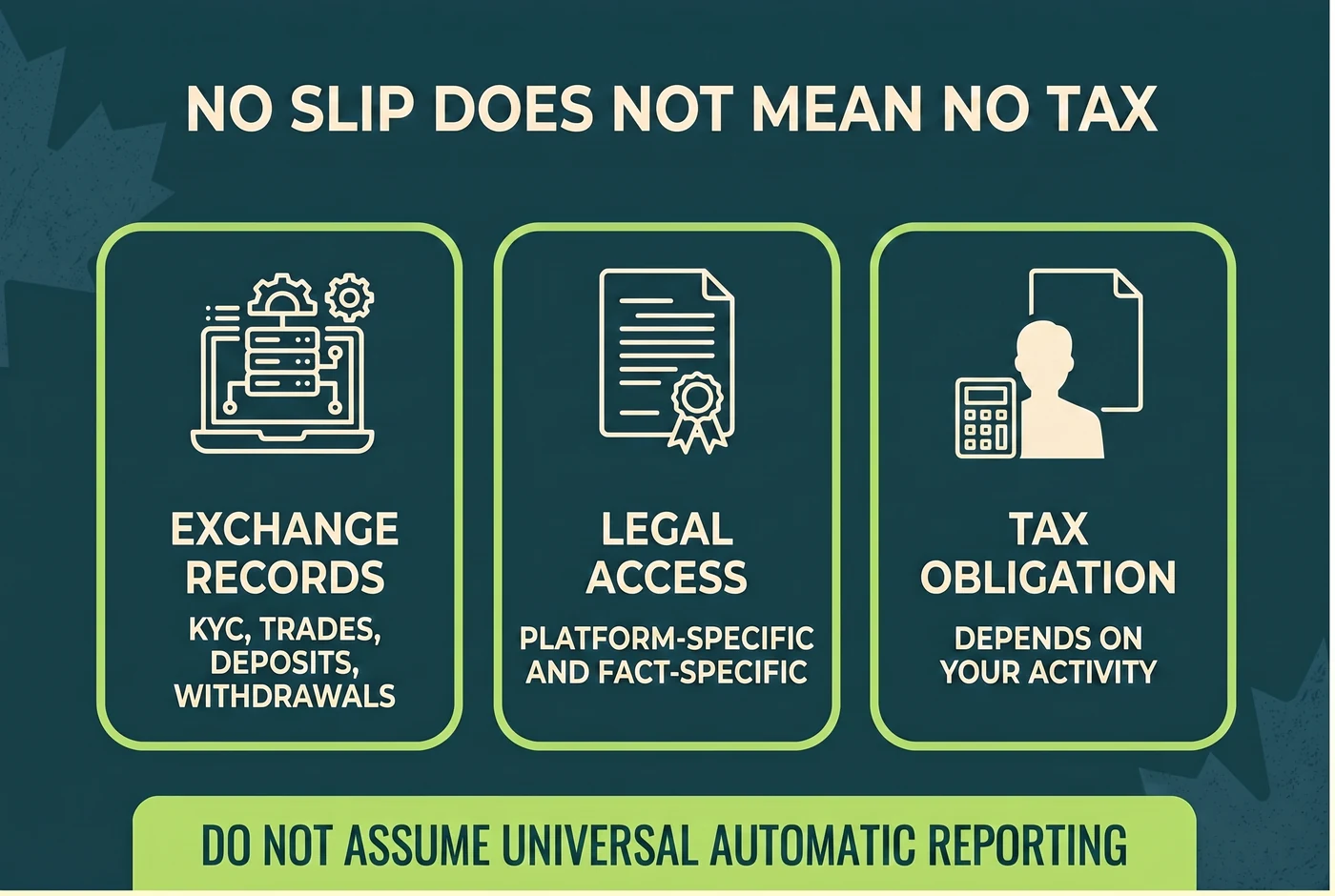
Access is not the same as automatic universal delivery. CRA may receive information through statutory reporting, an audit, a requirement for information, or another lawful process. The legal source and scope matter. The Coinsquare order shows how detailed an authorized demand can become.
Banking and fiat transfer records
Transfers between a bank and an exchange can link fiat activity to an account. A large bank deposit does not prove the taxable amount because some of the withdrawal may be recovered cost. It does help establish a timeline and can expose a mismatch between reported crypto activity and cash movement.
Public blockchain transaction data
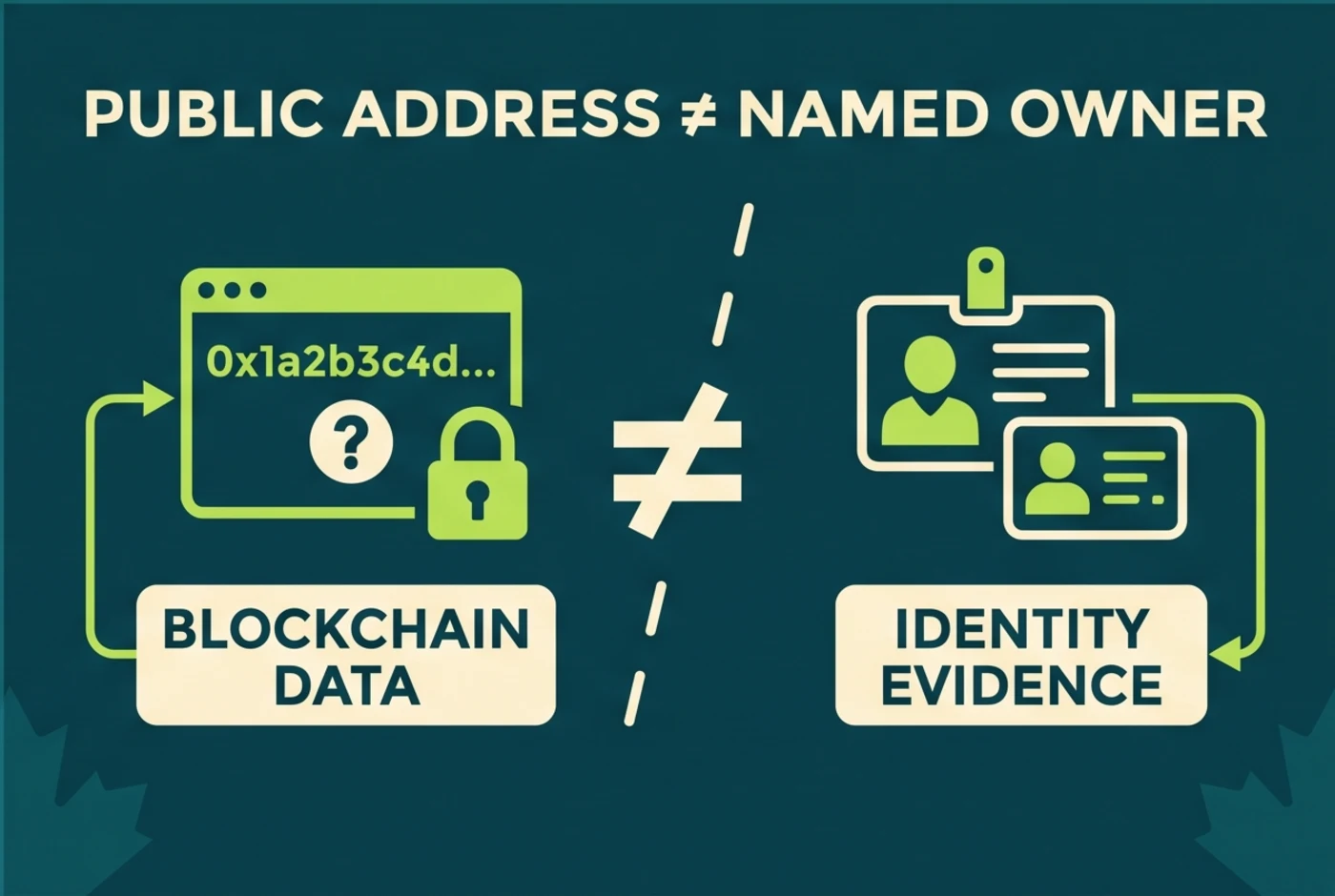
Public chains normally display addresses, transaction hashes, units, timestamps, contracts, and transfers. Analytics can follow those movements and identify clusters or interactions with known services. A public address does not contain a person's name by default, so attribution requires additional evidence.
Taxpayer books, records, and prior filings
CRA can ask the taxpayer for exchange exports, wallet lists, transaction histories, calculations, and supporting documents. Prior returns can show reported gains, business income, foreign-property positions, and opening balances. Inconsistencies between years can turn a simple question into a broader reconstruction.
Information-sharing and legal demands
CRA describes an unnamed persons requirement as a way to obtain information about an ascertainable group of unnamed taxpayers, subject to the statutory process and court authorization where applicable. Other audit and information-sharing powers can also apply. The correct conclusion is that CRA has lawful routes to obtain data, not that every route is used in every case.
| Data layer | What may be visible | Identity link or authority | Important limitation |
|---|---|---|---|
| Public blockchain | Addresses, hashes, units, time, contracts | Exchange link, taxpayer evidence, analytics | An address is not automatically a named person |
| Exchange records | KYC, trades, deposits, withdrawals, wallets | Reporting rule, audit, or lawful demand | Scope varies by platform, period, and process |
| Bank records | Fiat deposits, withdrawals, counterparties | Account ownership and audit records | Cash flow is not the same as taxable gain |
| Taxpayer records | Ledgers, ACB, income, transfer matching | Books-and-records request | Missing data may require reconstruction |
The Coinsquare court order: what actually happened
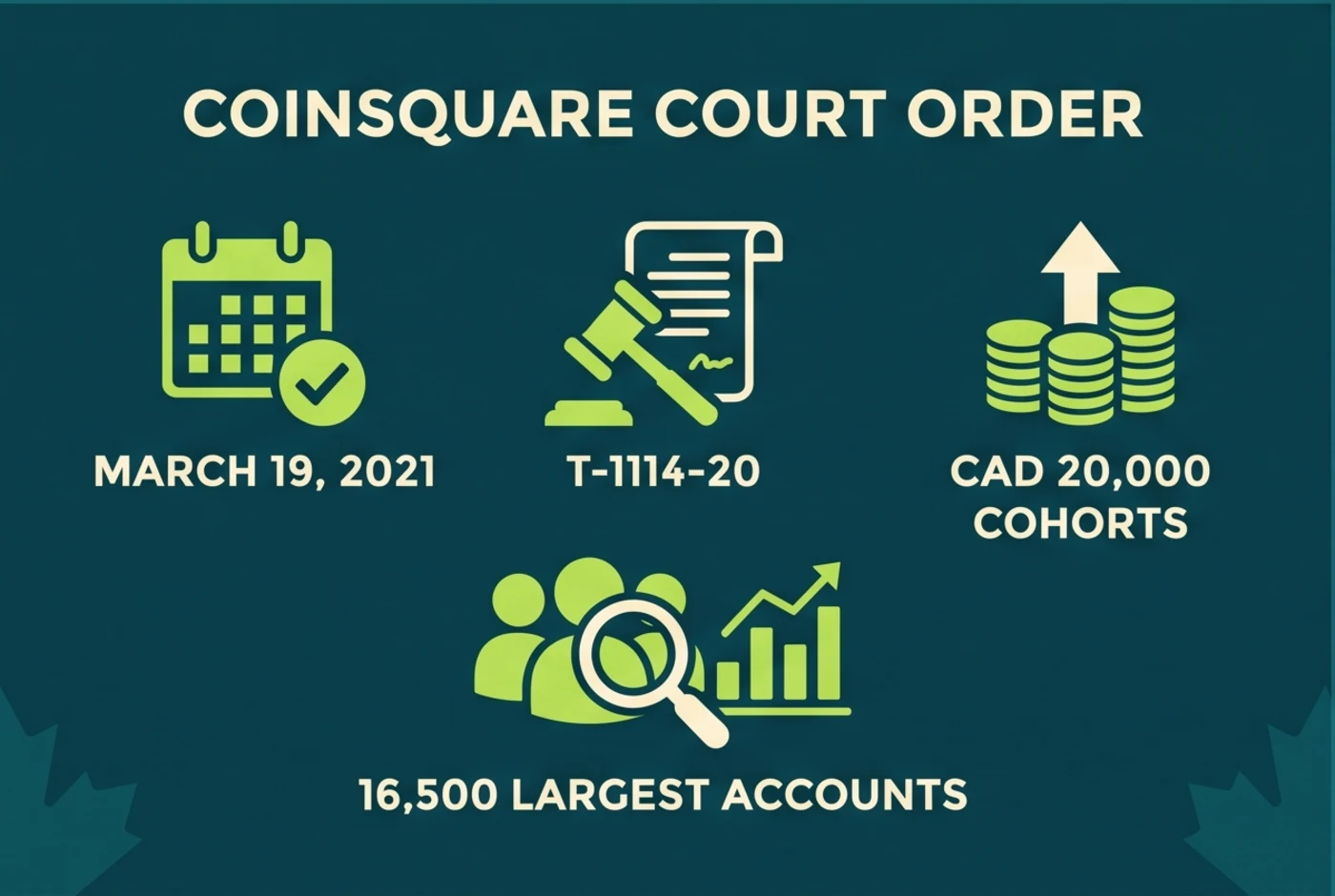
Federal Court docket T-1114-20
The documented proceeding is Federal Court docket T-1114-20. It concerned authorization for CRA to require information from Coinsquare Ltd. about groups of unnamed customers. Using the docket and signed order avoids turning a specific legal process into a vague claim that all Canadian exchanges report everything.
The March 19, 2021 authorization
On March 19, 2021, the Federal Court authorized the requirement under Income Tax Act subsection 231.2(3) and Excise Tax Act subsection 289(3). The order's date, statutory basis, customer cohorts, and requested fields matter because they show the actual scope of the precedent.
Which customer cohorts were covered
The order covered accounts valued at CAD 20,000 or more on December 31 in one or more years from 2014 through 2020. It also covered accounts with cumulative deposits of CAD 20,000 or more. Separate cohorts included the 16,500 largest accounts by Canadian-dollar trading volume and the 16,500 largest by number of trades, subject to overlap provisions in the order.
What data Coinsquare was required to provide
The required information included customer-account records, KYC information, deposit and withdrawal data, fiat and crypto transfers, wallet addresses, and trading details. Together, those fields can connect identity, off-chain account activity, and on-chain movement more effectively than any one data set.
What the case proves, and what it does not
The order proves that CRA can use a lawful process to compel detailed exchange records for defined cohorts. It does not prove that every exchange automatically sends CRA every transaction, that every Coinsquare customer was covered, or that CRA can identify every self-hosted wallet without additional evidence.
Do Coinbase, Crypto.com, and other exchanges report to CRA?
Why the answer depends on the platform and legal process
A responsible answer needs current platform documentation and the Canadian legal context. A service may have tax-slip duties, respond to CRA demands, participate in information exchange, or do several of these. Its practices can change. Without current official support, a categorical platform-by-platform statement is speculation.
What an exchange's KYC records can contain
KYC records can include legal name, address, date of birth, identification, and account details. Transaction systems can add trade, deposit, withdrawal, wallet, and fiat information. Those records can be useful even when the exchange has not issued the taxpayer a familiar income slip.
Why a tax obligation does not depend on receiving a slip
Canadian tax treatment follows the event and its classification. A swap can be a disposition without a slip. A staking reward can be income based on its facts even if the platform's annual document is incomplete. The taxpayer needs a complete ledger rather than a filing decision based only on what arrived in an inbox.
Avoiding unsupported platform-by-platform claims
Keep the question precise: What records did this platform collect? What document did it issue? Is there an applicable reporting rule? Was there a lawful request? The answers can differ by year and entity. If the evidence is unavailable, say that plainly and calculate from the taxpayer's records.
Can the CRA track a self-hosted wallet?
Public transactions versus personal identity
A self-hosted wallet does not make a public chain private. Its transactions may be visible indefinitely. What may be missing is the person's name. Attribution can be built from exchange interactions, bank records, address reuse, taxpayer disclosures, counterparties, and other evidence.
Exchange withdrawal and deposit links
A withdrawal from a verified exchange to a public address can support a connection between that address and the account holder. A later deposit back to an exchange can reinforce the path. It may not prove beneficial ownership throughout if funds were transferred to another person, so context and wallet records still matter.
Same-owner transfers and wallet mapping
Taxpayers should map every address they own and match both sides of each transfer. CRA says same-owner wallet movements are not dispositions by themselves. An unexplained outgoing transaction can instead look like a sale, gift, payment, or missing record.
Limits of the available evidence
The reviewed official sources do not support a blanket claim that CRA can always associate every self-hosted address with a named taxpayer. The opposite claim, that self-custody is invisible, is equally unsafe. Treat attribution as an evidence question and preserve the records that explain ownership.
When does CARF reporting begin in Canada?
The original 2026 proposal
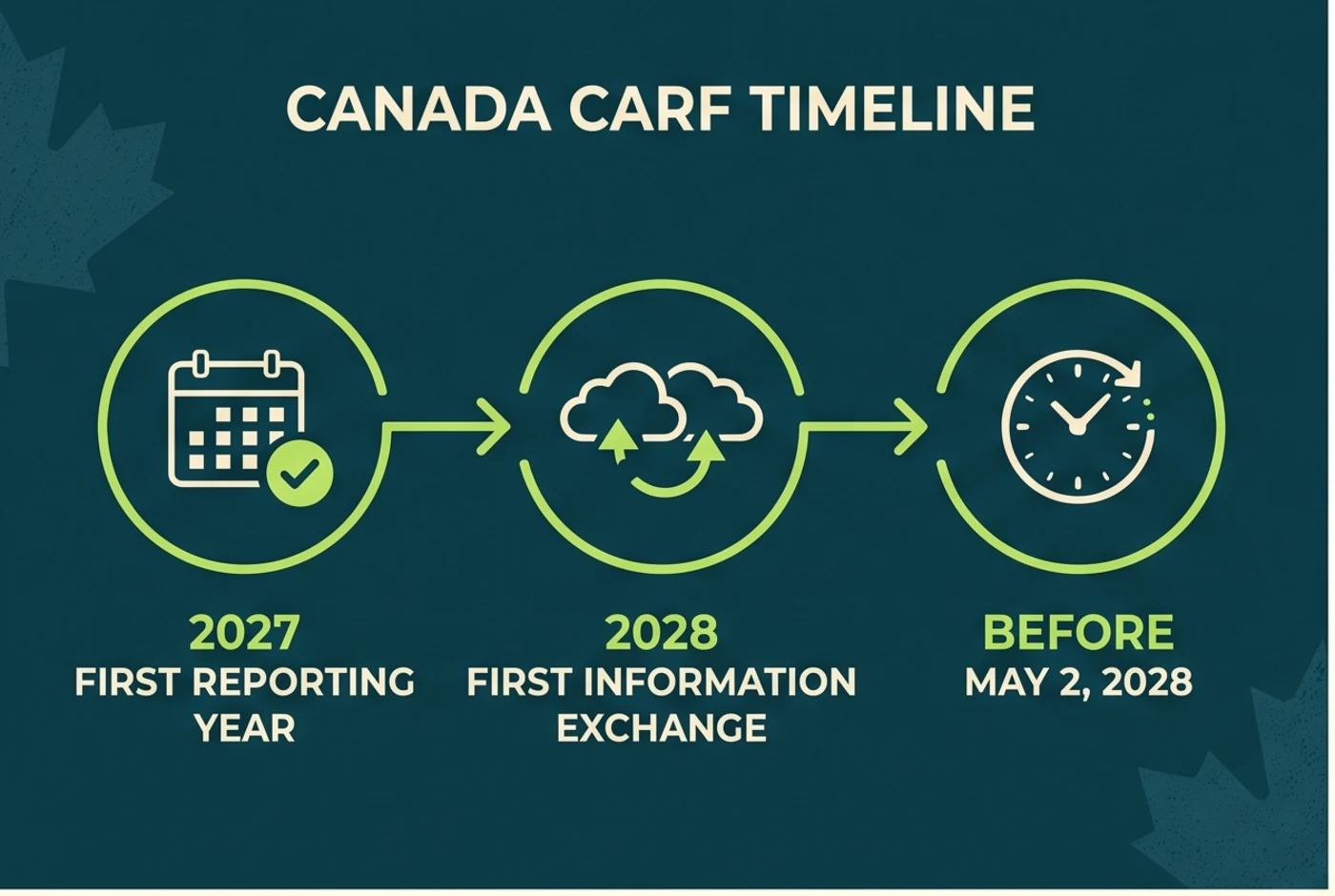
Budget 2024 originally proposed applying Canada's Crypto-Asset Reporting Framework rules to the 2026 calendar year, with reporting afterward. Articles that still use 2026 as the first covered year are now stale.
The current proposed January 1, 2027 application
The 2026 Spring Economic Update deferred the proposed application to January 1, 2027. Department of Finance explanatory notes say the amendments are intended to apply to 2027 and subsequent calendar years.
First provider return before May 2, 2028
The explanatory notes state that a reporting crypto-asset service provider's information return is due before May 2 of the following year. On the current proposal, the first reporting calendar year is 2027 and the first exchange of information follows in 2028, with the first provider return due before May 2, 2028.
Why the dates remain subject to enactment
CARF remains a proposed Canadian implementation that must be enacted and put into operation. The timeline should be checked immediately before publication or filing decisions. It is relevant to future data visibility, but it does not postpone a taxpayer's existing duty to report current transactions.
| Milestone | Current status |
|---|---|
| Budget 2024 proposal | Originally targeted the 2026 calendar year |
| Spring Economic Update 2026 | Deferred proposed application to January 1, 2027 |
| First reporting calendar year | 2027 under the current proposal |
| First provider return and exchange timing | Return before May 2, 2028; first exchange of information in 2028 |
| Legal status | Subject to enactment and implementation |
What can trigger a crypto review or audit?
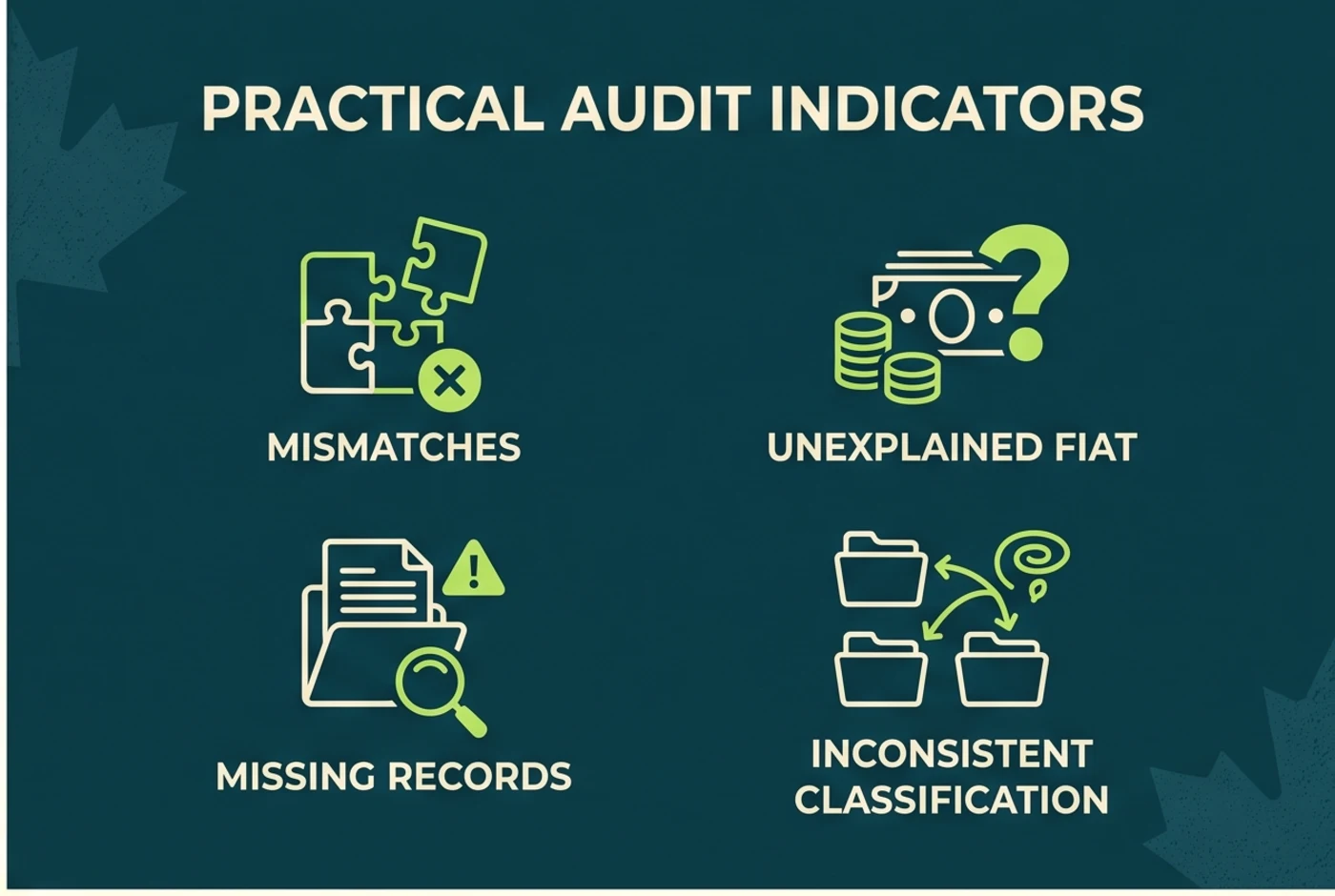
CRA does not publish a complete crypto-audit scoring formula. The items below are practical risk indicators, not an official exhaustive trigger list. A single item does not prove non-compliance.
Mismatch between records and reported income
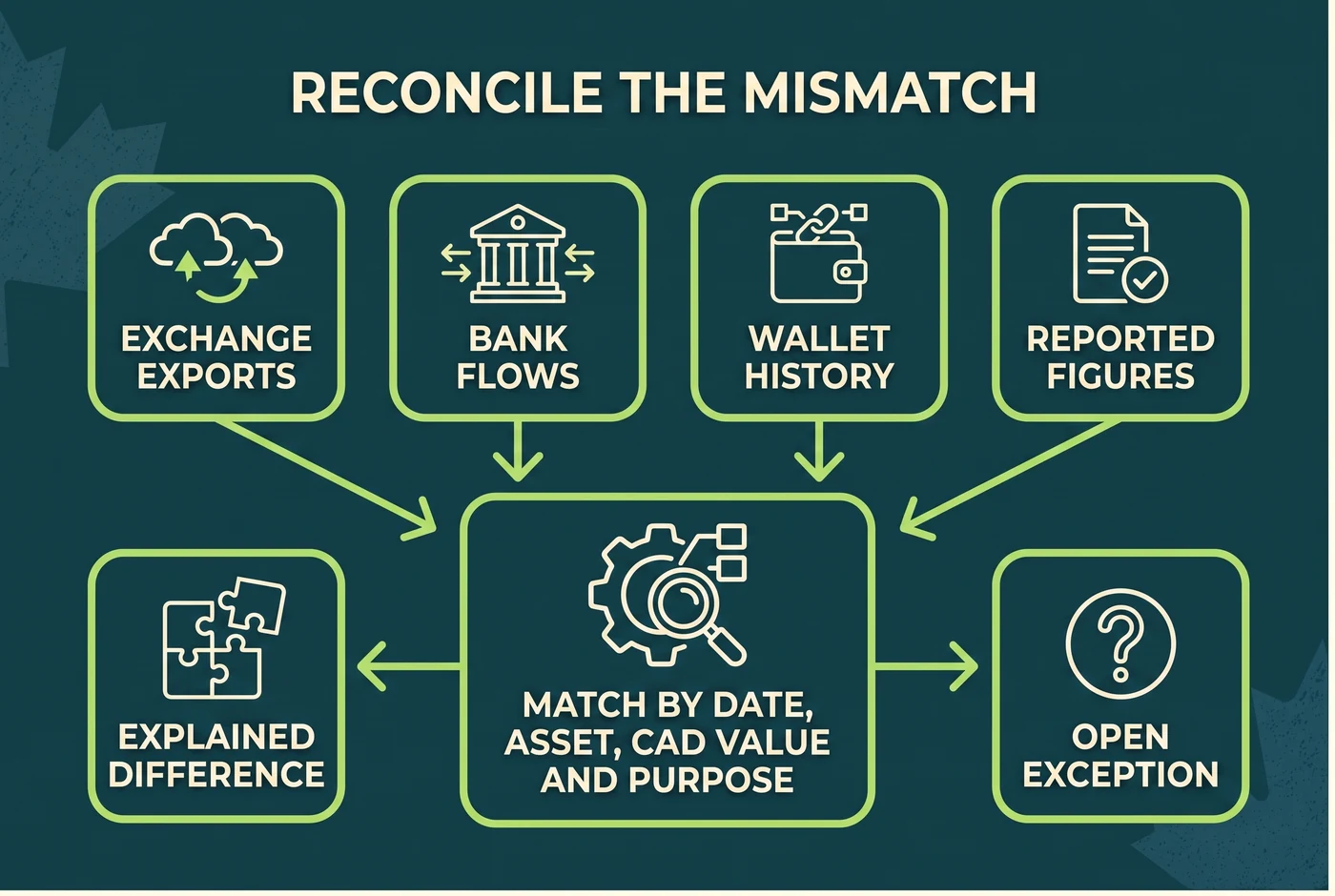
Exchange, bank, or third-party information may not align with reported proceeds or income. A mismatch can also be innocent, such as a gross-flow number compared with net gains, but it needs records that explain the difference.
Large or unexplained fiat flows
Bank deposits or exchange withdrawals that do not connect to reported sales, business revenue, loans, or transfers can raise questions. Reconciliation should trace the source and separate recovered principal from gain or income.
Incomplete business or capital schedules
Reporting only cash sales while omitting swaps, spending, gifts, rewards, or losses can leave an incomplete picture. Capital and business schedules should also connect consistently with the chosen classification.
Third-party information
Exchange data, legal requirements, information-sharing, and other records can lead to questions about an identifiable taxpayer. The Coinsquare order is one documented example of group information being obtained.
Missing records and inconsistent classifications
Unsupported basis, unexplained transfers, or switching between capital and business treatment without a documented change in facts can weaken the file. Our guide to capital gains vs business income for crypto explains the evidence CRA identifies.
What records should you have if CRA asks?
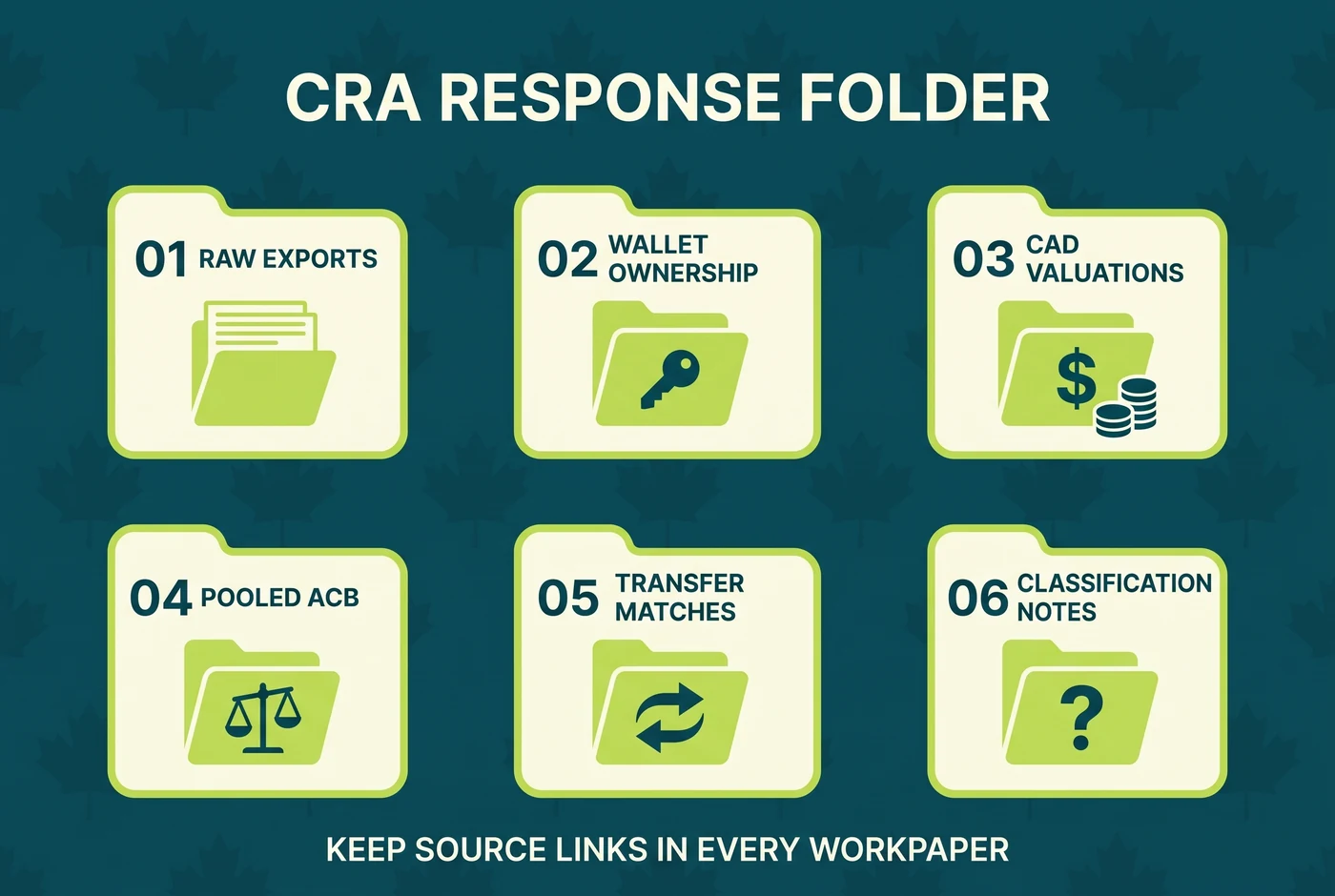
Exchange exports
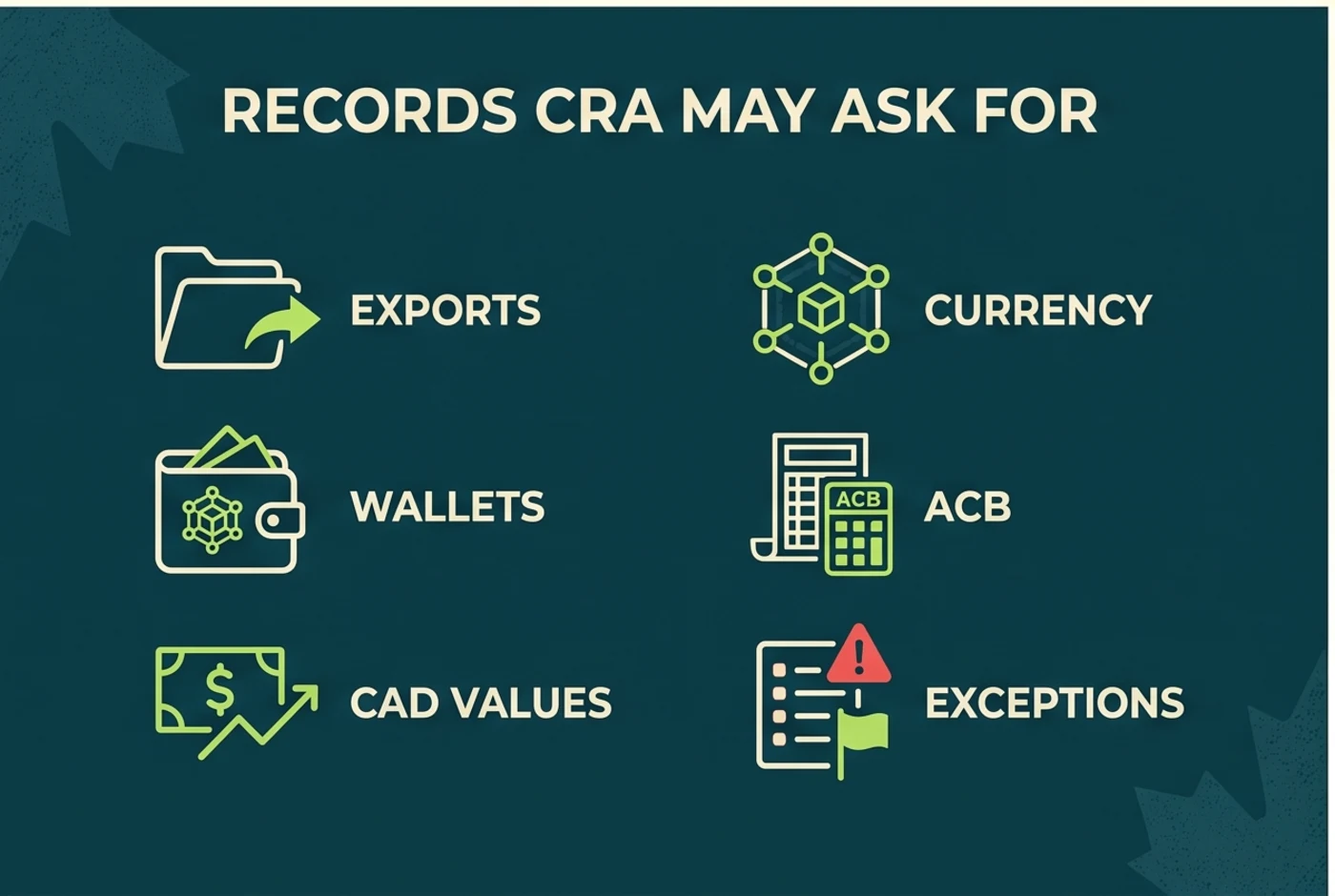
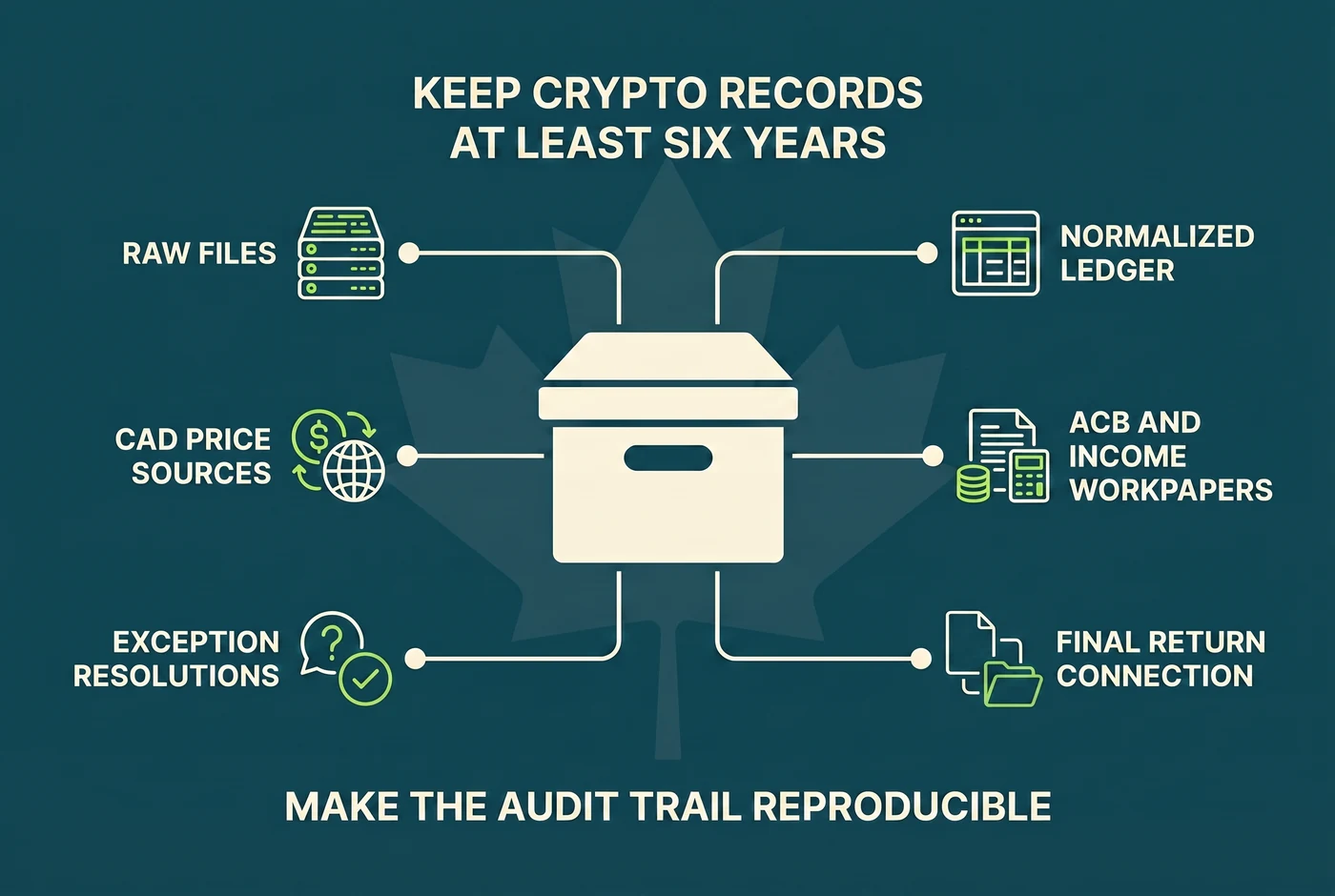
Preserve raw trade, deposit, withdrawal, reward, fee, and account statements. Keep the original files as well as any normalized ledger so the work can be traced back to source.
Wallet addresses and transaction hashes
Maintain a wallet ownership list, addresses by chain, hashes, timestamps, and notes for gifts, payments, lost access, or transfers to another person. Match the sending and receiving sides of same-owner movements.
CAD valuations and rate sources
Record the Canadian-dollar value, price source, timestamp, time zone, and method for thinly traded assets. A reproducible valuation is stronger than a number copied into a worksheet without its source.
ACB workpapers
Identical property generally uses pooled adjusted cost base. Workpapers should show opening units and cost, acquisitions, fees, dispositions, allocated cost, and closing pool by asset.
Transfer matching and missing-data notes
Keep an exception log for unmatched transfers, missing platforms, unsupported basis, duplicate rows, and estimated values. Silence is not a control. A visible exception lets the Canadian tax professional decide what evidence or treatment is needed.
Business-versus-capital evidence
Preserve intent, holding periods, transaction pattern, research and time spent, financing, automation, accounting method, and prior-year treatment. Classification can change the amount included in income.
What if past crypto activity was not reported?
Do not wait for an audit notice
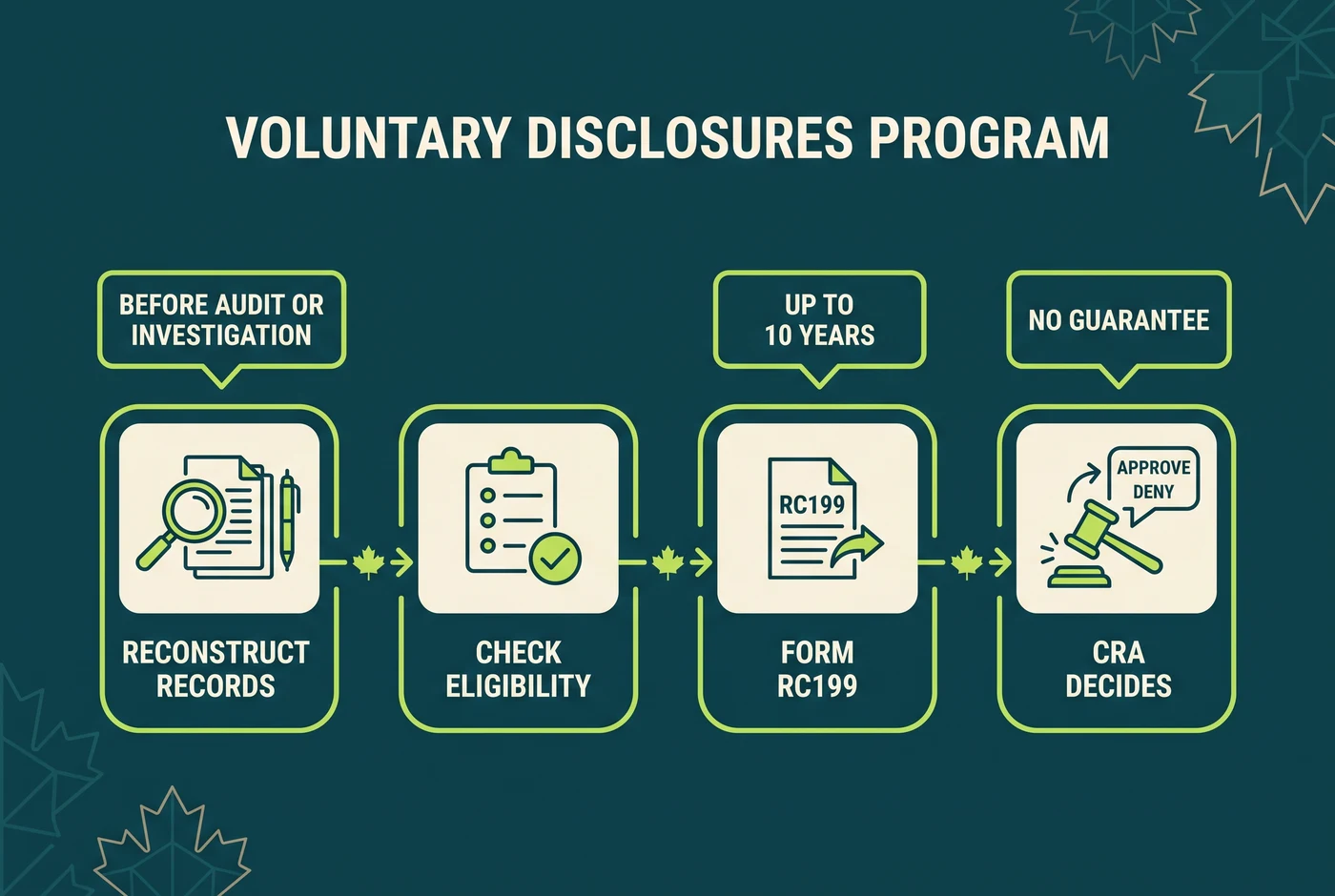
The current VDP generally requires an application before an audit or investigation begins. A person who discovers omissions should preserve the source data, stop deleting or editing records, and speak with a Canadian tax professional promptly.
Current Voluntary Disclosures Program eligibility
CRA's revised VDP took effect October 1, 2025. Its published eligibility page lists five general conditions: the application precedes an audit or investigation, is complete, involves potential penalties or interest, includes information at least one year or one reporting period overdue, and includes payment of estimated tax or a request for a payment arrangement.
Unprompted and prompted relief
CRA distinguishes unprompted and prompted applications. Published relief may include full penalty relief and 75% interest relief for qualifying unprompted applications, and up to full penalty relief and 25% interest relief for qualifying prompted applications. The program also describes protection from criminal referral for disclosed information, subject to its terms.
Ten-year relief limit and RC199
Relief is generally limited to the preceding 10 calendar years. Applications use Form RC199. The exact years, estimated tax, completeness, and timing need professional review before submission.
Why acceptance and relief cannot be guaranteed
CRA assesses each application on its facts. Meeting a preliminary checklist does not guarantee acceptance or a fixed amount of relief. A reconstructed ledger and exception file help the Canadian tax professional assess what can be disclosed accurately.
A belief that an amount was too small to matter does not create a reporting floor. See when crypto can result in no tax payable for the difference between an event, reporting, and a final balance.
Reconcile the records before your tax professional responds
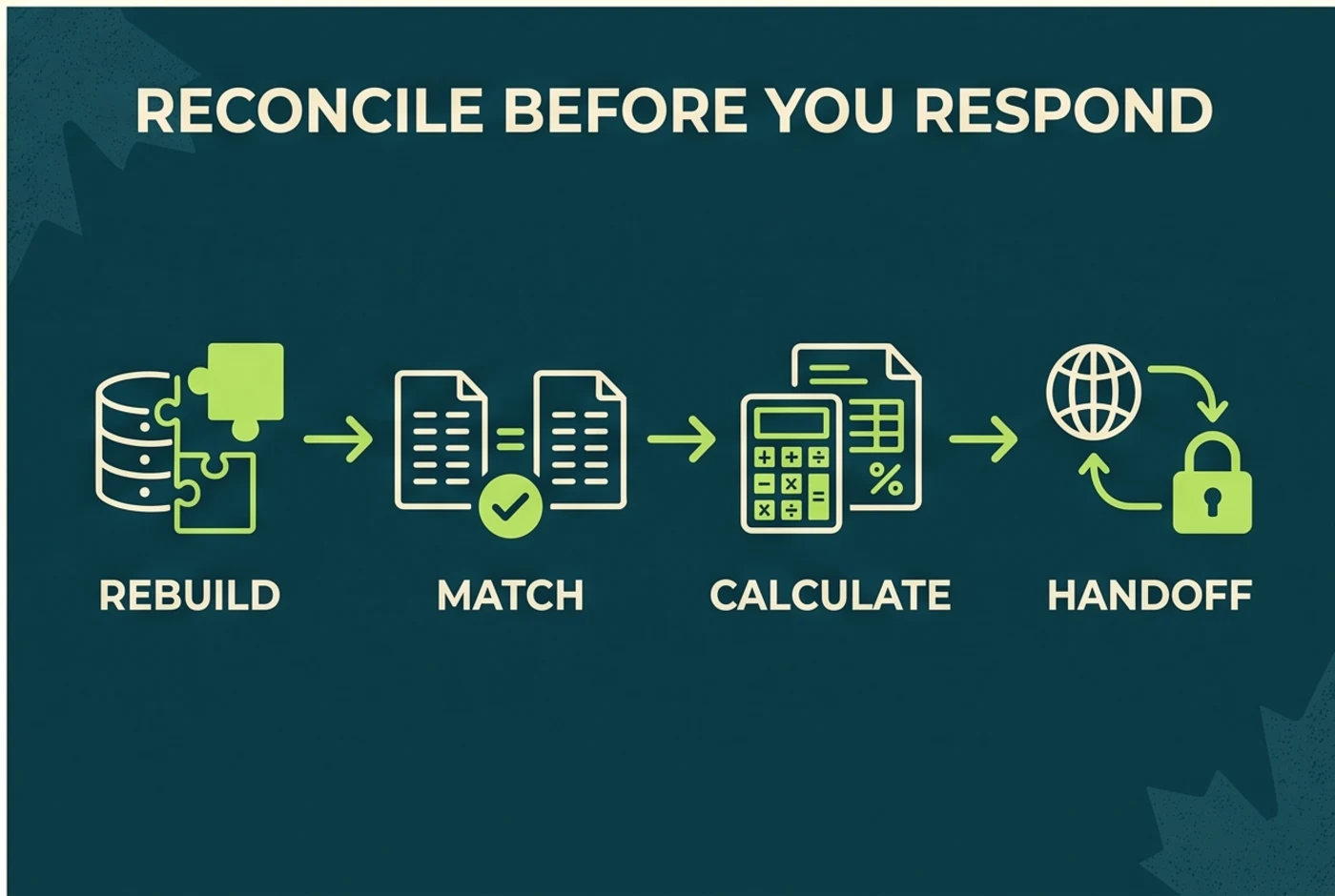
Rebuild transaction history
Inventory every exchange, wallet, chain, protocol, fiat account, and year. Preserve raw files. Normalize timestamps and token symbols while keeping the source archive intact.
Separate transfers from dispositions
Match same-owner movements by address, quantity, time, and transaction hash. Then investigate unmatched flows as possible sales, gifts, payments, missing legs, or unsupported acquisitions.
Calculate income and gains
Value each relevant event in Canadian dollars, build pooled ACB, calculate proceeds and outlays, and create separate income schedules. Apply capital or business treatment only after the facts are reviewed.
Prepare an exception log
List missing basis, closed platforms, uncertain wallet ownership, disputed classifications, thin-liquidity valuations, and DeFi rights that require professional judgment. Explain the amount affected by each issue.
Deliver CRA-ready figures to the client's Canadian tax professional
Count On Sheep prepares the reconciled ledger, calculations, workpapers, and exception file. The client's Canadian tax professional decides tax positions, responds to CRA, and prepares or files the return. For the full handoff, see our page on CRA-ready crypto reconciliation for your Canadian tax professional.
Get CRA-ready figures for your Canadian tax professional
Count On Sheep reconciles complex digital-asset activity into CRA-ready figures and workpapers for your Canadian tax professional. We do not file Canadian tax returns.
Talk to our Canadian crypto tax teamCanada crypto tax FAQs
Can the CRA track cryptocurrency wallets?
Public blockchains expose transaction data, while exchange KYC, banking, and taxpayer records can help attribute addresses to a person. That does not mean CRA automatically knows the owner of every self-hosted wallet. The available evidence supports a narrower, fact-specific answer.
Does Coinbase report crypto transactions to CRA?
Do not assume a universal platform rule. An exchange may hold detailed KYC and transaction records and may have to respond to lawful Canadian demands. A taxpayer must report applicable activity whether or not a named platform issues a slip or automatically sends a particular record.
What happens if I do not report crypto in Canada?
CRA can reassess tax and apply interest and penalties. Serious cases can involve further enforcement. A person correcting past activity should reconstruct the records and speak with a Canadian tax professional before an audit or investigation begins. VDP acceptance is not guaranteed.
Will the CRA audit my crypto?
No one can predict an individual audit from a short checklist. Mismatches, unexplained fiat flows, third-party information, incomplete schedules, missing records, and inconsistent classification are practical risk indicators. They are not an official exhaustive trigger list.
Is cryptocurrency traceable for tax purposes?
Many blockchain transactions are publicly visible and can be followed between addresses. Attribution is a separate step that may use exchange accounts, KYC, banking, taxpayer records, and legal information requests. Visibility does not always equal proven personal ownership.
Can I use the Voluntary Disclosures Program for unreported crypto?
Crypto omissions may qualify if the current VDP conditions are met, but CRA assesses applications case by case. The application generally must precede an audit or investigation, be complete, involve overdue information and potential penalties or interest, and address estimated tax. Use Form RC199 with professional advice.