
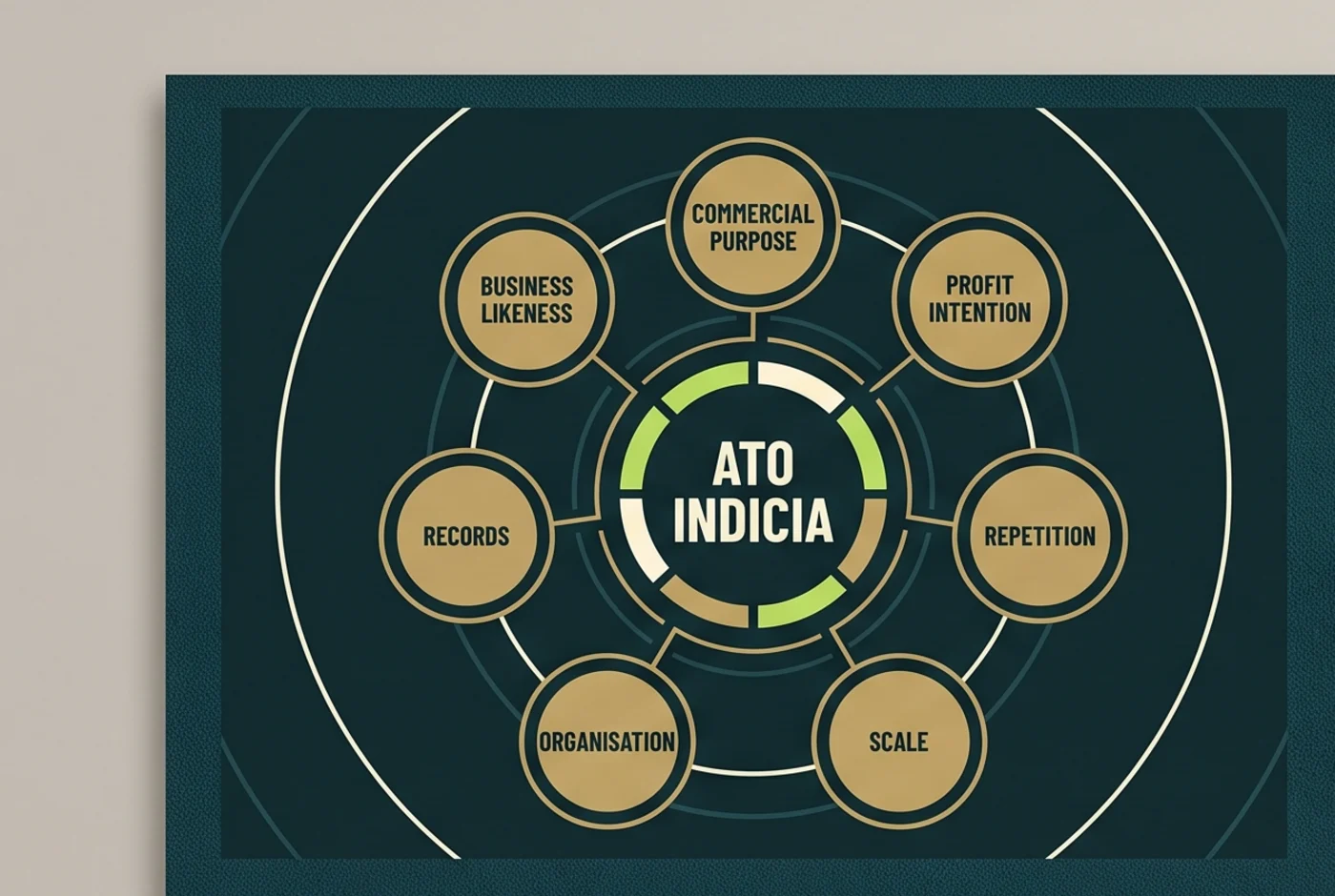
An Australian crypto investor generally holds crypto as a CGT asset. A person carrying on a crypto-trading business generally treats crypto as trading stock and returns ordinary business income. No transaction count, holding period or volume automatically decides the answer. The ATO looks at the whole activity, including commercial purpose, profit intention, repetition, organisation, records, scale and whether it resembles an ordinary business.
Last reviewed 27 July 2026. Critical rules checked against current ATO, Treasury and legislation.gov.au sources.
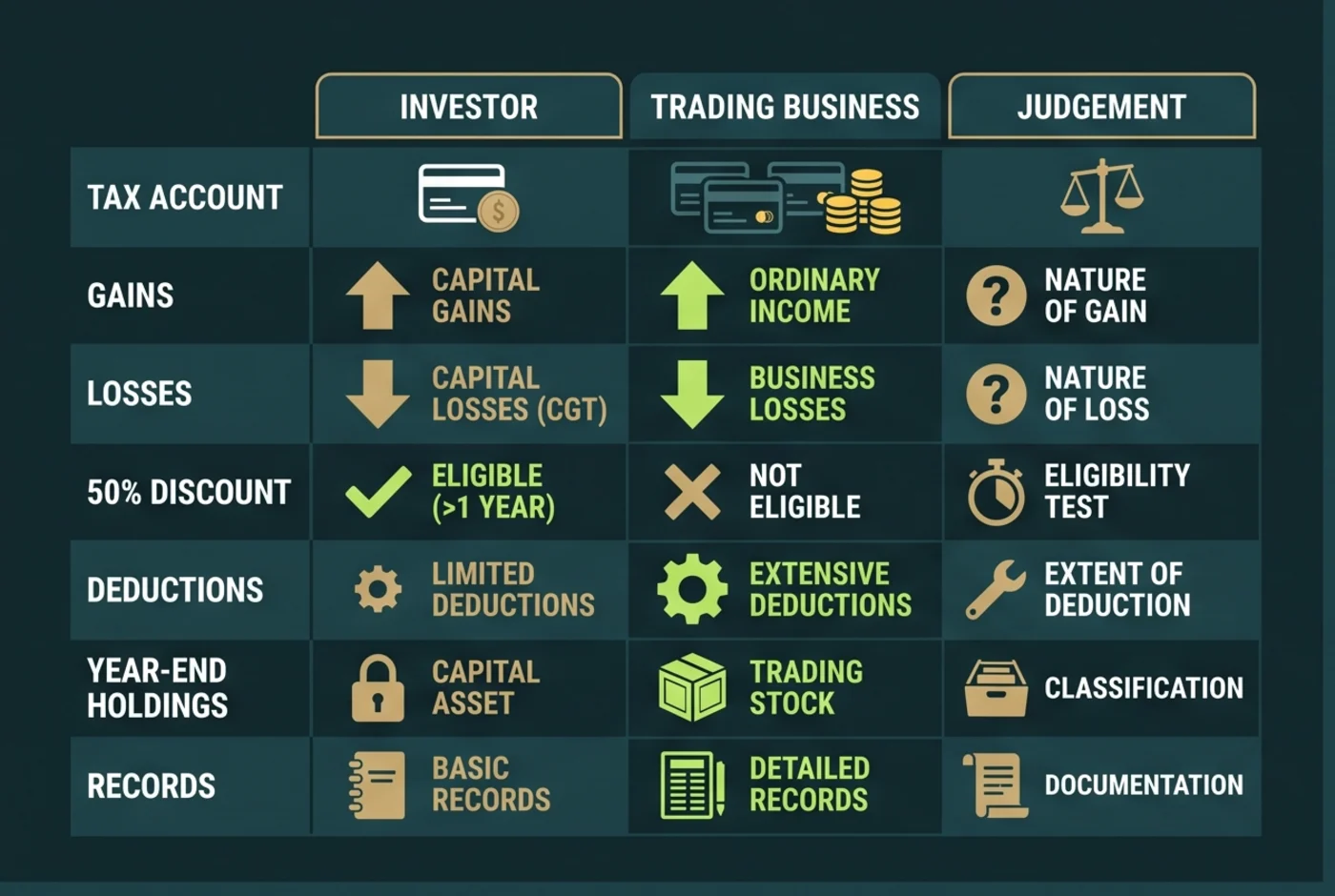
Investor and trading business at a glance
| Issue | Investor | Trading business | Adviser judgement needed |
|---|---|---|---|
| Core tax account | CGT asset | Trading stock and ordinary income | Does the whole activity amount to a business? |
| Gains or profit | Net capital gain enters assessable income | Net business profit enters assessable income | Which transactions belong to which activity? |
| Losses | Capital losses offset capital gains | Revenue losses may be deductible | Do non-commercial loss rules apply? |
| 50% discount | May be available after at least 12 months | Not available for trading-stock profit | Are all Division 115 conditions met? |
| Deductions | Cost-base and CGT rules apply | Ordinary business deduction rules may apply | Is the expense sufficiently connected and allowable? |
| Year-end holdings | Parcel-level CGT records | Opening and closing trading stock | Has any holding changed purpose? |
| Records | Cost base, proceeds and ownership period | Books, stock, strategy, revenue and expenses | Is separate investment and business treatment supported? |
Why investor or trader status matters
CGT account versus ordinary income
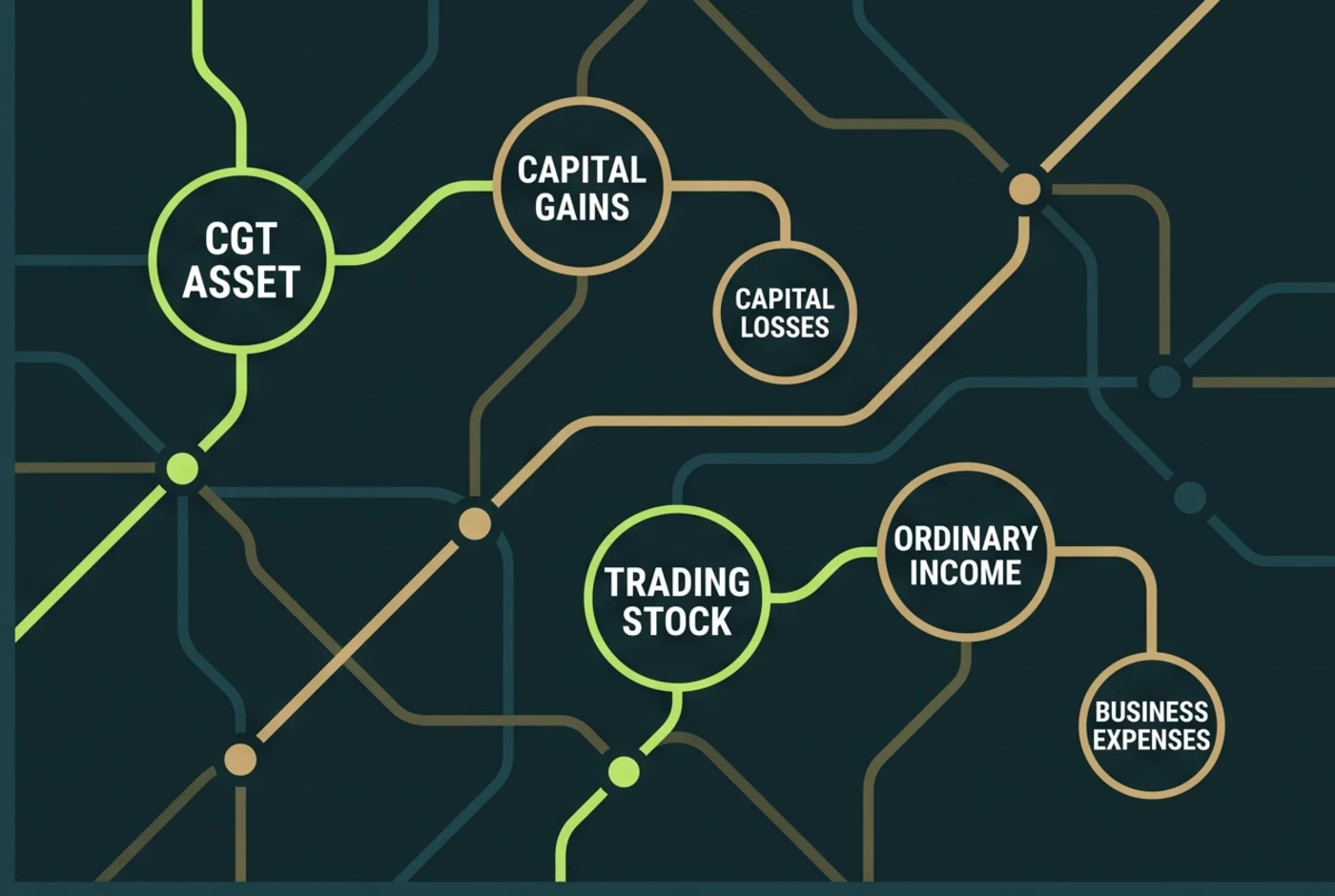
An investor generally calculates capital gains and losses when a CGT event happens to a crypto asset. A trading business generally records sales of trading stock as ordinary income and deals with purchases through business and stock rules. Both can contribute to taxable income, but the route to the number is different. Misclassification can affect almost every schedule that follows.
Capital losses versus revenue losses
An investor’s capital losses can reduce capital gains but cannot ordinarily reduce salary, staking income or other ordinary income. A genuine business may have revenue losses, but general deduction and non-commercial loss rules can restrict their current use. A loss should not be labelled business merely because that treatment appears more useful.
Access to the 50% CGT discount
An eligible Australian resident individual may reduce an eligible capital gain by 50% after holding the CGT asset for at least 12 months and satisfying the other conditions. Companies do not receive the discount. Profit on trading stock is ordinary business income and does not receive the CGT discount.
Trading-stock consequences
A trading business needs records of opening stock, acquisitions, sales and closing stock. The year-end valuation rules can affect taxable profit even where some tokens remain unsold. An investor instead maintains parcel cost bases and generally waits for a CGT event before recognising a capital gain or loss.
Business deductions and non-commercial loss rules
A business expense is not automatically deductible because it relates to crypto. It must satisfy the ordinary deduction rules and any specific limitations. Private or capital elements may be excluded or treated differently. Where an individual business makes a loss, the non-commercial loss rules can defer use unless an exception or test applies.
How does the ATO decide?
Commercial purpose and profit intention
A business usually has a commercial character and an intention to profit through organised activity. Preserve what the taxpayer intended when the strategy began and when major assets were acquired. A desire for assets to rise in value exists in many investments, so profit intention alone does not prove a trading business.
Repetition, regularity and turnover
Repeated transactions and regular turnover can support a business conclusion. Measure actual activity by month, asset, strategy and account. Distinguish automated executions, portfolio rebalances, staking claims and internal transfers. A raw transaction count can exaggerate activity where one economic action creates many technical rows.
Scale and capital committed
The amount of capital, transaction values, turnover and growth of the activity can be relevant. Large values do not automatically create a business, and a smaller activity can still be commercial. Compare scale with the person’s resources, stated plan and operating method.
Planned, organised and businesslike activity
A documented strategy, repeatable operating routine, risk controls, budgets, performance reviews and systematic execution can resemble business conduct. Ad hoc decisions without an operating structure can point toward investment, although imperfect administration does not prevent a genuine business. Test the documents against what actually happened.
Records, business plan and accounting method
Business books, a plan, management accounts, stock records and a consistent revenue method can support the classification. Records made before the tax result is known are more persuasive than a retrospective label. An investor should still keep excellent records, so record quality alone is not decisive.
Similarity to an ordinary business of that kind
Ask whether the activity resembles how a crypto-trading operation would normally be conducted. Relevant features can include strategy research, systematic entry and exit rules, market access, financing, controls, monitoring and accounting. The comparison should fit the specific kind of activity rather than a generic picture of any business.
No single factor is decisive
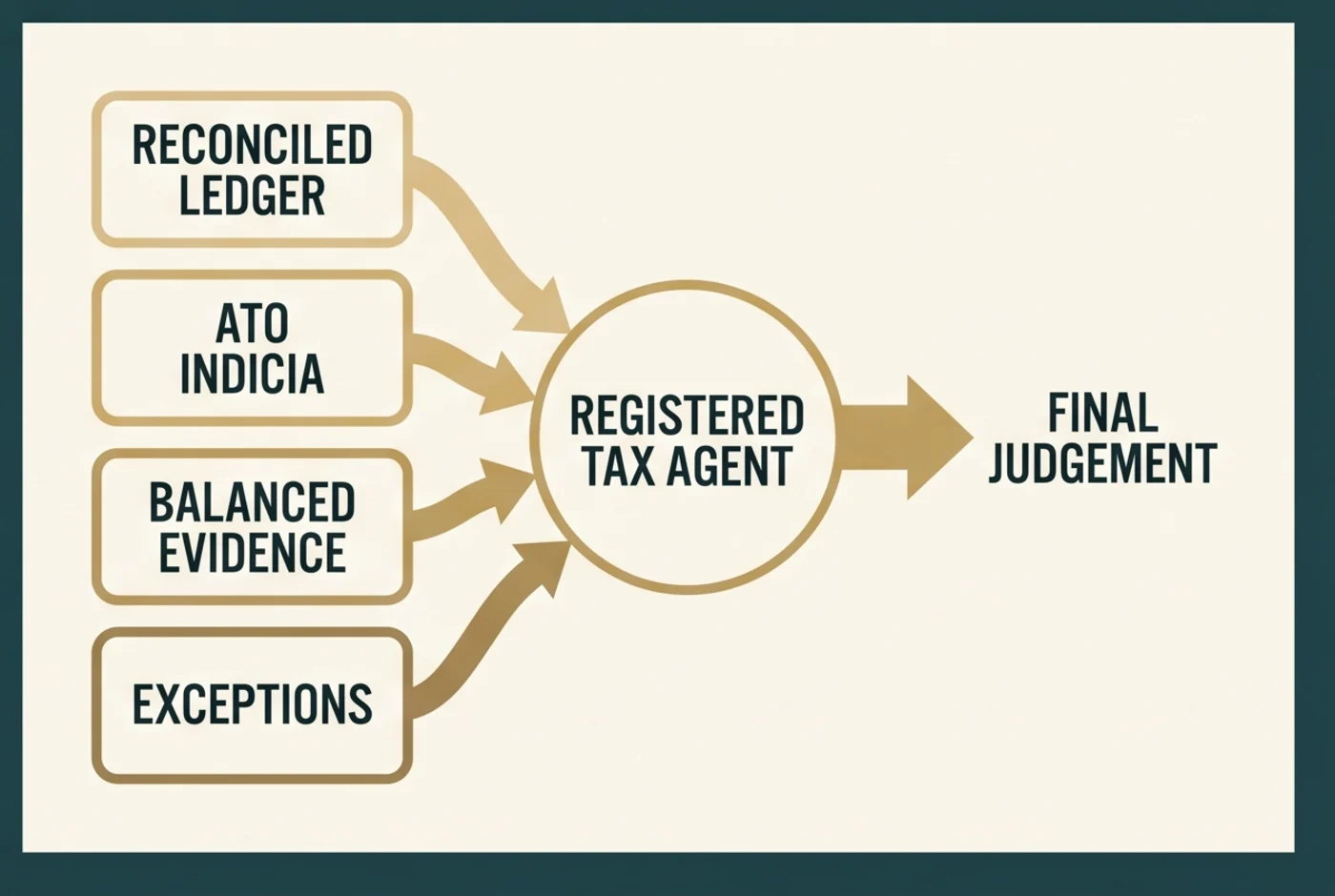
The indicia interact. High frequency paired with a long-term portfolio plan may point differently from high frequency paired with leverage, daily operating routines and systematic short-term resale. Record facts that cut both ways. A balanced workpaper is more useful to the registered tax agent than a scorecard designed to reach a preferred answer. Protocol activity also needs transaction analysis, as explained in the Australia DeFi tax guide.
Factors that do not decide the answer alone
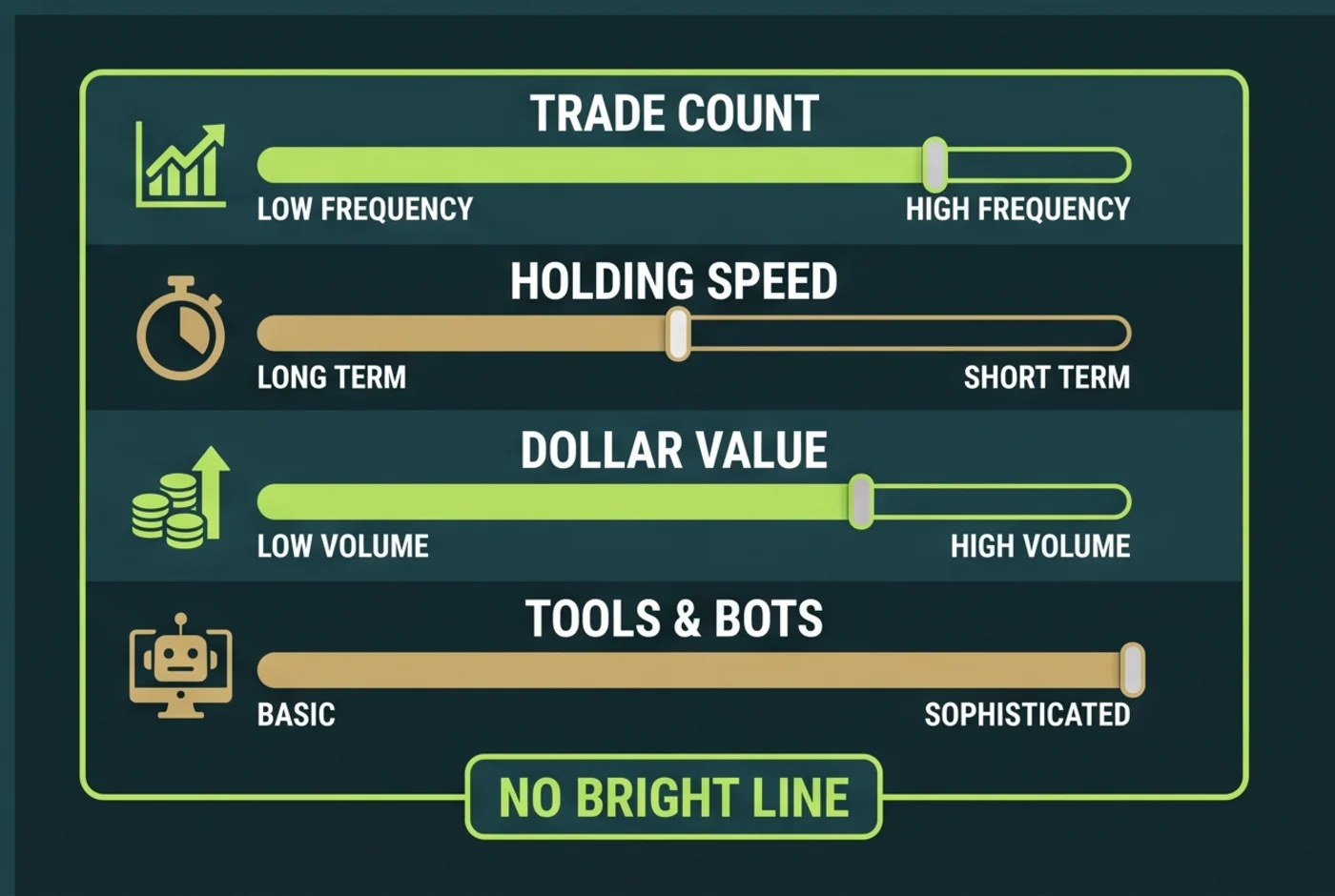
Number of trades
No verified ATO rule says that 50, 500 or 5,000 crypto trades automatically make a trader. One swap routed through a decentralised exchange can create several technical records, while a bot can create thousands of true executions. Count economic trades and explain the pattern, but do not use count as a statutory threshold.
Short holding periods
Brief ownership can support a resale pattern, especially when positions are opened and closed under a recurring plan. There is no fixed number of days that guarantees business treatment. A forced sale after one day can still belong to an investment activity, and a position held for months can still be trading stock.
Use of bots or sophisticated tools
Bots, APIs, charting systems and automated risk controls can make an activity more organised. They are evidence, not a switch. A passive rebalancing tool may support a long-term investment plan, while a market-making bot operated and adjusted daily can support a business conclusion. Preserve configuration and actual use.
High dollar value
A large portfolio is not automatically trading stock. Wealth, appreciation and a major disposal can exist on capital account. High turnover relative to capital, repeated reinvestment and an organised resale method may carry more meaning than the closing wallet balance alone.
Calling yourself a trader
A social-media bio, exchange account label or tax-software setting does not determine the law. The same is true of calling yourself an investor. Descriptions are relevant only to the extent that they record genuine intention and remain consistent with conduct.
Having another occupation
A person can carry on a business while employed elsewhere, and full-time attention does not automatically create one. Time spent is relevant because it can show operating commitment and organisation. Measure research, execution, monitoring, administration and reconciliation instead of relying on job title.
Investor tax treatment
Crypto as a CGT asset
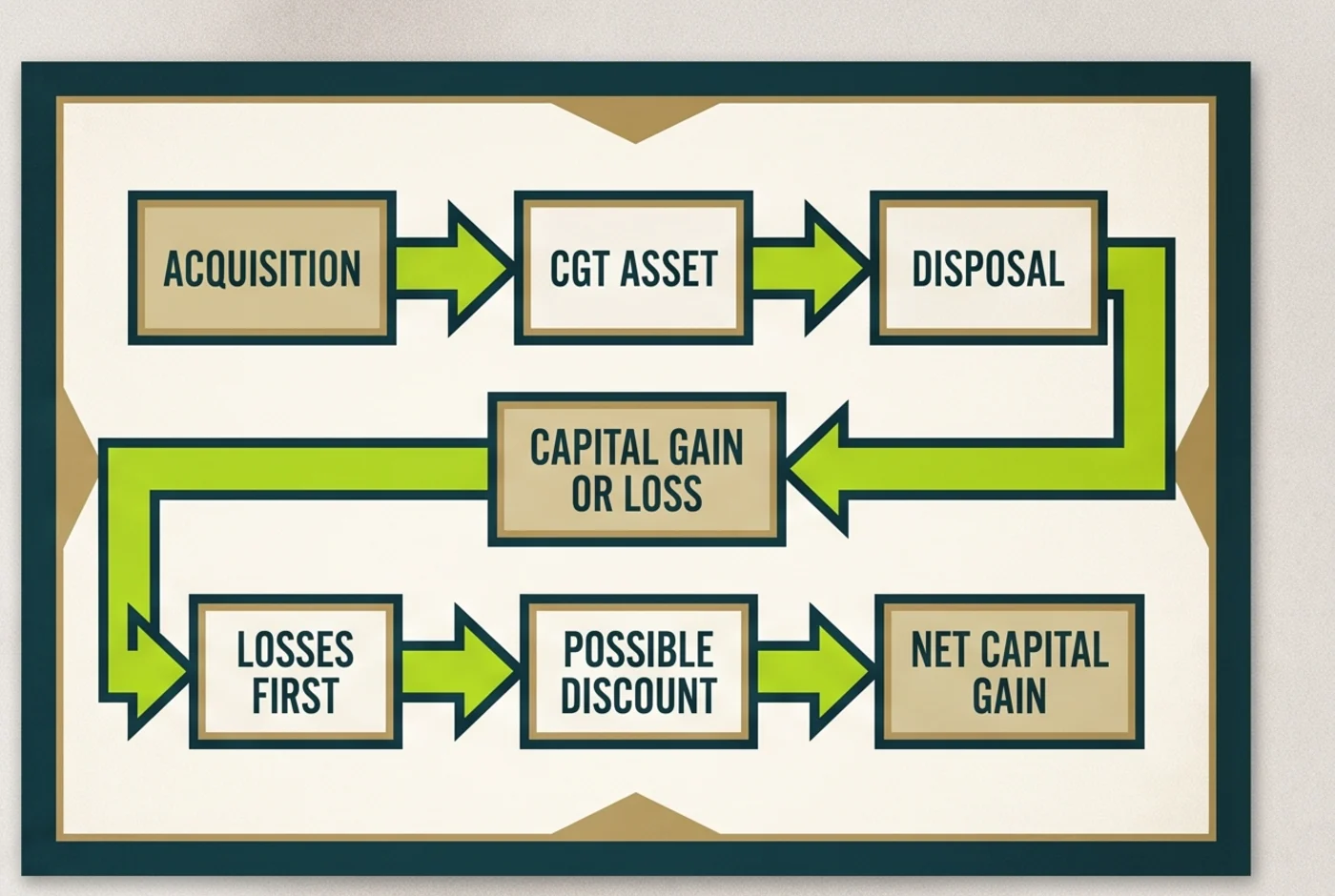
An investor generally holds crypto as a CGT asset. Sales, swaps, spending, gifts and other disposals can trigger CGT events. Buying and holding does not generally create a capital gain at purchase. Income received while holding, such as a staking reward under ATO guidance, is considered separately.
Cost base and capital proceeds
For each disposal, identify the actual units, their supported cost base, the capital proceeds and eligible outlays. Translate values to AUD at the relevant time. Keep the source and timestamp. The Australian crypto tax calculator guide shows the formula, swaps, fees and partial-parcel evidence.
Capital losses only offset capital gains
A net capital loss can reduce later capital gains but cannot ordinarily be deducted against salary or ordinary crypto income. Keep carried-forward loss schedules and transaction support. Personal-use asset losses are disregarded.
Possible 50% discount after at least 12 months
A resident individual may be eligible to reduce a gain by 50% after owning the asset for at least 12 months and meeting the other conditions. Capital losses are applied first. The discount is not a general tax exemption, and the remaining net capital gain enters assessable income. See Australia’s crypto threshold and discount rules.
Parcel and ownership records
Maintain acquisition date, units, AUD cost, fees, wallet path, disposal date, proceeds and holding period for each identified parcel. Same-owner transfers should preserve the parcel history. Unsupported method selection can change both cost base and discount eligibility.
Trading-business tax treatment
Crypto as trading stock
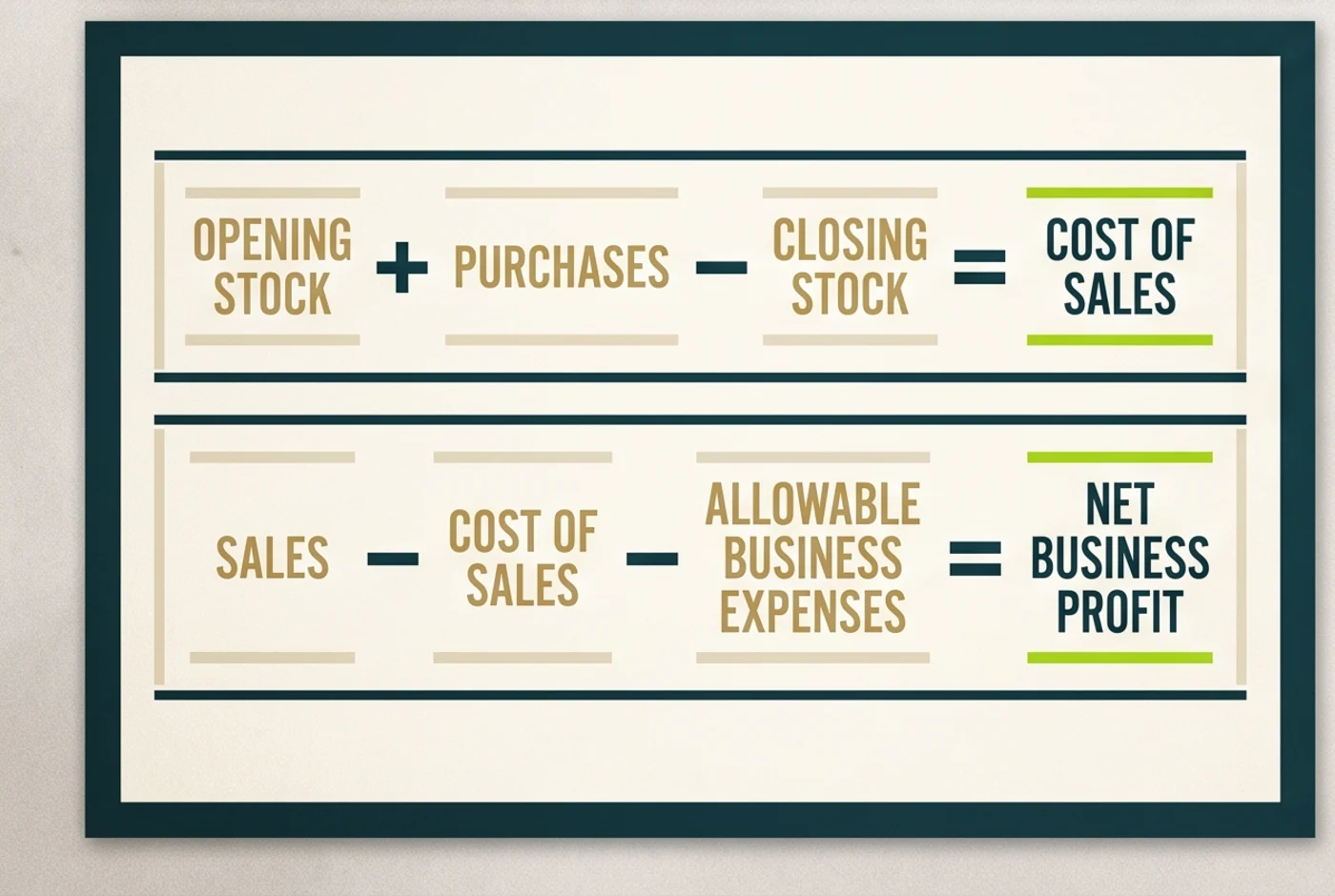
A person carrying on a crypto-trading business generally treats tokens held for sale in the business as trading stock. This brings opening stock, acquisitions, sales and closing stock into the annual profit calculation. A token balance cannot simply be ignored because it has not been converted to AUD.
Sale proceeds as ordinary income
Sales made in the ordinary course of the trading business are ordinary income. The gross sales schedule should reconcile to exchanges, wallets and bank records. Swaps and non-cash consideration still need AUD values and linked asset records.
Acquisition and business expenses
The cost of acquiring trading stock and qualifying business expenses can reduce business profit under the applicable rules. Exchange fees, data services, software, financing and equipment require character and apportionment review. Private, capital and insufficiently connected amounts are not automatically deductible.
Opening and closing stock
The trading-stock calculation compares opening stock, purchases and closing stock with sales and other business amounts. Valuation choices must follow the applicable law and be documented consistently. Wallet balances should reconcile to the stock schedule at year end.
Revenue loss limits and professional advice
A genuine revenue loss may be deductible, but an individual can face non-commercial loss rules that defer use. Other integrity provisions and private-use adjustments may matter. The registered tax agent should review the business status and loss treatment before it reaches the return.
Why the CGT discount does not apply to trading-stock profit
The 50% CGT discount applies within the capital-gain system to eligible gains. Profit from the sale of trading stock is ordinary business income. Holding a trading-stock token for 12 months does not convert the profit into a discounted capital gain.
Can someone be both investor and trader?
Separate activities can exist in principle
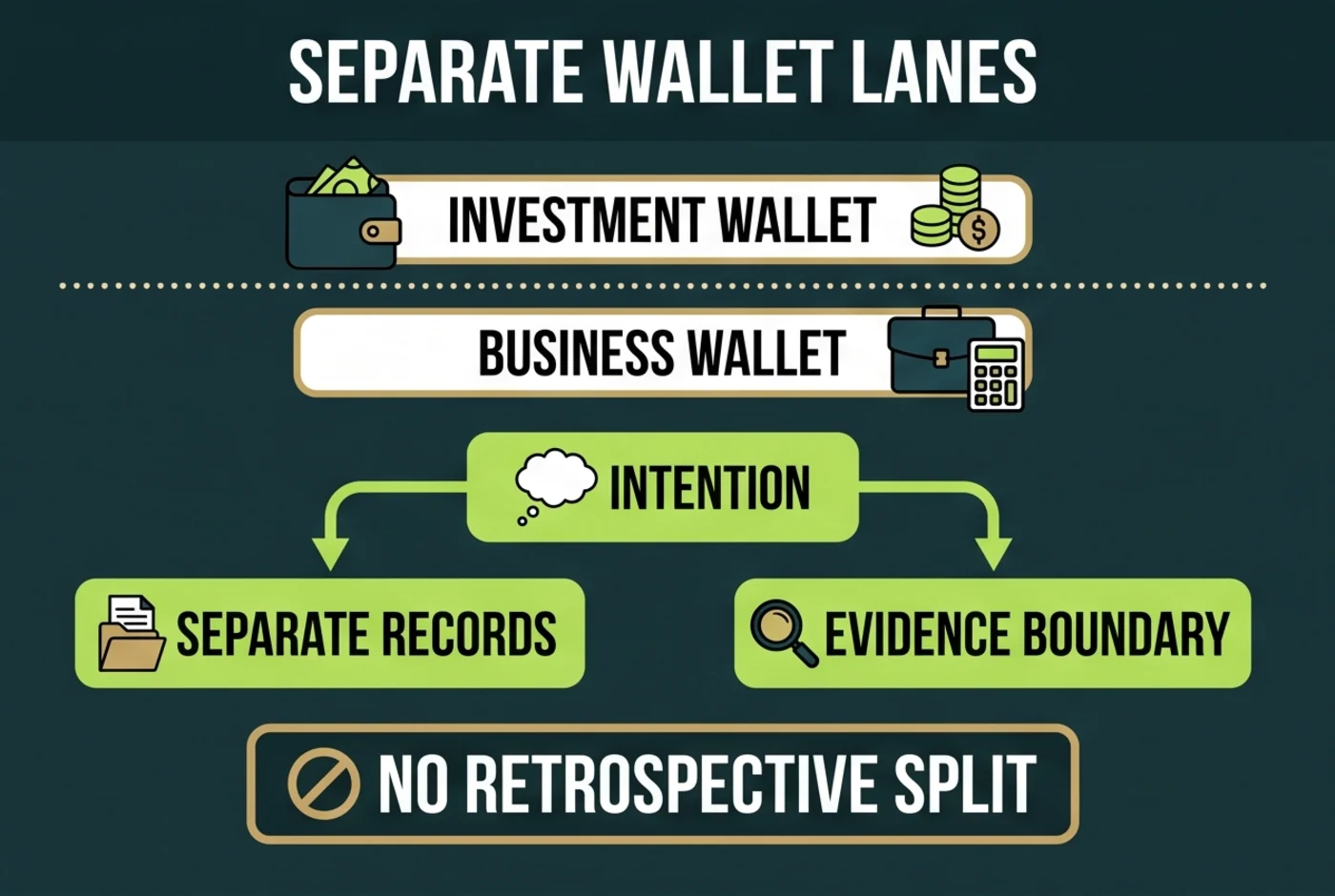
A person may be able to maintain a long-term investment portfolio alongside a distinct trading business where the facts support both. This is not a general election. Each holding needs a coherent purpose, account and treatment from acquisition onward.
Clear records and intention at acquisition
Use separate wallets, exchange subaccounts and ledgers where possible. Record why an asset was acquired, the strategy it belongs to and how decisions are made. Contemporaneous separation is stronger than dividing one mixed account after year end.
Transfers between accounts and change-of-purpose issues
Moving an asset from an investment wallet to a business wallet does not by itself settle a change of tax character. Change-of-purpose and trading-stock rules can have consequences at the transition. Preserve dates, values, intention and approvals for adviser analysis.
Do not self-select treatment after seeing the result
It is unsafe to call profitable long-held assets investments and losing short-term assets business stock without a pre-existing factual boundary. The overall conduct, records and consistency across years should support the separation. A registered tax agent should review mixed activities.
Worked comparison: the same AUD 60,000 economic gain
Investor branch with eligible discount assumptions
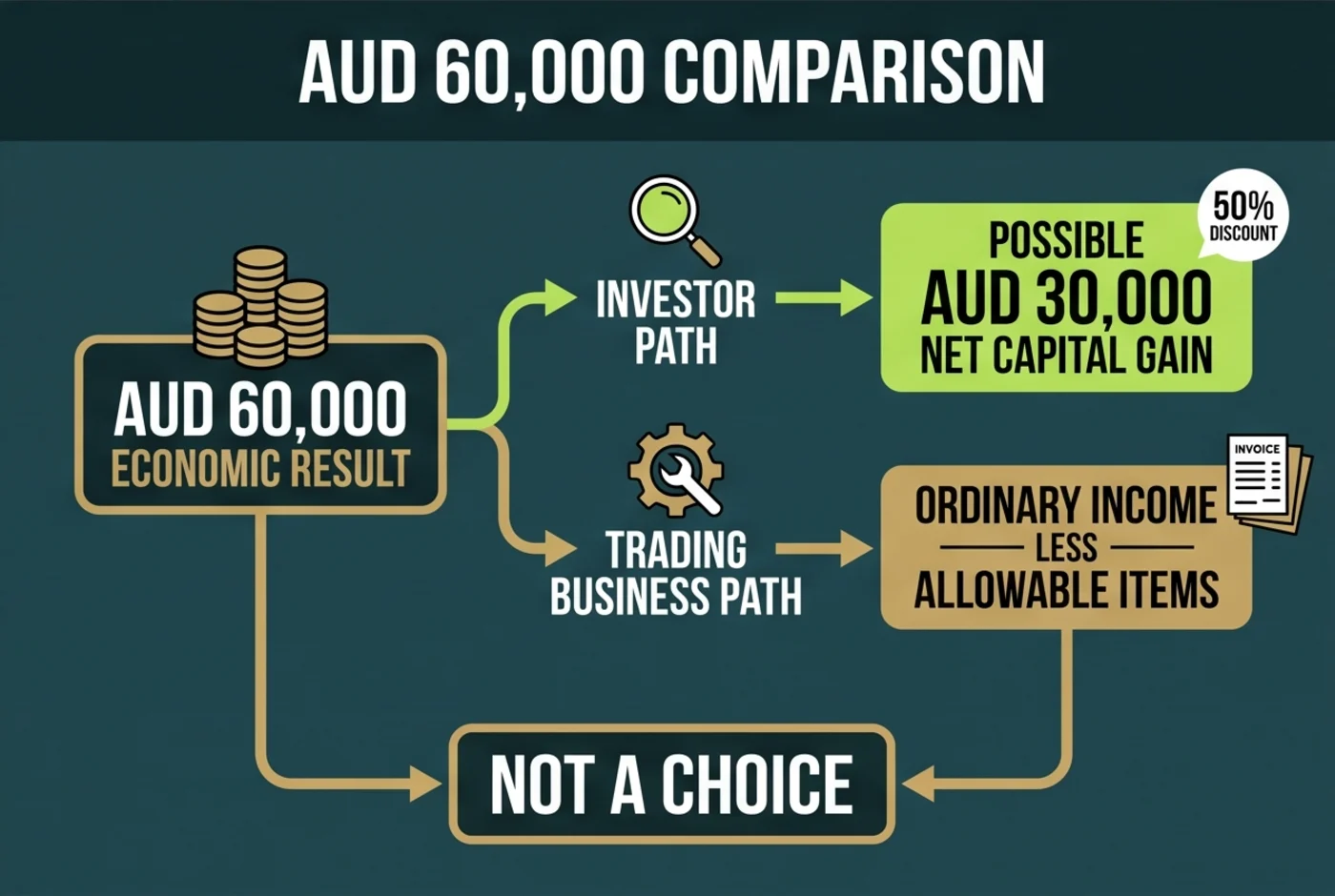
Assume an individual investor has a AUD 60,000 capital gain, no capital losses, owned the asset for at least 12 months and satisfies every CGT discount condition. A 50% discount could leave AUD 30,000 in the net capital gain calculation. That amount enters assessable income and is not the final tax.
Trading-business branch with ordinary income and expenses
Assume instead that the same AUD 60,000 economic spread arose from a genuine trading business before deductible business expenses and stock adjustments. The activity follows the ordinary-income and trading-stock calculation. The CGT discount does not apply. Qualifying expenses and year-end stock can change the net business profit.
Why this is not a rate comparison
The example does not prove that investor treatment is better. It uses different tax accounts and simplifying assumptions. Loss use, expenses, stock, timing, other income and the taxpayer’s circumstances can change the result. Classification follows facts, not the preferred tax outcome.
Adviser decides classification before final figures
Reconcile the activity and produce the evidence first. The registered tax agent can then determine whether the assumptions fit the law and complete the whole-return calculation. Do not multiply revenue by a capital discount merely to estimate a lower figure.
| Economic result | Investor illustration | Trading-business illustration |
|---|---|---|
| Starting amount | AUD 60,000 capital gain | AUD 60,000 spread before expenses and stock |
| Losses and expenses | Assumed no capital losses | Qualifying expenses and stock adjustments considered |
| 50% CGT discount | May reduce eligible gain to AUD 30,000 | Not available on trading-stock profit |
| Final tax | Depends on whole return | Depends on whole return |
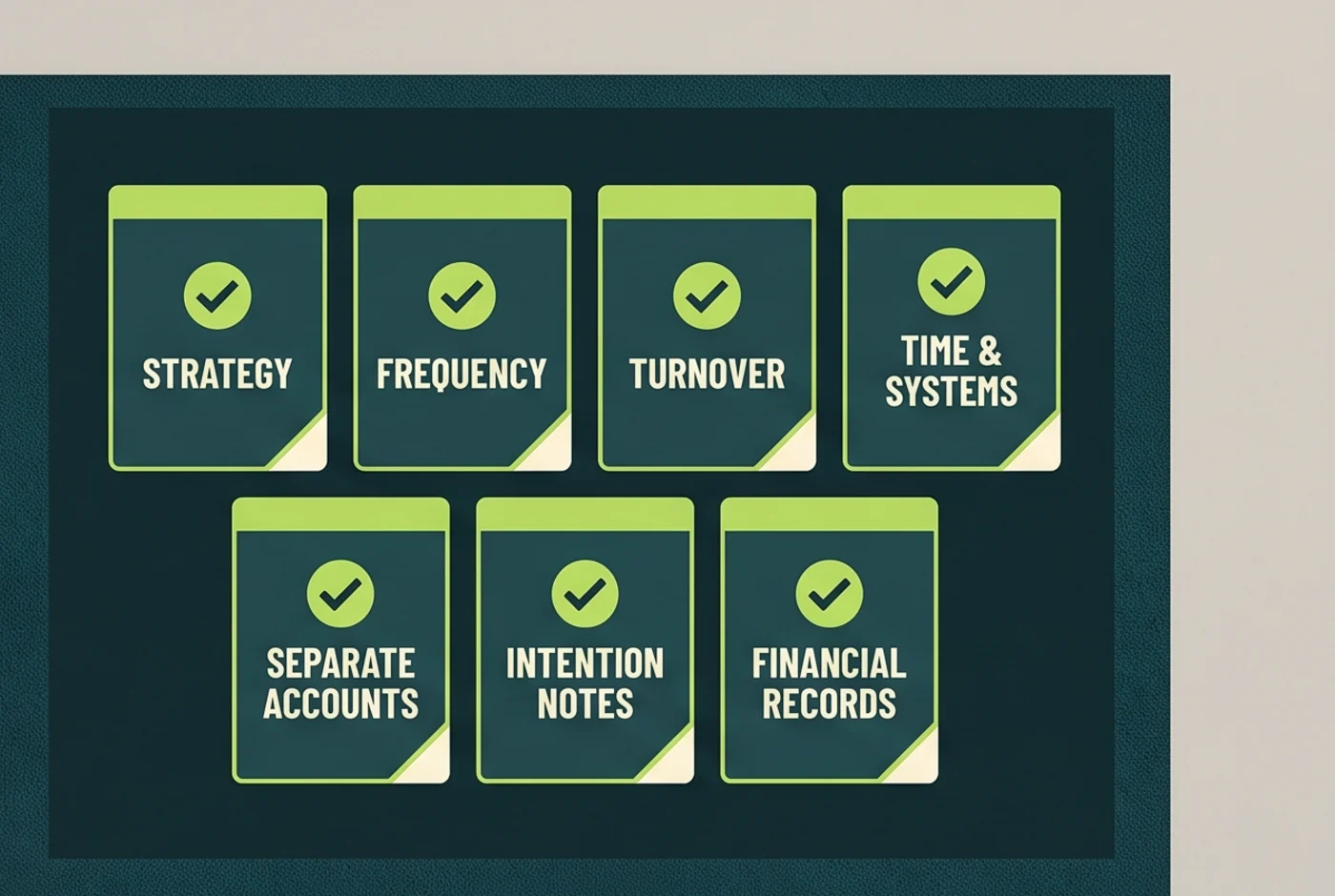
Evidence checklist for your registered tax agent
Strategy and business plan
Keep dated strategy documents, commercial objectives, expected holding periods, entry and exit rules, budgets and risk controls. Record changes when the strategy evolves. A document that matches the actual activity is more useful than a generic plan created after year end.
Frequency and pattern report
Summarise economic trades by day and month, distinguish bots from manual activity and exclude same-owner transfers from trade counts. Show holding periods, turnover and recurring strategy patterns. Retain the transaction-level link behind each summary.
Capital and turnover summary
Show capital committed, gross turnover, average position size, funding sources and changes over time. Explain leverage, margin and repayment obligations. Scale should be viewed relative to the taxpayer and the claimed commercial operation.
Tools, systems and time committed
Document exchanges, APIs, bots, research tools, accounting systems, monitoring routines and hours spent on research, execution and administration. Preserve configuration and change logs where automation is material.
Separate wallets and accounts
Map wallets and exchange subaccounts to investment, alleged business or mixed use. Show transfers between them and who controlled each address. Segregation supports the factual boundary but does not replace legal analysis.
Contemporaneous intention notes
Keep acquisition notes for material positions, including the reason, expected holding and strategy. Record why major disposals occurred. These notes help test stated intention against actual conduct without rewriting the story after prices move.
Financial and tax records
Retain source exports, transaction IDs, price evidence, business books, stock schedules, expense documents and prior returns. The ATO’s data matching can expose inconsistencies regardless of classification, so compare the file with the records the ATO may obtain.
How reconciliation supports classification
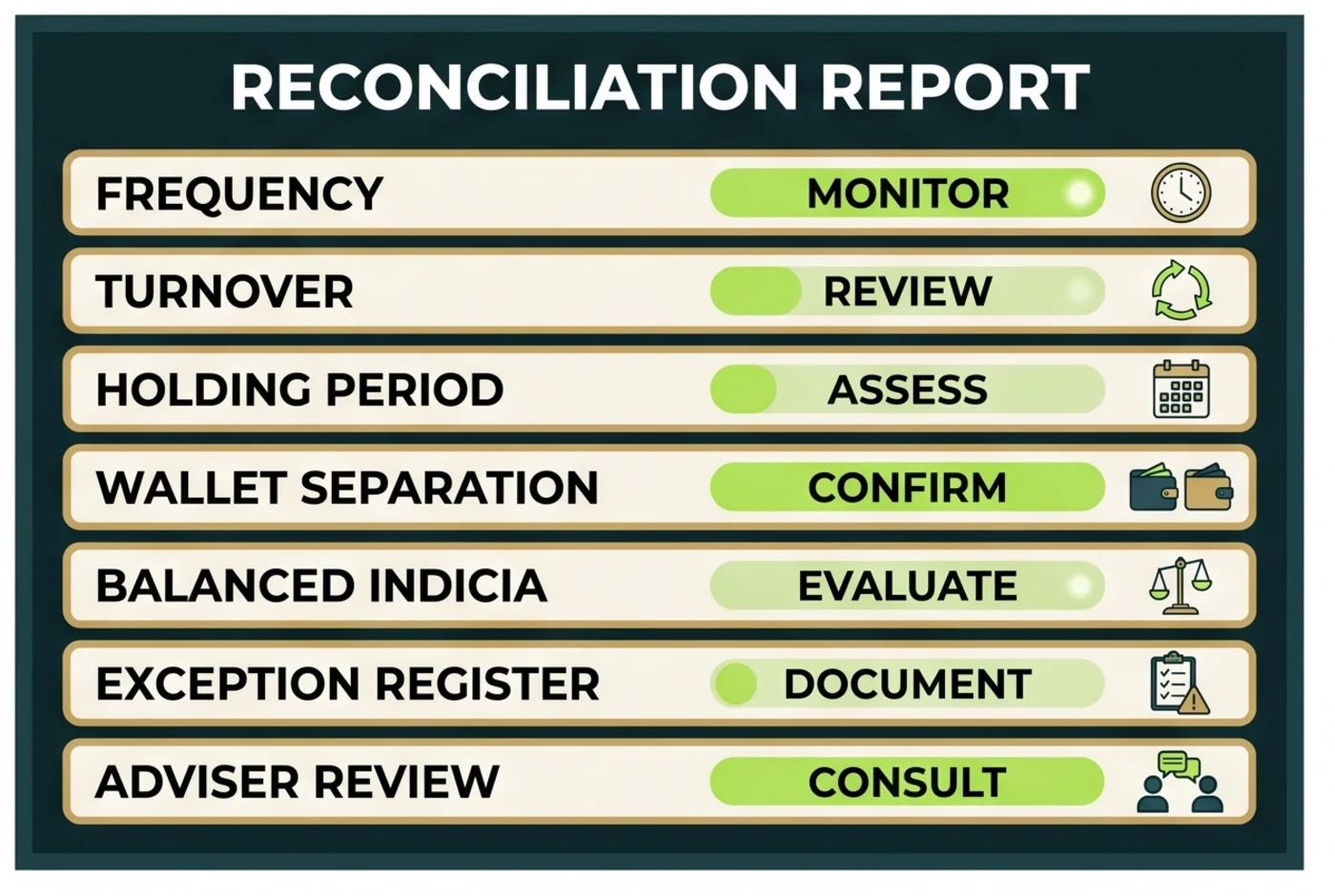
Normalise all activity
Combine exchanges, wallets and protocols into one consistent ledger while retaining source references. Standardise timestamps, symbols, fees and transaction types. Remove duplicates with an audit trail so the activity summary measures real economic actions.
Separate investment and alleged business accounts
Map each address, exchange account and strategy to its claimed activity. Flag mixed accounts and transfers across the boundary. Keep the evidence supporting intention and control rather than forcing every transaction into a category.
Produce frequency, holding-period and turnover summaries
Build monthly frequency, median and range of holding periods, gross turnover, capital deployed and strategy-level results. Explain the effect of bots, DeFi contract calls and internal movements. These summaries let the adviser apply the ATO indicia to reliable facts.
Identify transfers and mixed holdings
Match same-owner transfers so they do not inflate trade counts. Trace parcels that moved between investment and business-labelled accounts. Mixed or changing-purpose holdings go to an exception register with dates, values and available evidence.
Deliver a neutral evidence workpaper
Count On Sheep reconciles digital-asset activity and prepares classification evidence, ATO-ready figures and workpapers for your own accountant or registered tax agent. Count On Sheep does not decide your tax status, is not a registered tax agent and does not lodge Australian tax returns. For the broader CGT, income, records and reporting framework, read the Australia Crypto Tax Guide 2026.
Get ATO-ready figures for your own accountant or registered tax agent
Count On Sheep reconciles complex digital-asset activity into ATO-ready figures and workpapers for your own accountant or registered tax agent. Count On Sheep is not a registered tax agent and does not lodge Australian tax returns.
Build my crypto classification evidenceCrypto investor versus trader FAQs
How many crypto trades make me a trader in Australia?
There is no official ATO trade-count threshold for crypto. Frequency and regularity are relevant, but the ATO considers the whole activity, including commercial purpose, profit intention, scale, organisation, records and similarity to an ordinary business.
Is it better for tax to be an investor or trader?
Neither status is an election based on the lowest result. Investors use CGT rules, while a genuine trading business uses ordinary-income and trading-stock rules. Losses, deductions, stock and the CGT discount differ. Classification follows the facts and should be reviewed by a registered tax agent.
Can a crypto trader receive the 50% CGT discount?
Profit from crypto held as trading stock in a trading business does not receive the CGT discount. A person may have a separate investment activity in principle, but it needs a clear factual and record-keeping boundary. An eligible gain on that separate CGT asset may qualify if all conditions are met.
Can a crypto trading loss offset salary?
A genuine business may produce a revenue loss, but the non-commercial loss rules can defer an individual’s loss. General deduction rules and other limitations also apply. An investor’s capital loss cannot ordinarily offset salary and is instead used against capital gains.
Can I be both a crypto investor and trader?
Separate investment and business activities can exist where the facts support them. Use separate accounts, record intention at acquisition, maintain consistent accounting and document transfers or changes of purpose. Do not divide transactions retrospectively after seeing the result.
What records prove a crypto-trading business?
Useful evidence includes a commercial plan, strategy, frequency and holding-period reports, turnover and capital summaries, time committed, tools and systems, financing, separate accounts, business books, stock records and contemporaneous intention. No single record proves the result.