

Every time you sell, swap, or spend crypto, the IRS wants to know your cost basis: the original price you paid for those specific units. The method you use to assign cost basis can mean the difference between owing thousands in taxes or owing almost nothing.
Three methods dominate crypto tax planning: FIFO (First-In, First-Out), HIFO (Highest-In, First-Out), and Specific Identification (Spec ID). Each one selects different purchase lots when you sell, and each produces a different taxable gain. Choosing the right method is one of the simplest ways to reduce your crypto tax bill legally.
For a complete overview of crypto tax rules, including rates, deadlines, and reporting requirements, see our 2026 Crypto Tax Guide.
FIFO: First-In, First-Out

FIFO is the simplest cost basis method. When you sell crypto, FIFO assigns the cost basis from your oldest purchase first. You work through your lots in chronological order.
How it works: If you bought Bitcoin on four separate dates and then sold some, FIFO matches that sale against your earliest purchase. You do not get to choose.
Pros:
- Easy to calculate and track
- No special record-keeping beyond transaction history
- Accepted by every exchange and tax software
Cons:
- In a rising market, your oldest lots usually have the lowest cost basis, meaning larger taxable gains
- You lose control over which lots get sold
- Older lots are more likely to qualify for long-term capital gains rates, which is a plus. But the trade-off is a larger gain amount
If you do not specify a method on your tax return, the IRS assumes you are using FIFO. That default catches many crypto investors off guard.
HIFO: Highest-In, First-Out (through means of Specific ID)
HIFO is a strategy within Specific Identification. When you sell, HIFO assigns the cost basis from the lot with the highest purchase price first. This minimizes your taxable gain (or maximizes your loss) on each sale.
How it works: You look at all your available lots and match the sale against whichever lot you paid the most for, regardless of when you bought it.
Pros:
- Produces the smallest possible gain (or largest loss) per transaction
- Directly reduces your current-year tax liability
- Legal and IRS-compliant when proper records are maintained
Cons:
- Requires lot-level tracking for every purchase
- May result in short-term gains if your highest-cost lot was purchased recently
- Leaves behind low-cost lots that could create large gains later
Specific Identification (Spec ID)
Specific Identification is the umbrella method that gives you full control. You choose exactly which lot to sell for each transaction. HIFO and LIFO are both subsets of Spec ID with predefined selection rules. Pure Spec ID means you pick the optimal lot on a case-by-case basis.
How it works: For every sale, you identify the exact lot (by date and purchase price) you want to dispose of. You document this selection before or at the time of the transaction.
Pros:
- Maximum flexibility and tax optimization
- You can mix strategies: use a high-cost lot for one sale, then an old lot for another to get long-term treatment
- Best results when combined with professional tax planning
Cons:
- Highest record-keeping burden
- Requires contemporaneous identification (you must specify the lot at the time of sale)
- Complex to manage across multiple wallets and exchanges
For most investors with significant holdings, Spec ID offers the best outcome. But it demands discipline and documentation.
Difficult to manufacture in the crypto tax software of choice as these platforms generally only allow for HIFO or LIFO for Spec ID.
LIFO: Last-In, First-Out | A Brief Note
LIFO (Last-In, First-Out) sells your newest lots first. It is less common in crypto tax planning because HIFO almost always produces a better result. If your most recent purchase also happens to be your most expensive, LIFO and HIFO produce the same outcome. Otherwise, HIFO wins.
LIFO is worth knowing about, but it is rarely the optimal choice on its own.
Side-by-Side Comparison: Real Math
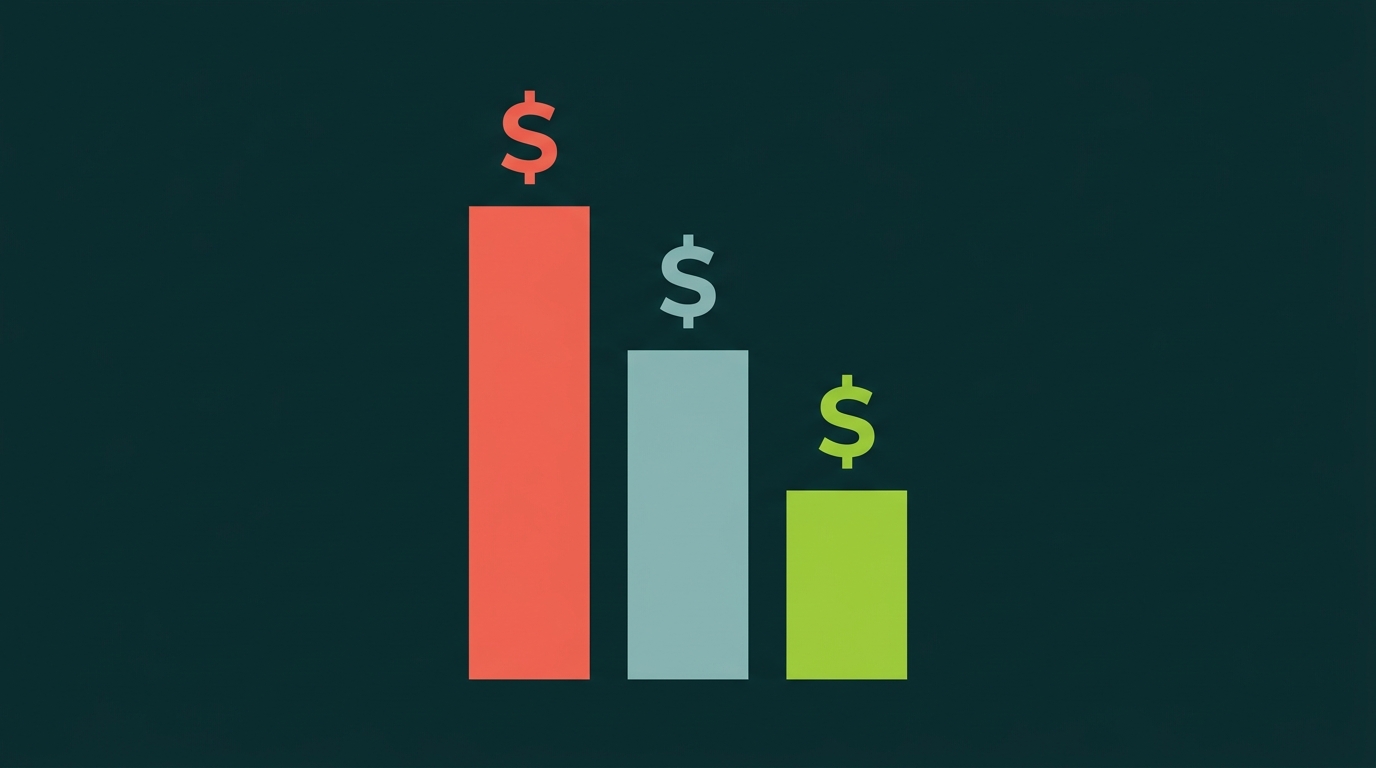
Let’s walk through a concrete example. This is where the differences become obvious.
The Setup
You made four ETH purchases over the past two years:
| Lot | Date | Amount | Price per ETH | Total Cost |
|---|---|---|---|---|
| Lot 1 | Jan 2024 | 1 ETH | $1,600 | $1,600 |
| Lot 2 | Jun 2024 | 1 ETH | $3,400 | $3,400 |
| Lot 3 | Mar 2025 | 1 ETH | $2,100 | $2,100 |
| Lot 4 | Dec 2025 | 1 ETH | $3,800 | $3,800 |
The sale: On April 15, 2026, you sell 2 ETH at $4,000 per ETH. Total proceeds: $8,000.
Now let’s calculate the taxable gain under each method.
First-In, First-Out
Uses the two oldest lots: Lot 1 and Lot 2.
- Lot 1: $4,000 - $1,600 = $2,400 gain (long-term)
- Lot 2: $4,000 - $3,400 = $600 gain (long-term)
- Total taxable gain: $3,000 (both long-term, taxed at 15%)
Highest-In, First-Out
Uses the two highest-cost lots: Lot 4 ($3,800) and Lot 2 ($3,400).
- Lot 4: $4,000 - $3,800 = $200 gain (short-term, 24%)
- Lot 2: $4,000 - $3,400 = $600 gain (long-term, 15%)
- Total taxable gain: $800 (mixed holding periods)
Specific Identification
You pick whichever lots match your full tax picture. If you have short-term losses from tax-loss harvesting to offset, you might pick Lot 4 ($3,800) and Lot 3 ($2,100, long-term). After offsetting the $200 short-term gain, effective tax: $285. The flexibility is the point.
Summary Table
| Method | Total Gain | Tax Owed (est.) | Lots Used |
|---|---|---|---|
| FIFO | $3,000 | $450 | Lot 1 + Lot 2 |
| HIFO | $800 | $138 | Lot 4 + Lot 2 |
| Spec ID | Varies | $138-$450+ | Your choice |
The difference between FIFO and HIFO on this single sale is $312 in tax savings. Multiply that across dozens or hundreds of transactions in a year, and the impact is substantial.
When to Use Each Method
There is no single best method for everyone. Your optimal choice depends on your situation.
Use FIFO when:
- You have few transactions and simple holdings
- Your earliest purchases are already at high prices (rare in crypto)
- You want minimal record-keeping
Use HIFO when:
- You want to minimize current-year taxable gains
- You are comfortable with lot-level tracking
- You are okay deferring larger gains to future years
Use Spec ID when:
- You have a complex portfolio with many lots at different prices
- You want to balance short-term vs. long-term gain treatment
- You work with a crypto tax professional who can optimize lot selection across your full return
Choosing the right cost basis method is not about avoiding taxes. It is about paying the right amount at the right time.
Documentation Requirements
The IRS requires adequate records for any cost basis method, but Spec ID and HIFO carry a higher documentation bar.
For FIFO, you need:
- Transaction dates and amounts
- Purchase prices
- Sale prices and dates
For HIFO and Spec ID, you additionally need:
- Lot-level records showing each individual purchase
- Identification of the specific lot at the time of sale (contemporaneous identification)
- Consistent application within a tax year
The IRS has not published crypto-specific lot identification rules as detailed as those for securities. However, the general principles from IRS guidance on digital assets apply. Maintaining a spreadsheet or using crypto tax software that tracks lots is essential.
Switching Methods Between Tax Years
You are allowed to change your cost basis method from one tax year to the next. If you used FIFO in 2025, you can switch to HIFO or Spec ID for 2026. The key rules are:
- You cannot retroactively change the method for a year you have already filed
- The switch applies going forward to remaining lots
- Lots already sold under the previous method keep their original treatment
- Document your chosen method clearly on your return or in your records
If you are considering a switch, talk to a crypto tax specialist before filing. Changing methods mid-stream without understanding the lot implications can create unexpected results.
Per-Wallet Considerations
Starting with the 2025 tax year, Rev. Proc. 2024-28 introduced per-wallet and per-account cost basis tracking for certain situations. This means your cost basis method may need to be applied separately for each wallet or exchange account rather than globally across all holdings.
This has real implications for method selection:
- FIFO applied per-wallet means the oldest lot in that specific wallet is sold first, not your oldest lot overall
- HIFO applied per-wallet selects the highest-cost lot within the same wallet
- Spec ID still lets you choose the lot, but only from the wallet where the sale occurs
If you hold crypto across multiple exchanges and self-custody wallets, per-wallet tracking adds complexity. Transfers between wallets do not trigger taxable events, but they do affect which lots are available in each location. Understanding how your capital gains are calculated under per-wallet rules is critical for accurate reporting.
Bottom Line: What to Do Next
The cost basis method you choose directly affects how much tax you owe on every crypto sale. FIFO is the default, but it is rarely the best option for active traders or long-term holders who bought at varying prices. HIFO minimizes gains in most scenarios. Spec ID offers the most control when paired with solid record-keeping.
Here is what to do:
- Pull your transaction history from every exchange and wallet
- Calculate your gains under FIFO and HIFO to see the difference
- Choose your method before filing your return
- Document your lot selections if using HIFO or Spec ID
- Work with a professional if you have complex holdings, multiple wallets, or high transaction volume
If you are not sure which method saves you the most, or if per-wallet rules are making your head spin, schedule a consultation with our team. We run the numbers under every method and find the approach that fits your tax situation.
Frequently Asked Questions
What is the difference between FIFO and HIFO?
FIFO (First-In, First-Out) sells your oldest crypto lots first. HIFO (Highest-In, First-Out) sells your most expensive lots first. HIFO typically produces lower taxable gains in a rising market.
Is HIFO legal for crypto taxes?
Yes. HIFO is a strategy within Specific Identification, which is fully IRS-compliant. You must maintain lot-level records and identify the specific units being sold.
What is Specific Identification for crypto?
Specific Identification (Spec ID) lets you choose exactly which crypto lots to sell for each transaction. It gives you maximum control over your tax outcome but requires detailed documentation.
Can I switch from FIFO to HIFO?
Yes, you can change cost basis methods between tax years as long as you have not yet filed. Once filed, you cannot retroactively change the method for that year.
What method does the IRS default to?
If you do not specify a method, the IRS defaults to FIFO (First-In, First-Out). This is often not the most tax-efficient choice.