
Are Solana staking rewards taxable? Yes. Every reward credited to your stake account is ordinary income at its fair market value the day it lands, under Rev. Rul. 2023-14. Solana pays those rewards at every epoch boundary, roughly every two to three days, so a year of staking produces well over a hundred separate income events. Miss them and you do not just underreport income; you also lose the cost basis those rewards were supposed to carry, which inflates your gains when you eventually sell.
This guide covers Solana staking taxes end to end for 2026: when income actually hits under the per-epoch reward schedule, how rewards set their own cost basis, the difference between delegating and running a validator, Schedule 1 versus Schedule C, what auto-compounding does to your tax picture, how Form 1099-DA changes things when staked SOL touches an exchange, and a step-by-step reporting walkthrough. It is one piece of our full Solana tax guide, which covers everything else that happens on the chain: DeFi, NFTs, airdrops, and more.
If you hold mSOL, JitoSOL, or bSOL instead of staking natively, that is a different tax animal entirely. We cover it in our companion guide to liquid staking token taxes.
Disclaimer: This guide is for informational purposes only and is not tax or legal advice. Cryptocurrency rules change quickly. Always consult a qualified CPA about your specific situation.
How Solana Staking Actually Works
You cannot get the tax timing right without understanding the mechanics, because Solana’s reward schedule is what drives the income calendar.
Solana is a proof of stake network. SOL holders delegate their coins to validators, who process transactions and vote on blocks. In return, the network pays staking rewards funded by inflation and transaction fees. To stake natively, you create a stake account, a separate on-chain account distinct from your main wallet address, and delegate its balance to a validator you choose. Wallets like Phantom and Solflare handle this in a few taps, and many users end up with several stake accounts spread across validators.
Two mechanical details matter enormously for taxes:
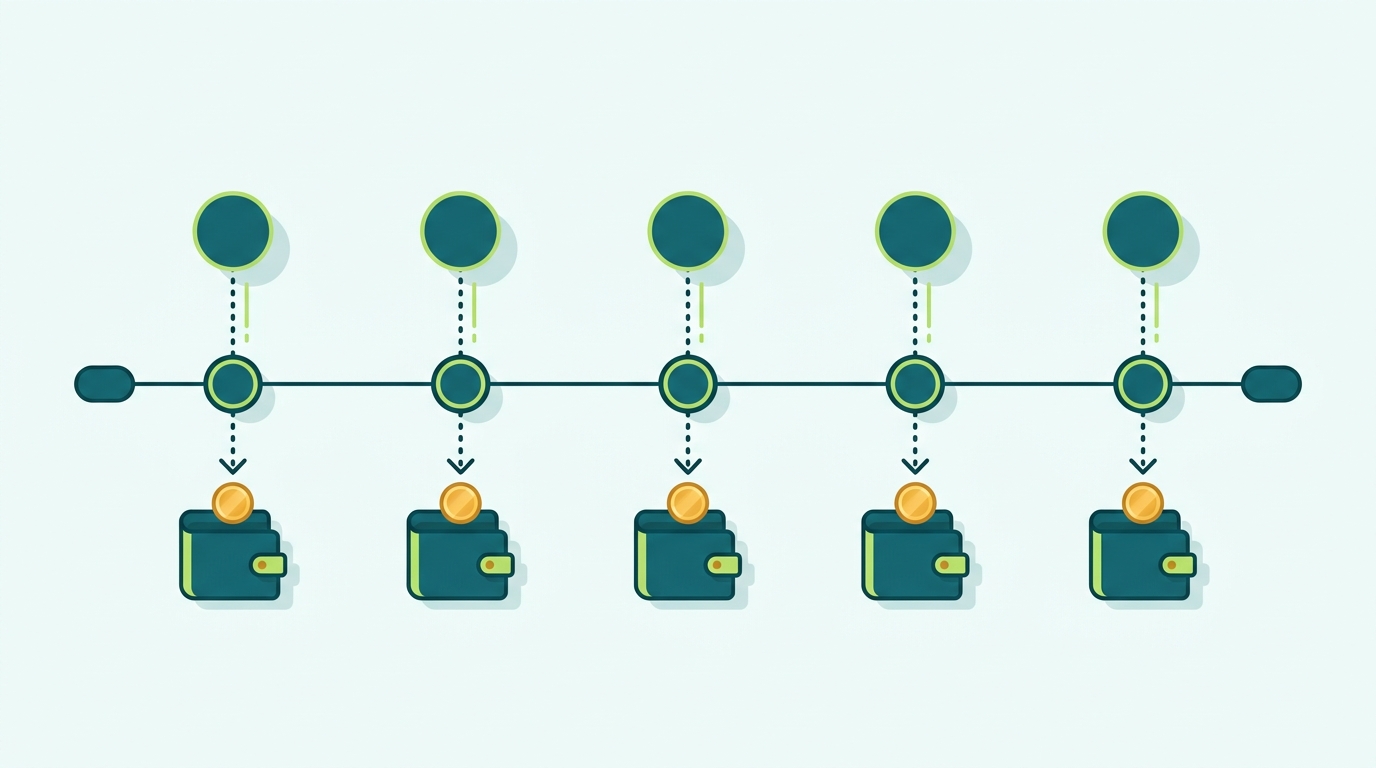
- Rewards arrive per epoch. A Solana epoch is 432,000 slots, which works out to roughly two to three days. At each epoch boundary, the network calculates your share of rewards and credits it directly to your stake account.
- Rewards auto-compound at the protocol level. Credited rewards are added to your active stake automatically. You do not claim them, and they immediately start earning rewards themselves. To actually spend them, you deactivate some or all of your stake, wait through a cooldown of about one epoch, and withdraw.
So a typical delegator earns a small reward roughly every two to three days, around 130 to 180 times per year per stake account, and never presses a claim button. That is the fact pattern the rest of this guide is built on.
When Solana Staking Rewards Become Taxable Income
The governing rule is Rev. Rul. 2023-14: staking rewards are includible in gross income at their fair market value when the taxpayer gains dominion and control over them, meaning the ability to sell, exchange, or otherwise dispose of them.
The Standard Position: Income at Every Epoch
For Solana native staking, the standard and widely followed position is that each epoch credit is an income event. The rewards are yours the moment they hit your stake account: they are recorded on-chain in an account you control with your own keys, and you can start the deactivation process at any time. Major crypto tax platforms treat Solana rewards this way by default, booking income at each epoch’s credit using SOL’s fair market value that day.
The math looks like this. Suppose you have 500 SOL delegated and earn about 0.09 SOL per epoch. Over a year that is roughly 13 to 14 SOL of rewards, received in more than 150 small pieces, each valued at whatever SOL traded at on its credit date. Your total staking income for the year is the sum of all those individual valuations, not 13.5 SOL times the year-end price.
The Deferral Argument, and Why It Is Risky
Some stakers argue the income moment should wait until unstaking, because credited rewards are locked into active stake and cannot be spent until you deactivate and sit through the cooldown. On that theory, you lack full dominion and control until withdrawal is possible.
It is not a frivolous argument, but it is aggressive, and it cuts against how the industry and tax software actually report. The deactivation delay is short, about one epoch, and it is a delay you can initiate at will, which looks more like a brief settlement period than a genuine restriction. Rev. Rul. 2023-14 itself dealt with a validation reward subject to a brief inability to sell and still found income once the taxpayer could dispose of it. If you take a deferral position, do it with professional guidance, apply it consistently, and document your reasoning. Do not simply skip reporting rewards and hope the question never comes up.
Fair Market Value Sets the Income and the Basis
Each reward is measured at SOL’s fair market value at the time of credit. Use a consistent, defensible price source, such as a major exchange’s daily price or your tax software’s pricing feed, and stick with it. That dollar figure does two jobs: it is the income you report now, and it becomes the cost basis of the reward SOL for later. There is no double tax here, despite the persistent myth. You are taxed once on the reward as income, then only on the change in value between receipt and sale as capital gain or loss.

One Reward, Two Tax Moments
An epoch credits you 1 SOL when SOL trades at $150. You report $150 of ordinary income, and that reward SOL takes a $150 basis. Eight months later you sell it at $200. You report a $50 short-term capital gain. The $150 is never taxed twice; it is income once and basis forever after.
Delegating vs Exchange Staking vs Running a Validator
How you stake changes who keeps records, what forms exist, and in one case, what kind of income you have.

Delegating From Your Own Wallet
Native delegation through Phantom, Solflare, or the command line is the self-custody path. You keep control of your keys, the validator never touches your SOL, and rewards flow straight into your stake account. Tax-wise: ordinary income per epoch, no forms from anyone, all record-keeping on you. Your wallet address and stake accounts are the complete data source, and crypto tax software can read them directly from the chain.
Staking Through an Exchange
Coinbase, Kraken, and other platforms offer SOL staking where the exchange handles delegation and passes rewards to your account, minus a cut. The income rule is identical: rewards are ordinary income at fair market value when credited to you. The differences are practical. The exchange controls the reward schedule it credits on, it may issue a Form 1099-MISC once your reward income reaches $600, and its records feed the IRS reporting system. Remember that the 1099-MISC threshold controls whether a form is filed, not whether the income is taxable. A $400 reward year with no form is still $400 of reportable income.
Running a Validator or Node Operation
Operating your own validator is a different business, literally. A validator earns commission on the rewards of everyone delegating to it, plus rewards on its own self-stake, plus potentially MEV tips through clients like Jito. It also burns real money: server hardware or bare-metal hosting, bandwidth, and Solana’s vote transaction fees, which historically run on the order of 1 SOL per day and add up to a meaningful annual cost.
That combination of continuous activity, profit motive, and operating expenses generally makes validating a trade or business for tax purposes, which changes everything about how the income is reported. That brings us to the Schedule C question.
Schedule 1 or Schedule C: Where Your Staking Income Goes
All staking rewards are ordinary income, but which kind of ordinary income depends on whether your staking rises to the level of a trade or business.
Schedule 1: The Investor Default
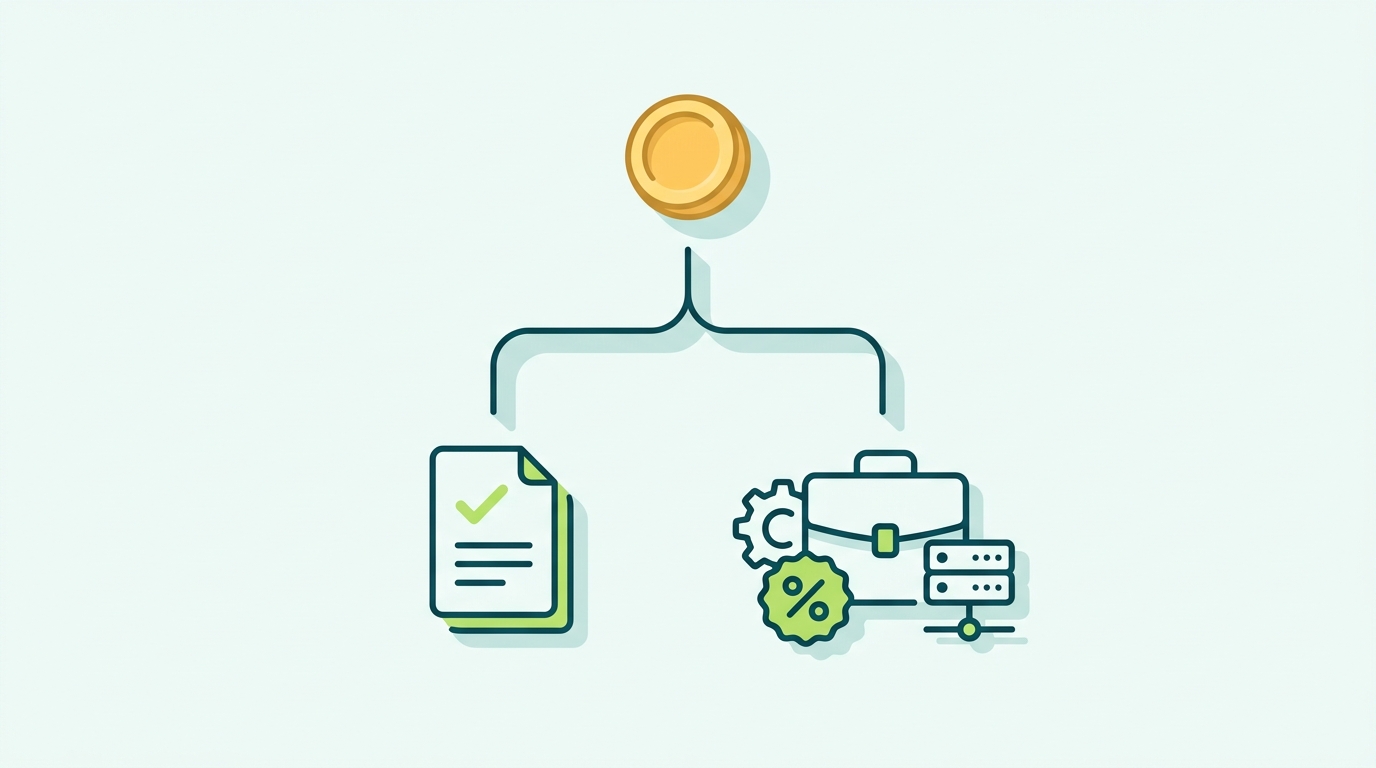
If you delegate SOL from your wallet or stake through an exchange, you are an investor earning reward income, not running a business. Report the year’s total reward value as other income on Schedule 1 of Form 1040. The 2025 form includes a line specifically for digital assets received as rewards. No self-employment tax applies, and no business deductions are available. This is the right lane for the overwhelming majority of Solana stakers.
Schedule C: The Validator Operator
If you run validator infrastructure with continuity and a profit motive, your commissions and staking income belong on Schedule C as business income. Two big consequences follow:
- Self-employment tax. Net Schedule C profit is hit with the 15.3% self-employment tax on top of income tax. That is the cost of business treatment.
- Deductions. The benefit is that your real costs become deductible: servers and hosting, vote fees, monitoring tools, a home office if you qualify, depreciation on hardware. For Solana validators, vote fees alone can be a five-figure annual expense at recent SOL prices, so Schedule C treatment often reflects economic reality far better than reporting gross rewards with no offsets.
The Gray Middle: Hobby Operations
Running a small validator at a loss with no realistic profit path can be a hobby under IRS rules, which is the worst of both worlds: income is still reportable, but hobby expenses are not deductible. The trade or business question turns on facts: regularity, effort, expertise, books and records, and profit motive. If you operate anything beyond simple delegation, this classification decision is worth an hour with a professional, because it swings both your tax rate and your deductions.
Auto-Compounding and Yield Aggregators
Solana’s native staking already compounds automatically, and an ecosystem of tools compounds harder: bots that split and redelegate stake, protocols that claim and restake across validators, and vault products that chase the best yield. The tax question everyone asks: is each compound a taxable event?
The conservative answer, and the one consistent with Rev. Rul. 2023-14, is yes. Every time new SOL is credited to an account you control, whether by the protocol at an epoch boundary or by an aggregator claiming and restaking on your behalf, you have received a reward. The fact that it was immediately put back to work does not change the receipt. You never need to touch the coins for income to land; dominion and control, not manual claiming, is the trigger.
Two practical notes:
- Aggregators multiply your record-keeping, not your tax rate. A vault that compounds daily creates daily income events instead of per-epoch ones. Same total income over time, more line items. Make sure your tax software actually captures the protocol’s reward transactions, because some vault structures are poorly supported.
- If the aggregator gives you a token instead of stake, you have left native staking territory and entered liquid staking territory, where the analysis changes completely. Our liquid staking token guide covers that model, including the mSOL and JitoSOL swap question.
Compounding changes how fast your stake grows. It does not change when income happens. Every credit counts, whether you pressed the button or a protocol did.
Staked SOL in the 1099-DA Era
Starting with the 2025 tax year, centralized exchanges file Form 1099-DA with the IRS, reporting gross proceeds when you sell or swap digital assets on their platforms. That form reshapes the risk picture for stakers in a specific way.
Here is the common flow: you stake in your own wallet for two years, accumulate hundreds of small reward credits, then move a pile of SOL to Coinbase and sell some. The exchange files a 1099-DA showing your gross proceeds. What the exchange does not know is your basis, because your SOL arrived by transfer, and it certainly does not know that part of your stack was reward income already taxed at receipt. Broker basis reporting is still phasing in, and it will never cover coins whose history lives in your stake accounts.
The result is an asymmetry the IRS can see: reported proceeds on one side, and whatever story your return tells on the other. If your return shows no staking income in prior years and a sale with fuzzy basis now, that mismatch is exactly the pattern automated matching is built to flag. The fix is boring and effective:
- Report reward income every year it is earned, so your basis is real.
- Match every wallet-to-exchange transfer in your records, so deposits are not treated as zero-basis mystery coins.
- Reconcile any 1099-DA you receive against your own numbers before filing, and correct missing basis with your records rather than accepting the form’s blanks.
Record-Keeping: Per-Wallet Basis and Your Stake Accounts
Under Rev. Proc. 2024-28, effective January 1, 2025, cost basis must be tracked per wallet and per account instead of in one universal pool. Solana stakers should read “account” literally, because the way Solana structures staking creates more accounts than most people realize.
A typical setup involves one main wallet address plus one or more stake accounts, each of which is a distinct on-chain account. Rewards land in specific stake accounts and take their basis there. When you deactivate stake and withdraw to your main wallet, specific lots move with specific basis. When you send SOL to an exchange, again, specific lots travel. Universal averaging across all of it is no longer an available method. Our per-wallet cost basis guide covers the full framework, including the safe harbor allocation for lots you held when the rules switched.
What good Solana staking records look like:
- Every wallet and stake account address you have ever used, including closed and emptied ones.
- Every reward credit with date, amount, and fair market value. Tax software builds this automatically from your addresses; the chain has the full history.
- Transfer matching between your stake accounts, main wallet, and exchanges, so self-transfers never read as sales or zero-basis deposits.
- Your basis method per account (FIFO or specific identification), applied consistently.
How to Report Solana Staking Rewards: Step by Step
Here is the full reporting pipeline, from raw chain data to finished forms.

- Import every address. Add your main wallet, all stake accounts, and every exchange account to crypto tax software (Koinly, CoinTracker, and CoinLedger all support Solana staking). The software reads reward credits directly from the chain.
- Verify rewards are booked as income. Spot-check a few epochs against a Solana explorer. Confirm the software tagged reward credits as staking income with sensible prices, not as deposits or transfers.
- Match your transfers. Confirm stake account withdrawals, wallet consolidations, and exchange deposits are linked as self-transfers carrying basis, not sales.
- Total your income. The year’s staking income is the sum of all reward values. It goes on Schedule 1 as other income for investors, or Schedule C if you operate a validator business.
- Report disposals. Any SOL you sold or swapped during the year, including reward SOL, goes on Form 8949 and Schedule D with proceeds, basis, and gain or loss. Reward lots use their income value as basis, and their holding period starts at the credit date.
- Answer the digital asset question. Receiving staking rewards means you check “yes” on Form 1040. Answer truthfully.
- Reconcile any forms received. Cross-check exchange 1099-MISC income and 1099-DA proceeds against your own records before filing, and archive everything.
For the broader income picture beyond staking, including airdrops and mining, see our crypto income tax guide, and for the general map of what is and is not taxable, our taxable events guide.
Common Solana Staking Tax Mistakes
These are the errors we see most in Solana reconciliations, roughly in order of expense.
Reporting Rewards Only When Sold
The most common mistake by far. Rewards are income at receipt, not at sale. Waiting until you sell understates income in earning years and usually pairs with the next mistake.
Zero-Basis Reward Sales
If rewards were never booked as income, software assigns them zero basis, and every reward SOL you sell shows 100% gain. You end up voluntarily paying tax on value you should have shielded with basis. This error compounds silently across hundreds of reward lots.
Missing Stake Accounts
Importing your main wallet but not your stake accounts leaves every reward credit out of the data set, then makes withdrawals look like unexplained deposits. Import every account, including ones you closed.
Valuing Rewards at Year-End Prices
Each reward is valued at its own credit date. Summing the year’s rewards and multiplying by December’s price is wrong in both directions and easy for software to get right, so let it.
Treating Unstaking as a Taxable Event
Deactivating and withdrawing stake is not a disposal. Some software mislabels these internal movements; review and correct them so you are not paying tax on moving your own coins.
Forgetting Exchange Staking Income Under $600
No 1099-MISC does not mean no income. Sub-threshold rewards are fully reportable from your own records.
Your Solana Staking Tax Checklist
- List every address: main wallets, all stake accounts, exchange accounts, old and current.
- Import them into crypto tax software and let it read reward history from the chain.
- Confirm every epoch credit is booked as income at credit-date fair market value.
- Verify reward lots carry their income value as basis for later sales.
- Match all self-transfers between stake accounts, wallets, and exchanges.
- Choose your lane: Schedule 1 for delegators, Schedule C for validator businesses, and get advice if you are in between.
- Report disposals on Form 8949 and Schedule D, including reward SOL sales.
- Apply per-wallet basis tracking under Rev. Proc. 2024-28.
- Reconcile any 1099-MISC or 1099-DA against your records.
- Archive the audit file: addresses, reward logs, transfer proofs, and final forms.
Bottom Line
Solana’s staking design is generous to stakers and merciless to record-keepers: rewards every two to three days, auto-compounded, across multiple stake accounts, with no forms from anyone unless an exchange is involved. The tax rules themselves are settled at the core: income at receipt under Rev. Rul. 2023-14, basis equal to that income, capital gains on later sales, Schedule 1 for investors and Schedule C for operators. What separates a clean return from an expensive mess is purely the quality of the records.
If your staking history spans years, multiple stake accounts, validator operations, or liquid staking tokens layered on top, this is exactly the kind of reconciliation work we do. Count On Sheep untangles the reward history, fixes the basis, and hands you and your tax preparer CPA-ready numbers. A 15-minute call with a crypto tax specialist is the fastest way to find out where you stand, or reach out to our team for a full Solana staking review.
Related Reading
- Solana Tax Guide: The Complete Picture
- Liquid Staking Token Taxes: mSOL, JitoSOL, and bSOL
- Phantom Wallet Tax Guide
- Crypto Income Taxes: Staking, Mining & Airdrops
- Per-Wallet Cost Basis Under Rev. Proc. 2024-28
- Form 1099-DA Explained
Frequently Asked Questions
Are Solana staking rewards taxable?
Yes. Under Rev. Rul. 2023-14, staking rewards are ordinary income at fair market value when you gain dominion and control over them. For Solana, rewards are credited to your stake account at each epoch boundary, roughly every two to three days, and standard practice is to treat each credit as an income event at that day's SOL price.
When exactly do I owe tax on Solana staking rewards?
The standard position is at each epoch boundary, when the network credits rewards to your stake account. Solana pays rewards roughly every two to three days, so a full year of staking creates well over a hundred small income events. Each one is measured at the fair market value of SOL when the reward lands.
How do I report Solana staking rewards on my tax forms?
For most investors, total the fair market value of all rewards received during the year and report it as other income on Schedule 1 of Form 1040. When you later sell or swap the reward SOL, report that disposal on Form 8949 and Schedule D using the income value as your cost basis. Validators operating as a business report on Schedule C instead.
Do Solana staking rewards get a 1099 form?
Not for native staking through your own wallet. No one issues a form for rewards earned in a self-custody stake account. If you stake through an exchange like Coinbase or Kraken, the exchange may issue a Form 1099-MISC once rewards reach 600 dollars. Either way, the rewards are taxable whether or not a form arrives.
What is the cost basis of my Solana staking rewards?
The fair market value you reported as income when each reward was credited. That value becomes the basis of the reward SOL. If you skip the income step, your tax software assigns zero basis, which overstates your gain when you eventually sell.
Is unstaking SOL a taxable event?
No. Deactivating and withdrawing your stake is not a disposal, because you still own the same SOL. The taxable moments are the reward credits along the way, which are income, and any later sale or swap, which is a capital gain or loss.
Do Solana validators pay self-employment tax?
Usually yes. Running a validator with regularity and a profit motive is generally a trade or business, so commission income and rewards on the operator's own stake belong on Schedule C and are subject to self-employment tax of 15.3 percent. The upside is that hardware, hosting, and Solana's substantial vote fees become deductible business expenses.
Are auto-compounding Solana staking rewards taxable each time they compound?
The conservative answer is yes. If a protocol or bot claims your rewards and restakes them, each claim is a receipt of new SOL and an income event at that moment's price, even though you never touched the coins. Native Solana staking compounds automatically at the protocol level, and standard practice treats each epoch credit as income the same way.
Does moving staked or reward SOL to an exchange create tax problems?
The move itself is not taxable, but it creates a reporting gap. When you sell on the exchange, the Form 1099-DA it files reports your gross proceeds without knowing your basis. If your reward income and basis records are incomplete, the IRS sees proceeds with no story behind them. Clean per-wallet records close that gap.
How does the per-wallet cost basis rule affect Solana stakers?
Under Rev. Proc. 2024-28, effective January 1, 2025, cost basis is tracked per wallet and account rather than in one universal pool. Solana stakers often run several stake accounts plus a main wallet, and each one carries its own lots. Rewards credited to a stake account take their basis in that account, and transfers between accounts must carry specific lots.
Are mSOL, JitoSOL, and other liquid staking tokens taxed the same way?
No. Liquid staking tokens follow a different model where value accrues inside the token instead of arriving as separate reward payments, and the swap into and out of the token raises its own questions. See our liquid staking token tax guide for the full treatment.
What happens if I never reported my Solana staking rewards?
You have unreported ordinary income, and any reward SOL you sold was likely reported with the wrong basis. The fix is to reconstruct your reward history from the blockchain, amend the affected returns, and correct your basis going forward. Blockchain records are permanent, so the history is recoverable, and fixing it proactively is far better than waiting for an IRS notice.