

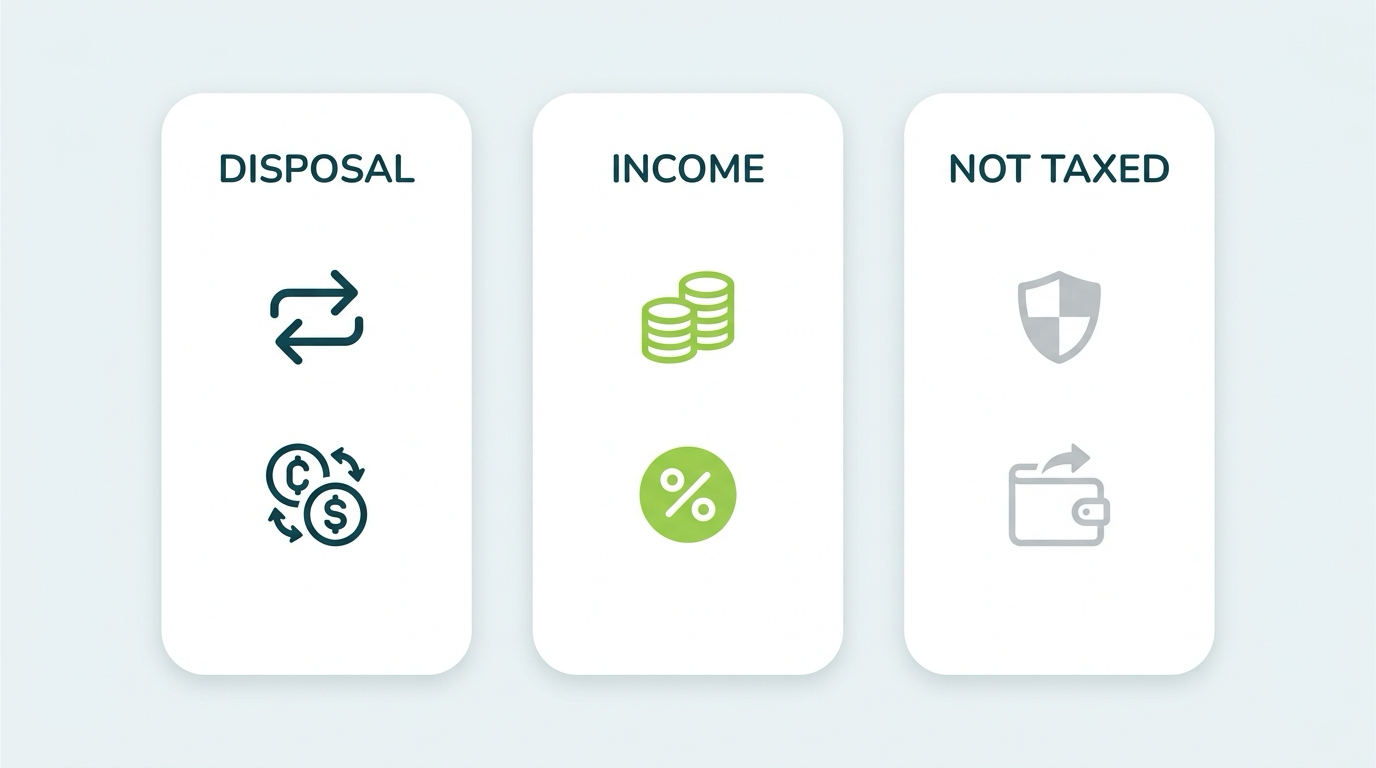
Are Solana DeFi transactions taxable? Most of them, yes. Every swap is a disposal with a capital gain or loss, every token reward is ordinary income at receipt, and entering or exiting a liquidity pool is a taxable event under the treatment most tax software applies. The exceptions matter too: borrowing, posting collateral, and wrapping SOL are generally not taxable. Knowing which bucket each click falls into is the entire game.
Solana makes this harder than it sounds, because the chain’s speed and near-zero fees encourage volume. A casual Jupiter user might execute more taxable disposals in a month than a Coinbase user does in a year. Add Raydium pools, Kamino loops, marginfi borrows, and a few seasons of reward emissions, and a single wallet can hold ten thousand taxable events that no exchange will ever report for you.
This guide maps Solana DeFi taxes action by action for 2026: swaps and aggregator routes, providing and removing liquidity, lending and borrowing, liquidations, yield and emissions, wrapped SOL, and how liquid staking tokens plug into all of it. Then it covers reporting mechanics, the 1099-DA gap, and the mistakes that cost the most. It is part of our complete Solana tax guide, alongside our deep dives on Solana staking, liquid staking tokens, Solana airdrops, and Solana NFTs.
Disclaimer: This guide is for informational purposes only and is not tax or legal advice. DeFi taxation includes unsettled areas with no direct IRS guidance. Always consult a qualified CPA about your specific situation.
The One Principle Behind Every DeFi Tax Question
Crypto is property. Under the general framework, tax consequences flow from two triggers:
- Disposal. Whenever you give up a token and receive something different in return, you dispose of property. Gain or loss equals what you received minus your cost basis in what you gave up.
- Receipt of income. Whenever new tokens come to you as compensation, yield, rewards, or interest, you have ordinary income at their fair market value on receipt, and that value becomes their basis.
Everything in Solana DeFi is one of these, a combination of them, or neither. The protocols do not change the principles; they just multiply the events and blur which trigger fired. So this guide is organized the way your wallet history is: by action.
Swaps: Jupiter, Raydium, Orca, and Every Route
The bread and butter of Solana DeFi is the swap, and the rule is unambiguous: every crypto-to-crypto swap is a taxable disposal. Trade SOL for USDC, USDC for JUP, or BONK for WIF, and in each case you sold the first asset at its market value and bought the second. Gain or loss is that value minus your basis in what you sold. There is no like-kind treatment for crypto, and swapping into a stablecoin is just as taxable as cashing out to dollars.
Three Solana-specific wrinkles:
- Aggregator routes are still your trades. Jupiter may split one swap across four pools and three intermediate tokens. Tax software generally, and reasonably, treats the economic trade you signed for as the disposal, but messy route data is a common source of import errors. Review large swaps after import.
- Stablecoin swaps count. USDC to USDT is a disposal of USDC. Gains are usually pennies, but the events pile up and belong in the record.
- Fees adjust your numbers. Transaction fees and priority fees paid in SOL are themselves tiny disposals of SOL, and trading costs can be added to basis or netted from proceeds. Software handles this automatically; the point is not to panic when line items look slightly off from the UI price.
Wrapped SOL: The Non-Event
Programs on Solana often require wSOL, a one-to-one wrapped representation of native SOL. Wrapping and unwrapping does not change what you own in any economic sense, and the widely used position is that it is not a taxable event. Most tax software treats wrap and unwrap transactions as non-taxable conversions and carries your basis through. Flag it only because bad imports sometimes misread wraps as swaps, silently inflating your gain count.
Liquidity Pools: Raydium and Orca
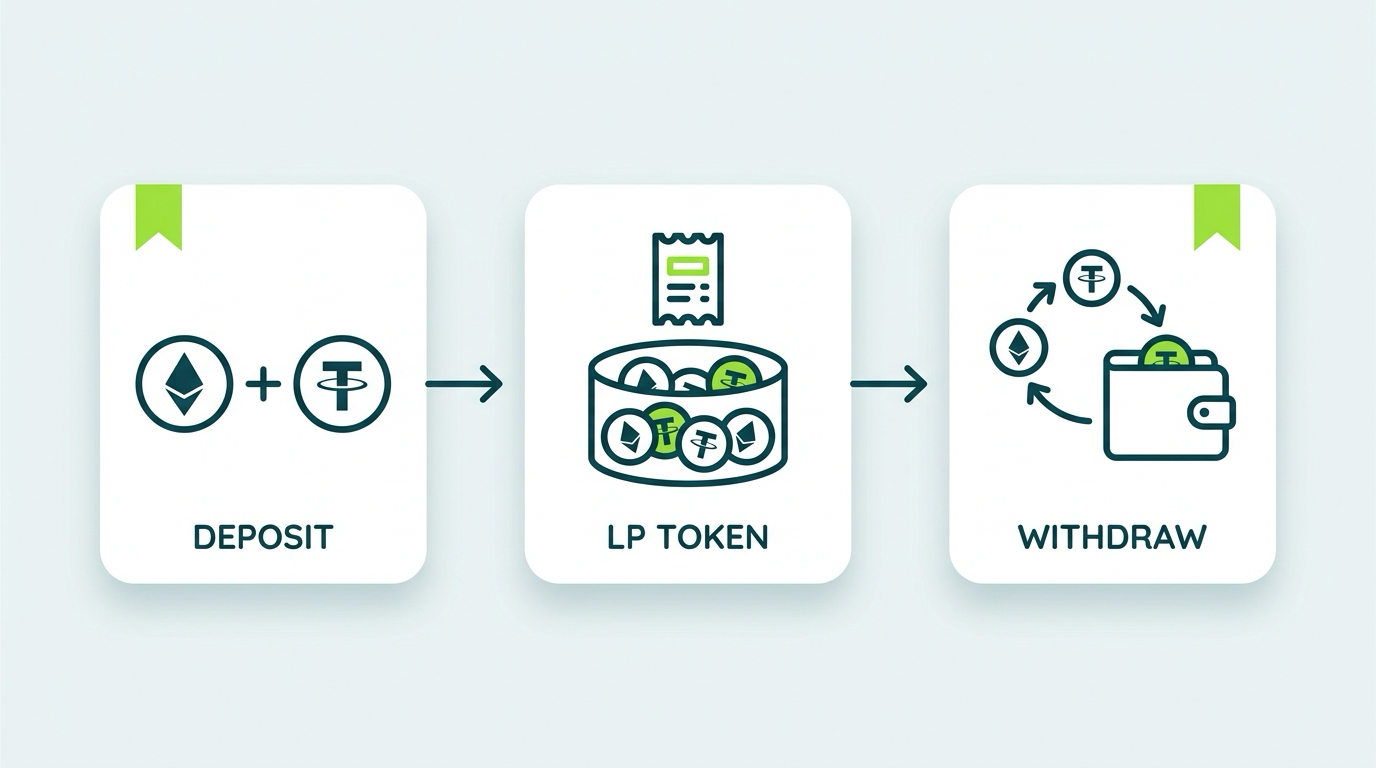
Providing liquidity is where Solana DeFi taxes get genuinely unsettled. Here is the mechanical picture first: you deposit two assets (say SOL and USDC) into a pool, and you receive either an LP token (classic pools) or a position NFT (concentrated liquidity on Orca Whirlpools and Raydium CLMM). Traders pay fees to the pool, your position earns them, and some pools add reward emissions on top. Later you withdraw, handing back the LP position for the underlying assets, which by then are in different proportions than what you deposited.
Entering: The Conservative Default Is a Disposal
There is no direct IRS guidance on LP deposits. The conservative position, and the default in Koinly, CoinTracker, and most other software, is that depositing tokens and receiving an LP token in exchange is a taxable disposal of the deposited tokens. You exchanged two assets for a different asset (the LP token), so gain or loss is realized on both deposited legs, and your LP token takes a basis equal to the value you put in.
The aggressive position argues a deposit is not a disposal because the LP token is just a receipt for assets you still beneficially own. It has some intuitive appeal and some analogy support, but it strains when pools rebalance your assets underneath you, and it is not what mainstream software produces. If you take it, take it deliberately: document the reasoning, apply it to every pool in every year, and accept the audit risk. Our DeFi and liquidity pool guide walks through the positions in more depth.
While In: Fees and Emissions
Two kinds of return arrive while your liquidity works, and they are taxed differently:
- Reward emissions you claim (RAY, ORCA, or partner tokens) are ordinary income at fair market value when you harvest them, exactly like staking rewards. Each claim is an income event, and the claimed tokens take that value as basis.
- Trading fees depend on pool design. In concentrated liquidity positions, fees accrue as separate claimable amounts, and harvesting them is best treated as income at receipt. In classic pools where fees just increase what your LP token redeems for, there is no separate receipt; the value shows up as extra capital gain when you exit.
Exiting: Another Disposal
Withdrawing liquidity is the mirror image of entering: you dispose of the LP position and receive the underlying tokens at their current values. Gain or loss is what you received minus your basis in the LP position. The received tokens take fresh basis at withdrawal-day value.
This is also where impermanent loss finally touches your taxes. While you are in the pool, divergence between your deposited assets is unrealized and not deductible. At exit, it is baked into the math automatically: if the pool returns less value than your LP basis, you realize a capital loss. No separate impermanent loss deduction exists, and none is needed; the disposal captures it.
One Raydium Round Trip
You deposit 10 SOL ($1,500) and 1,500 USDC into a Raydium pool, receiving LP tokens. Entry: you disposed of SOL and USDC at market value, realizing gain or loss on each against their basis, and your LP tokens take a $3,000 basis. Over three months you claim $140 of RAY emissions: ordinary income. You withdraw and receive 8.6 SOL and 1,760 USDC worth $3,080 total: a disposal of the LP tokens for an $80 capital gain, and every received token starts fresh at today’s value.
Lending and Borrowing: Kamino and marginfi
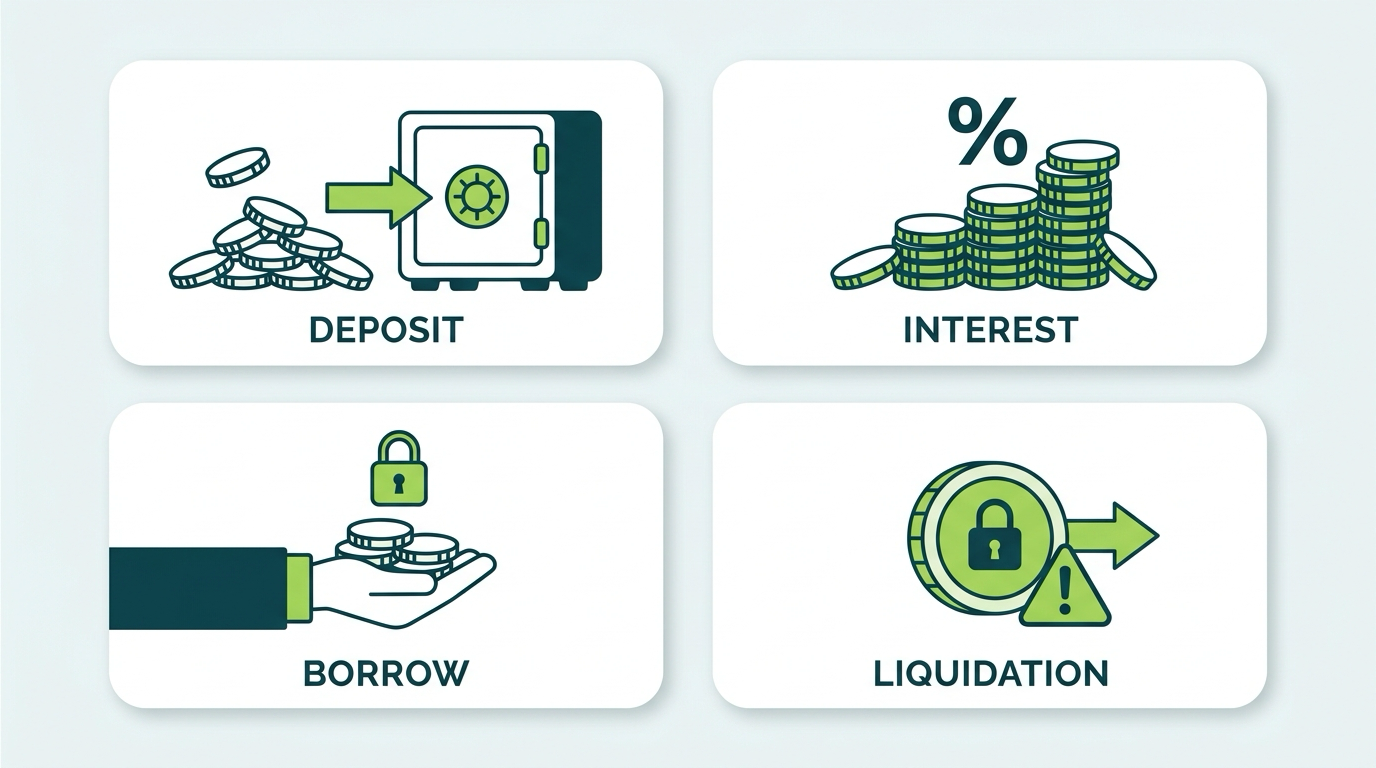
Solana’s money markets, Kamino and marginfi chief among them, involve four distinct actions with four distinct answers.
Depositing to Lend
You deposit USDC or SOL into a lending pool and the protocol tracks your claim, sometimes via a receipt token (Kamino’s kTokens), sometimes as an internal balance (marginfi). Is the deposit a disposal? This is the same gray area as LP entry, one notch less severe. Where you receive a transferable receipt token, conservative software may treat the deposit as a swap into that token. Where the position is just an internal balance, treating it as a non-taxable deposit of property you still own is the natural reading, and even for receipt tokens many practitioners take the deposit position because the token maps one-to-one onto your claim. Pick a treatment, document it, apply it consistently on the way in and the way out.
Earning Interest
No gray here: lending interest is ordinary income. Whether it drips in continuously or shows up as a growing redeemable balance, the value you earn for lending is income, generally booked as you gain the ability to withdraw it. Software typically books lending interest at withdrawal or at periodic accrual points; check that it is captured at all, because internal-balance protocols sometimes import as if the interest never happened.
Borrowing
Loan proceeds are not income. You have an obligation to repay, so borrowing USDC against your SOL creates cash without tax, which is exactly why borrowing against crypto is a popular alternative to selling it. Posting collateral is generally not a disposal either; you have pledged property, not exchanged it. Repaying the loan in the borrowed asset is likewise a non-event, though if you repay a loan with a different, appreciated asset, that repayment is a disposal of the asset you used.
Liquidation: The Forced Sale
If your health factor fails, the protocol sells your collateral, and the tax system sees exactly what happened: a disposal of your collateral at the liquidation price. You realize capital gain or loss against your basis in the seized assets. The brutal case is long-held, highly appreciated SOL posted as collateral: liquidation can trigger a large taxable gain in the same moment you lose the position. Nobody sends you a form; the event lives only in your wallet history.
Yield, Rewards, Points, and Jito
Beyond pools and money markets, Solana DeFi pays out in a few recurring shapes:
- Emission and incentive rewards (RAY, ORCA, KMNO, MNDE, JTO incentives) are ordinary income at fair market value when claimed. Identical logic to staking rewards.
- Points programs are generally not taxable while points are untradeable, and become income when they convert to real tokens, usually via an airdrop-style claim. Our Solana airdrop tax guide covers the claim mechanics, valuation, and the claim-high sell-low trap in full.
- Vault and auto-compounder products (Kamino vaults and similar) layer income events on top of LP treatment: the vault harvests and compounds rewards on your behalf, and the conservative reading books each harvest as income even though you never clicked anything.
- Jito and MEV-flavored yield. If you hold JitoSOL, the MEV yield accrues inside the token’s exchange rate and follows liquid staking treatment: no ongoing income under the standard approach, capital gain at disposal. That model, including the entry and exit swap questions, lives in our liquid staking token guide. Once an LST goes into DeFi (lent on Kamino, paired on Orca, looped as collateral), the rules in this guide stack on top of it.
Solana DeFi does not create new tax law. It creates volume. The rules fit on an index card; the work is applying them to eleven thousand transactions the protocols never recorded for you.
No Forms Are Coming: DeFi and the 1099-DA Gap
Starting with 2025 transactions, custodial exchanges file Form 1099-DA reporting gross proceeds from digital asset sales. DeFi was originally scheduled to join that regime: a 2024 regulation would have treated DeFi front-ends as brokers. Congress repealed that rule in 2025, so Jupiter, Raydium, Kamino, and marginfi report nothing to anyone, and that is unlikely to change soon.
For your risk picture, the repeal cuts both ways. Nothing you do on-chain generates a form, but the moment your DeFi proceeds land on a centralized exchange and get sold, that sale hits a 1099-DA as proceeds with no basis story. A wallet that shows two years of silent DeFi activity followed by a six-figure exchange sale looks, to an automated matching system, like unexplained money. Your own records are the entire bridge between those two facts. And the raw material is excellent: Solana’s ledger is public, permanent, and readable by every major tax platform.
Under Rev. Proc. 2024-28, effective January 1, 2025, all of this basis tracking happens per wallet, not in one universal pool. DeFi users routinely run a main wallet, a degen wallet, and protocol-specific accounts; each carries its own lots, and transfers between them must move specific basis.
How to Report Solana DeFi: Step by Step
- Import every wallet address into crypto tax software with Solana DeFi support (Koinly, CoinTracker, and CoinLedger all read Solana wallets). Include old and abandoned wallets; their history feeds your basis.
- Let it classify, then audit the classifications. DeFi imports are the most error-prone in crypto. Spot-check that swaps are swaps, LP entries and exits carry sensible values, lending interest was captured, wraps are non-events, and self-transfers between your wallets are matched, not booked as sales. Our Koinly DeFi import guide covers the common failure modes.
- Resolve the gray areas deliberately. LP deposits and lending deposits need a chosen position, applied consistently across protocols and years. Do not let default settings choose differently for two pools doing the same thing.
- Book the income. Claimed rewards, emissions, harvested fees, and lending interest total into ordinary income, reported as other income on Schedule 1 (or Schedule C if your activity is a genuine trade or business).
- Report the disposals. Every swap, LP entry and exit, and liquidation goes on Form 8949 and Schedule D with proceeds, basis, and holding period.
- Check yes on Form 1040’s digital asset question, and reconcile any exchange 1099-DAs against your on-chain records before filing.
Common Solana DeFi Tax Mistakes
Assuming No Form Means No Tax
The foundational error. DeFi’s silence is a reporting gap, not an exemption. The chain is the record, and it is public.
Missing Income From Internal-Balance Protocols
marginfi-style accounting, where interest accrues invisibly inside a position, is easy for importers to miss entirely. If your software shows a lending position earning zero for a year, the software is wrong, not the protocol.
Letting LP Events Import as Garbage
LP entries misread as full-value income, exits misread as zero-basis deposits, position NFTs treated as worthless: concentrated liquidity imports produce all of these. Every LP round trip deserves a manual look.
Counting Self-Transfers as Disposals
Moving funds between your own wallets, or between a wallet and a protocol-owned account that is still yours, is not a sale. Unmatched transfers inflate gains and break basis chains under per-wallet tracking.
Forgetting the Liquidation
People remember the pain and forget the paperwork. A liquidation is a disposal with real gain or loss, dated to the worst day of your quarter.
Ignoring Small Swaps and Dust
Ten thousand small disposals are still disposals. Materiality is not a filing standard, and the cleanup is cheaper when the record is complete from the start.
Your Solana DeFi Tax Checklist
- List every wallet you have used for Solana DeFi, current and abandoned.
- Import them all into crypto tax software and sync full history.
- Audit swap classifications, including Jupiter multi-hop routes and wSOL wraps.
- Review every LP entry and exit for sensible values and consistent treatment.
- Confirm lending interest and reward claims are booked as income.
- Check liquidations imported as disposals with correct basis.
- Match all self-transfers so they are not counted as sales.
- Apply per-wallet basis tracking under Rev. Proc. 2024-28.
- Report income on Schedule 1, disposals on Form 8949 and Schedule D.
- Archive everything: addresses, position histories, and your documented positions on gray areas.
Bottom Line
Solana DeFi taxes reduce to a short map: swaps and LP round trips are disposals, rewards and interest are income, borrowing and collateral are non-events, and liquidations are disposals you did not choose. What makes it hard is scale and silence: thousands of events, zero forms, unsettled corners around LP and lending deposits, and basis rules that now track per wallet.
If your Solana wallets hold years of Jupiter swaps, Raydium pools, and Kamino loops that no return has ever reflected, that is a reconstruction job, and it is the kind we do daily. Count On Sheep rebuilds DeFi histories, resolves the gray-area positions with you, and delivers CPA-ready numbers. Book a 15-minute call with a crypto tax specialist to size the work, or reach out to our team for a full Solana DeFi review.
Related Reading
- Solana Tax Guide: The Complete Picture
- Solana Staking Rewards Taxes
- Liquid Staking Token Taxes: mSOL, JitoSOL, and bSOL
- Solana Airdrop Taxes: JTO, JUP & More
- Solana NFT Taxes: Magic Eden, Tensor & cNFTs
- NFT & DeFi Taxes: Liquidity Pools, Staking, and Lending
- Per-Wallet Cost Basis Under Rev. Proc. 2024-28
Frequently Asked Questions
Are Solana DeFi transactions taxable?
Most of them, yes. Every swap on Jupiter, Raydium, or Orca is a taxable disposal of the token you give up. Rewards and yield paid in tokens are ordinary income at receipt. Adding and removing liquidity is treated as a disposal under the conservative approach most software takes. The main non-taxable actions are depositing collateral, borrowing, and moving assets between your own wallets.
Is swapping tokens on Jupiter or Raydium a taxable event?
Yes. A crypto-to-crypto swap is a disposal of the token you sell, taxed as a capital gain or loss measured against your cost basis, plus the token you receive takes a new basis at its market value. This applies to every route Jupiter takes on your behalf; the aggregator routing does not change the tax result.
How is providing liquidity on Raydium or Orca taxed?
The conservative treatment, and the default in most tax software, is that depositing two tokens and receiving an LP token or position NFT is a taxable disposal of the deposited tokens. Removing liquidity is then a disposal of the LP position. A minority position treats the deposit as non-taxable, but there is no direct IRS guidance, so whichever position you take should be applied consistently and documented.
Are trading fees and emissions from liquidity pools taxable?
Yes. Reward emissions like RAY that you claim are ordinary income at fair market value when received. Fees that accrue inside a concentrated liquidity position are generally income when you harvest them. Fees that accrue by increasing the value of a classic LP token are typically captured as capital gain when you exit the pool instead.
Is lending on Kamino or marginfi taxable?
The deposit itself is a gray area: conservative software treats receiving a deposit receipt token as a swap, while many argue it is a non-taxable deposit because you retain ownership. The interest you earn is clearly ordinary income. Withdrawing your principal back is the reverse of the deposit and follows whichever position you took going in.
Is borrowing against my crypto on Solana taxable?
No. Loan proceeds are not income because you have an obligation to repay. Depositing collateral is generally not a disposal either. The taxable moment arrives if you are liquidated: the protocol selling your collateral is a disposal at that moment, with gain or loss measured against your basis, even though you never pressed a button.
Is wrapping SOL into wSOL a taxable event?
The widely used position is no. Wrapped SOL is a one-to-one technical representation of SOL used by programs, and wrapping or unwrapping does not change what you own economically. Most tax software treats it as a non-taxable conversion. A hyper-conservative reading could call it a swap, but that treatment is rare in practice.
What happens to my taxes when I get liquidated on Solana?
A liquidation is a forced sale. The protocol disposes of your collateral to cover the debt, and you recognize capital gain or loss on that collateral as of the liquidation moment. If your collateral had appreciated, you can owe real tax on a position you lost. Liquidation penalties are generally baked into the disposal math rather than separately deductible.
How does impermanent loss affect my taxes?
Impermanent loss is not deductible while you stay in the pool, because nothing has been realized. It shows up at exit: when you withdraw and dispose of your LP position, the gain or loss you realize reflects what the pool actually returned to you versus your basis. Until you exit, it is an unrealized paper effect.
Do Solana DeFi protocols send tax forms or 1099-DAs?
No. Congress repealed the rule that would have made DeFi front-ends report as brokers, so protocols like Jupiter, Raydium, and Kamino file nothing. Form 1099-DA comes from custodial exchanges. The moment your DeFi profits touch a centralized exchange and get sold, the proceeds are reported with no basis behind them, which is why your own records carry the whole story.
Are JitoSOL and other liquid staking tokens part of DeFi taxes?
They overlap. Acquiring or redeeming an LST raises its own questions, covered in our liquid staking guide. Once you use an LST inside DeFi, lending it on Kamino, pairing it in a pool, or looping it as collateral, the normal DeFi rules in this guide apply on top.
What if I have years of unreported Solana DeFi activity?
You are not alone, and it is fixable. Solana's history is public and permanent, so a complete record can be rebuilt from your wallet addresses. The work is classifying thousands of transactions correctly: swaps, LP events, interest, rewards, and self-transfers. That is exactly the reconciliation work a crypto tax specialist does, and doing it proactively is far cheaper than answering an IRS notice with no records.