

Does Tangem report to the IRS? No. Tangem is a self-custody cold wallet, it collects no KYC identity data, and it will never send you or the IRS a tax form. But every sale, swap, Tangem Pay purchase, and staking reward that touches your cards is still fully taxable, and the buy, sell, and swap providers built into the Tangem app are KYC businesses that leave a paper trail. The distance between “no tax documents” and “no taxes” is exactly where Tangem holders get burned.
This guide covers Tangem taxes end to end for 2026: what the IRS can actually see, which Tangem app actions are taxable and which are not, how in-app staking is taxed, why your 2-card or 3-card set counts as one wallet (not three) under the new per-wallet basis rules, and exactly how to pull your history out of a wallet that famously does not make it easy.
Two quick clarifications before we start. First, this guide is about US income taxes on your crypto, not the “Tax ID” Tangem asks for when shipping cards to certain countries (that is a customs and VAT thing, unrelated to the IRS). Second, “Tangem” here means the NFC card and ring cold wallet plus the Tangem app, including its newer hot wallet mode. The tax rules below apply to all of it.
Disclaimer: This guide is for informational purposes only and is not tax or legal advice. Cryptocurrency rules change quickly. Always consult a qualified CPA about your specific situation.
What Is Tangem?
Tangem is a cold wallet that looks nothing like a Ledger or Trezor. Instead of a screen-and-buttons device, it is a credit-card-sized NFC card (or a ring) with an EAL6+ secure chip inside. No battery, no cable, no screen. You tap the card to your phone to sign transactions through the free Tangem app, which supports 14,100+ tokens across 90+ blockchains, multiple accounts, WalletConnect for dApps, in-app buying and swapping, and native staking. Tangem says it has sold more than six million cards since 2017.
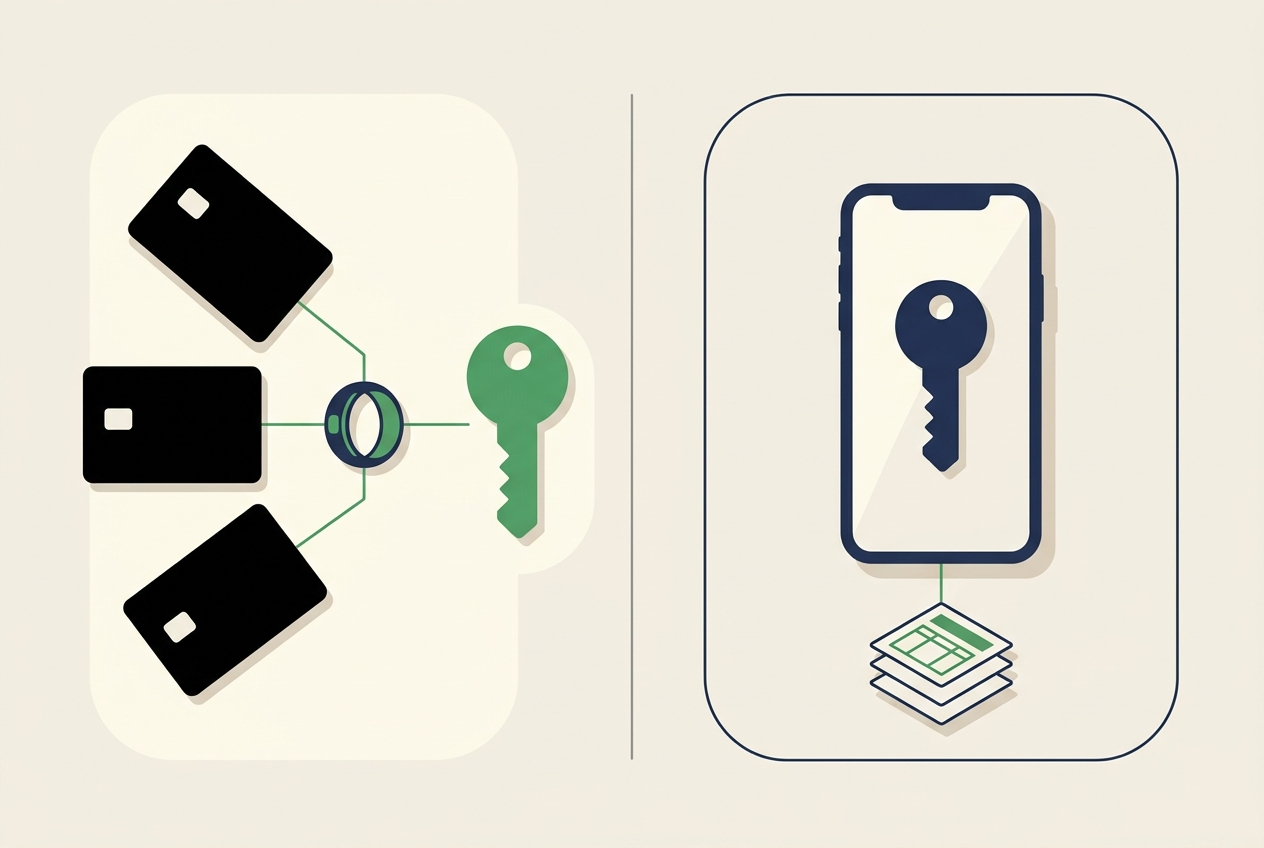
The tax-relevant design choice is that Tangem is seedless by default. The private key is generated inside the card’s chip and never leaves it. Your backup is not a 12 or 24 word phrase; it is the extra cards in your set. A standard pack ships with 2 or 3 cards, and the Tangem Ring bundles a ring plus 2 cards. Each one is a full physical copy of the same key. That detail sounds like pure security trivia, but it matters directly for the IRS per-wallet cost basis rules, and we cover it in its own section below.
Like every cold wallet, Tangem is self-custody. Your coins never sit on Tangem’s servers, the company does not know who you are (buying a card requires no account or KYC), and it has no broker relationship with you. That is why no Tangem tax documents exist. It is also why the entire reporting job lands on you.
Why Tangem Taxes Confuse People
Three things make Tangem taxes uniquely confusing:
- Zero paperwork, zero prompts. No 1099, no gain and loss summary, no year-end email. Exchange users get a tax report handed to them; Tangem users get silence, and many read silence as “nothing to report.”
- The app’s convenience features feel internal but are not. Buying, selling, and swapping “inside” the Tangem app actually executes through regulated third-party providers, most of which verify your identity.
- Getting data out is genuinely hard. There is no one-click Tangem tax report; the transaction export is per token and per network, with no unified tax CSV. Users on r/Tangem regularly ask how to pull a full history for taxes, and the honest answer involves a workaround (covered below).
A Tangem card secures your keys, not your tax position. No KYC at the checkout does not mean no record on the chain.
Does Tangem Report to the IRS?
This is the most searched Tangem tax question, so here is the precise answer. Tangem does not report to the IRS. It is not a broker, not an exchange, and not a money services business with respect to your self-custodied funds. It never learns your name, so it could not file a report on you even if it wanted to. There is no Tangem 1099, no Tangem tax form, and no reporting relationship with US tax authorities. If you went looking for Tangem tax documents to download from the app, what actually exists is a per-token history export, covered in the how-to section below. The forms that matter for filing (Form 8949, Schedule D, Schedule 1) are ones you or your software prepare.
Before that answer makes you relax, it needs three serious caveats.
The In-App Providers Know Exactly Who You Are
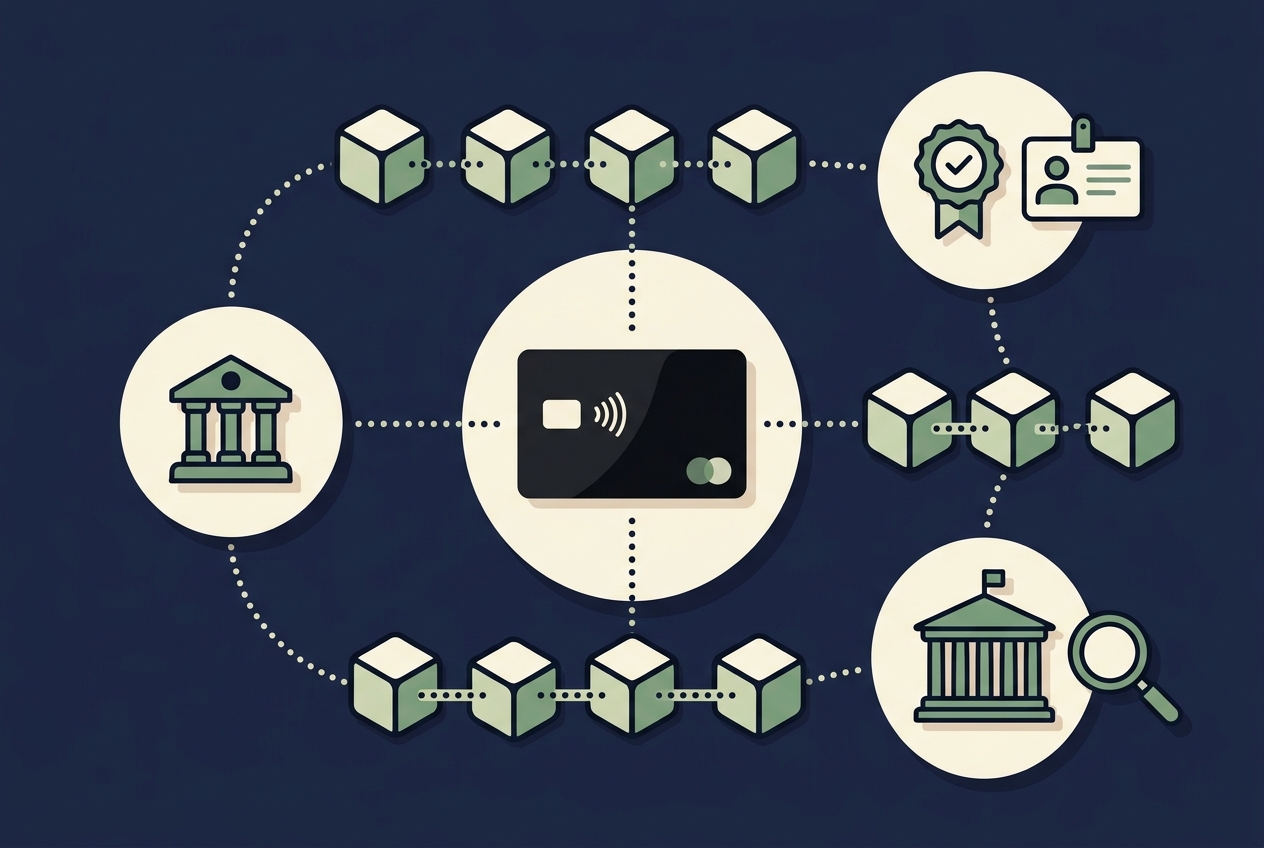
Here is the nuance almost every Tangem guide skips. The buy, sell, and swap buttons in the Tangem app are storefronts for third-party providers, not Tangem services:
- Fiat on-ramps and off-ramps: MoonPay, Mercuryo, and Simplex handle buying crypto with dollars and cashing out. These are regulated, KYC-collecting businesses. Your first in-app purchase involves identity verification with the provider.
- Swaps: Tangem Express aggregates swap routes through providers such as Changelly, ChangeNOW, and 1inch. Depending on the provider and amount, KYC can apply here too.
So while Tangem the company holds no data on you, the moment you use the app’s built-in commerce features, a regulated intermediary has your identity, your addresses, and your transaction details. Those records can be produced to tax authorities, and the fiat side of any sale flows through the banking system, which the IRS sees clearly.
The Blockchain Is the Report
Every transaction you sign by tapping a Tangem card is broadcast to a public blockchain and recorded permanently. Bitcoin, Ethereum, Solana, and essentially every chain the Tangem app supports are transparent public ledgers. The IRS contracts with blockchain analytics firms such as Chainalysis to cluster addresses, follow funds across chains, and connect on-chain activity to real identities. Your Tangem addresses are pseudonymous, not anonymous.
The Exchanges You Touch Report Plenty
The moment you withdraw from Coinbase or Kraken to your Tangem address, the exchange records exactly which address received your coins, and that address is now linked to your KYC identity forever. Starting with the 2025 tax year, centralized exchanges also issue Form 1099-DA for disposals on their platforms. When an exchange tells the IRS you withdrew 1.5 BTC to self-custody, the IRS reasonably expects your future returns to account for those coins. Silence reads as evasion, not privacy.
Is Tangem Traceable?
Yes. This deserves its own direct answer because it is a common follow-up question. Tangem itself cannot trace you (it has nothing to trace with), but your activity is traceable the way all on-chain activity is: public, permanent, and increasingly easy to attribute. Three links connect a “private” Tangem wallet to your name:
- Exchange withdrawals and deposits. Any transfer between a KYC exchange and your Tangem ties the address to your identity.
- In-app provider records. MoonPay, Mercuryo, Simplex, and the swap providers keep KYC records tied to the addresses they served.
- Chain analytics. Once one address is attributed, clustering heuristics follow the rest of your activity across wallets and chains.
Treat your Tangem history as something the IRS can eventually reconstruct, because it can.
Do You Pay Taxes on a Tangem Wallet?
Not for owning one, and not for holding crypto on it. The cards are hardware; buying a 3-card pack is no more taxable than buying a USB drive. There is no tax on storage and no tax on unrealized gains while your coins appreciate in cold storage. A Tangem card holding Bitcoin for five years generates zero tax until you dispose of it.
Tangem taxes only exist when taxable events happen. The IRS treats crypto as property under Notice 2014-21, which means disposals trigger capital gains and new coins you earn trigger ordinary income. Where the transaction happens (the Tangem app, a WalletConnect dApp, or an exchange) changes nothing about whether it is taxable.
Capital Gains
When you sell, swap, or spend crypto, you realize a capital gain or loss: proceeds minus cost basis. Held one year or less, gains are short-term and taxed at ordinary rates up to 37%. Held more than a year, they are long-term and taxed at 0%, 15%, or 20%. Cold storage actually works in your favor here: Tangem holders who genuinely hold tend to qualify for long-term rates far more often than active traders.
Ordinary Income
When you receive new crypto (staking rewards, airdrops, payment for work), it is ordinary income at fair market value on the day you gain control of it. That value then becomes your cost basis going forward. Our crypto income guide covers the mechanics in depth.
Tangem Transactions That Are NOT Taxable
Knowing what is not taxable keeps you from overreporting and helps you catch software errors that inflate your bill.
Transferring Crypto to Your Tangem
Moving coins from an exchange or another wallet you own onto your Tangem is not taxable. You still own the same asset; only the keys changed location. This is the single most common Tangem transaction and the single most common source of panic. Two record-keeping duties come with it: the original cost basis and holding period travel with the coins, and you should keep evidence that both sides of the transfer were yours.
Transferring Crypto Off Your Tangem
Same rule in reverse. Sending coins from your Tangem back to your own exchange account, to a second Tangem wallet you control, or to a hot wallet like MetaMask is not a disposal.
Buying Crypto Through the Tangem App
Purchasing crypto with US dollars through the app’s on-ramp providers (MoonPay, Mercuryo, Simplex) is not taxable. The purchase sets your cost basis: price paid plus fees. Save the provider receipt, because your basis claim years from now needs to match their record.
Holding, Internal Moves, and Gifts Received
HODLing in cold storage is not taxable. Moving assets between accounts you control inside the Tangem app is not taxable. Receiving a crypto gift is generally not taxable at receipt (the giver may have gift tax considerations), though the basis rules you inherit matter later.
Losing a Card
Worth stating because Tangem’s card format makes people ask: losing one card of your set is not a tax event. Your backup cards hold the same key and the funds never moved. No disposal, no loss deduction, no gain. Your record-keeping obligations survive the lost card, which is a good argument for keeping tax records somewhere other than a drawer next to the wallet.
The Cold Storage Panic
You bought 0.8 BTC on Kraken for $48,000 and later withdrew it to your Tangem card when BTC was worth $76,000. Nothing is owed. The transfer is not a disposal. Your basis stays $48,000, your holding period keeps running from the original purchase date, and the $28,000 of appreciation stays untaxed until you actually sell, swap, or spend.
For the complete map, see our taxable vs non-taxable events guide.
Tangem Transactions That ARE Taxable
Now the events that create real tax. Every one of these can happen entirely inside the Tangem app, without your coins ever touching an exchange account.

Selling Crypto Through the Tangem App
Cashing out to dollars through the app’s off-ramp providers (MoonPay handles off-ramp, among others) is a taxable disposal. Gain or loss equals proceeds minus your cost basis. Because the provider processed a KYC fiat payout, this transaction is thoroughly documented on both the crypto and banking sides.
Swapping Coins Through Tangem Express
Swapping BTC for ETH, or any coin for any other coin, through Tangem Express is a taxable disposal of the coin you give up, even though no dollars appeared and you never left self-custody. The app routes the trade through providers like Changelly, ChangeNOW, or 1inch, but the tax result is identical to selling on an exchange: you realize gain or loss on the outgoing asset at its fair market value, and the incoming asset takes that value as its new basis.
The In-App Swap Surprise
You hold 10 SOL on your Tangem with a $9,500 total basis. Using Tangem Express, you swap all 10 SOL for ETH when SOL trades at $2,400, so your proceeds are $24,000. No exchange account, no bank, no fiat. You still disposed of the SOL and owe capital gains tax on a $14,500 gain. The ETH you received takes a $24,000 basis.
Spending With Tangem Pay
Tangem Pay turns your crypto into a payment card that works anywhere, including through Apple Pay and Google Pay. Convenient, and a tax event every time you tap. Spending crypto is a disposal of property under IRS rules, so each purchase realizes a capital gain or loss on the crypto spent, measured from its cost basis to its value at checkout. There is no de minimis exemption in current law: the $6 coffee and the $2,000 laptop are both reportable disposals.
The Tangem Pay Laptop
You buy a $2,000 laptop with Tangem Pay, spending ETH you acquired for $700 eighteen months ago. That tap disposed of the ETH at $2,000 of proceeds against a $700 basis: a $1,300 long-term capital gain, reportable on Form 8949. Heavy Tangem Pay users can generate hundreds of these micro-disposals a year, each needing its own lot, date, and basis.
Staking Rewards
Rewards earned by staking through the Tangem app are ordinary income. Full section next.
DeFi and NFTs via WalletConnect
Connect your Tangem to a dApp through WalletConnect and every swap, liquidity event, NFT mint, and NFT sale follows normal DeFi and NFT tax rules. The card is just the signer; the tax treatment belongs to the transaction. Our MetaMask guide and Phantom guide cover those layers in detail, and the same logic applies when the wallet behind the interface is a Tangem card.
Tangem Staking Taxes
The Tangem app offers native, self-custodial staking with one tap for assets like SOL, TRX, ATOM, ADA, BNB, POL, and TON (the supported list changes, so check the app). You delegate to validators while keys stay on your card. Convenient, and taxable.
When Rewards Become Income
Under Rev. Rul. 2023-14, staking rewards are ordinary income at fair market value when you gain dominion and control: when you can freely sell or transfer them. For most Tangem staking, that is when rewards land in your account or become claimable. Locked or unbonding rewards may defer the income moment until you can actually move them.
Rewards Set Their Own Cost Basis
The dollar value you report as income becomes the basis of the reward coins. Sell them later and you calculate a separate capital gain or loss from that basis. Skip the income step and your tax software assigns zero basis, which quietly taxes the same value twice.
The Yield Mode Caveat
Tangem also offers Yield Mode, a separate interest-accrual product distinct from validator staking. Earnings that accrue from lending-style products raise their own questions about income timing and character, and the treatment can differ from plain staking rewards. If you turned Yield Mode on, flag it for your tax preparer specifically rather than lumping it in with staking.
Common Tangem Staking Mistakes
- Assuming staking is tax-free because no form ever arrives from Tangem or the validators.
- Reporting rewards only when sold instead of when received.
- Missing small frequent rewards (Solana epochs, Cosmos claims, TRX votes) that compound across a year.
- Forgetting that reward coins need their income-date basis recorded, or every later sale reads as 100% gain.
Per-Wallet Cost Basis: Your Cards Are ONE Wallet
This is the most important 2026 development for cold wallet holders, and it has a twist that is unique to Tangem. Under Rev. Proc. 2024-28, effective January 1, 2025, the old universal pooling method is dead. Cost basis must now be tracked per wallet and per account, not in one big portfolio-wide pool.
What Counts as “One Wallet” on Tangem?
Here is where Tangem’s seedless, multi-card design creates a question no other wallet guide answers. Your 2-card or 3-card set (or ring plus cards) is not two or three wallets. Every card in a set is a physical copy of the same private key, controlling the same addresses. For Rev. Proc. 2024-28 purposes, the whole set is one wallet with one set of basis records. Tapping with card A or backup card B changes nothing; it is the same wallet signing.
What DOES create separate wallets:
- Multiple wallets in the Tangem app. The app supports adding more than one wallet (a second card set, an imported seed wallet, the hot wallet mode). Different keys mean different wallets, and each is its own basis universe.
- Different accounts and chains within a wallet. Your Bitcoin, Ethereum, and Solana accounts each carry their own lots and their own records, just like separate accounts on any hardware wallet.
- Other wallets you own. Your Tangem, your MetaMask, and your exchange accounts are all separate wallets for basis purposes now. You cannot sell from the Tangem while pointing at a high-cost lot that still sits on Coinbase.
Why This Hits Tangem Users
The typical Tangem journey is consolidation: buy BTC on Coinbase in 2021, ETH on Kraken in 2023, then sweep everything onto one card set for safekeeping. Under the old universal method, all those lots lived in one pool. Now, specific tax lots (dates and purchase prices) had to move with the coins to the wallet where they sit, and your records need to say which lots landed where. If you made a safe harbor allocation under Rev. Proc. 2024-28, keep that documentation permanently. If you never formally allocated, reconstruct now: list every acquisition, match every transfer, and assign lots to the wallet holding the coins. Our per-wallet cost basis guide walks through the full process, and your cost basis method choice (FIFO, or HIFO via specific identification) now operates within each wallet rather than across your whole portfolio.
Zero-Basis Default
You sell 0.25 BTC from your Tangem for $22,000 through the app’s off-ramp. Your software cannot trace which exchange lot arrived in which transfer and defaults the basis toward zero. Nearly the entire sale reads as gain, and it may default to short-term.
Documented Transfer
Same sale, but your records show this was the lot bought on Kraken at $17,000 and transferred to the Tangem with basis intact. Gain = $5,000, and the original purchase date qualifies it as long-term at the lower rate.
Tangem and Form 1099-DA
Tangem will never send you a 1099-DA. But the form still shapes your filing, because the 1099-DA era wraps a reconciliation gap around every self-custody wallet.
Centralized exchanges began issuing Form 1099-DA for the 2025 tax year, reporting gross proceeds (and over time, basis) for disposals on their platforms. Here is the catch for Tangem holders: when an exchange reports the coins you bought and shows a withdrawal to self-custody, its reporting trail ends at your Tangem address. Everything after that (Tangem Express swaps, Tangem Pay spending, staking income, an eventual off-ramp sale) exists only in your records. The IRS can see the on-chain activity; it just does not receive a tidy broker form for it. That asymmetry is where audits start.
Your job is to make the two halves meet:
- Match every exchange withdrawal to a Tangem deposit with the basis attached.
- Report all self-custody disposals on Form 8949 even though no broker reported them.
- Reconcile any 1099-DA you receive against your own numbers before filing, since broker-reported basis on transferred coins is often missing or wrong. Our 1099-DA explainer covers how to correct it.
How to Get Tax Info From Tangem
Tangem does not generate a Tangem tax report, and this is honestly its weakest point at tax time: there is no unified transaction export. The in-app CSV export is per token and per network, and the formatting is inconsistent enough that tax software often chokes on it. The good news: you do not need Tangem’s export at all. Blockchains are public, so the reliable path is letting tax software read the chain directly. Building a complete Tangem tax report still takes only about an hour with the right process. Here is the exact workflow.

- List every network you have ever used on the wallet. Open the Tangem app and inventory every token and chain, including networks you emptied and tokens the app hides when balances hit zero. Missing one chain breaks the whole reconciliation.
- Copy your public address for each chain. In the app, open each token and use the Receive screen to copy the address. For Bitcoin and similar UTXO chains, get the xPub (extended public key) where offered so all derived addresses are captured, not just the current one.
- Import the addresses into crypto tax software. Koinly, CoinTracker, CoinLedger, and Coinpanda all support Tangem via public address and xPub import. This is view-only data. Never enter a seed phrase anywhere, and be suspicious of anything that asks (a standard Tangem setup does not even have one).
- Use per-token CSV exports only to fill gaps. If the software misses a network it cannot sync, export that token’s history CSV from the app and upload it manually. Expect to massage column formats.
- Connect every exchange you ever used. Coinbase, Kraken, Gemini, closed accounts included. The basis for coins on your Tangem almost always originates at an exchange, so the software needs both sides to link the transfers.
- Reconcile transfers and fix flags. Confirm exchange withdrawals match Tangem deposits and are tagged as self-transfers, not sells or zero-basis buys. Resolve every missing basis warning. Verify staking rewards booked as income with correct dates, and confirm each Tangem Pay spend appears as a disposal.
- Generate and review your forms. Produce Form 8949, Schedule D, and an income summary for Schedule 1. Spot-check the largest disposals by hand before filing.
Best Tangem Tax Software
The major platforms all support Tangem through address and xPub import: Koinly (excellent multi-chain coverage, see our Koinly review), CoinTracker (strong exchange linking, see our CoinTracker review), CoinLedger (the option Tangem’s own blog promotes, with clean Form 8949 output), and Coinpanda. The Koinly vs CoinTracker comparison helps you choose. One honest caveat that applies to all of them: software can read your Tangem’s chains perfectly and still get your Tangem wallet taxes wrong if the basis from your pre-Tangem exchange history is missing. The import is the easy part; the review is where accuracy happens, and a professional cleanup pays for itself on messy histories.
Which Tax Forms Do Tangem Users File?
- Form 8949: every taxable disposal (sells, swaps, Tangem Pay spends) with dates, proceeds, basis, and gain or loss.
- Schedule D: the roll-up of short-term and long-term totals from Form 8949.
- Schedule 1: staking rewards, airdrops, and other crypto income for hobby investors.
- Form 1040 digital asset question: answer truthfully. Receiving, selling, swapping, or earning crypto means “yes.”
- 1099-DA: never from Tangem, but reconcile any you receive from exchanges against your own records.
Our Form 8949 and Schedule D walkthrough shows the line-by-line mechanics.
Common Tangem Tax Mistakes
These six errors account for most of the overstated bills and audit exposure we see when cleaning up Tangem wallet taxes and other cold wallet histories.
Treating In-App Swaps as Non-Taxable
Tangem Express feels like an internal wallet function, so people assume no tax. Every swap is a disposal of the outgoing coin. This is the most expensive misunderstanding on this list.
Ignoring Tangem Pay Spending
Each card tap is a disposal with its own lot and gain calculation. Users who spend from appreciated crypto all year without tracking it face a brutal reconstruction job in April.
Losing Basis on Transfer-In
Software mislabels an exchange-to-Tangem transfer as a sell on one side and a zero-basis buy on the other, inventing gains twice. Review every transfer pair manually.
Assuming No KYC Means Invisible
Tangem never asks who you are, but the exchanges, on-ramps, and swap providers around your wallet do, and the chain records everything. Filing as if the IRS cannot see self-custody is a bet against blockchain analytics, and it is a losing one.
Forgetting Staking Income
Small frequent rewards are income at receipt and basis for later. Skipping them creates cascading zero-basis errors that inflate gains on every future sale of the reward coins.
Panicking Over a Lost Card
Losing one card of your set is not a taxable loss and not a deductible casualty. Your backups control the same funds. The only tax consequence of a lost card is the reminder that your records should not live in one place.
Cold wallet histories fail audits for one reason: the coins arrived with no story. Give every coin its story, from purchase to disposal, and the numbers defend themselves.
Audit Readiness for Cold Wallet Holders
Audit defense is the part of Tangem taxes nobody enjoys thinking about, so build the file before you need it. Cold storage holders often assume low audit risk, and long holding periods genuinely help. But the 1099-DA reconciliation gap makes self-custody a natural audit target when reported withdrawals never reappear on a return. A defensible Tangem audit file includes:
- A wallet and address register: every card set, every app wallet, every chain, every address or xPub.
- Transfer documentation: exchange withdrawal records matched to Tangem deposits.
- Basis records per wallet: lots, dates, prices, and your Rev. Proc. 2024-28 allocation.
- Income logs: each staking reward with date and fair market value source.
- Spending logs: Tangem Pay disposals with per-transaction proceeds and basis.
- Reconciled software reports: archived each year, flags resolved, any 1099-DA cross-checked.
If the IRS ever sends a notice (see our guide to IRS crypto letters), that file turns a stressful inquiry into paperwork.
Your Tangem Tax Checklist
Run this list once a year and Tangem taxes stop being scary.
- Inventory every chain and token you have used across all Tangem wallets in the app, including emptied ones.
- Copy all public addresses and xPubs from the Receive screens (public data only; a standard Tangem has no seed phrase to enter anywhere).
- Import the addresses into crypto tax software and use per-token CSVs only for gap-filling.
- Connect every exchange you have ever used, including closed accounts.
- Mark self-transfers correctly so nothing reads as a sale or zero-basis deposit.
- Verify every Tangem Express swap and in-app sale appears as a disposal with correct proceeds and basis.
- Capture every Tangem Pay purchase as its own disposal.
- Book staking rewards as income at fair market value on each receipt date, and flag Yield Mode separately.
- Apply per-wallet cost basis under Rev. Proc. 2024-28, remembering your card set is one wallet.
- Resolve all missing basis flags before generating forms.
- Generate Form 8949 and Schedule D, put income on Schedule 1, answer the 1040 question.
- Reconcile any exchange 1099-DA against your records and archive everything.
Bottom Line: What to Do Next
Tangem gives you elegant, seedless cold storage and exactly zero help with your taxes. No tax documents will ever arrive, none are coming, and the app will not warn you that the swap you just tapped was a taxable disposal. Meanwhile the IRS sees the chain, receives the exchange forms, and expects your return to tell the whole story. In 2026, with per-wallet basis rules live and 1099-DA reporting in force, Tangem taxes come down to one thing: clean records that connect every coin’s purchase to its disposal.
Your action plan:
- Inventory every chain, address, and app wallet today, while the history is fresh.
- Import everything into tax software alongside your full exchange history.
- Fix transfers, basis flags, staking income, and Tangem Pay disposals before they compound.
- File complete forms and archive the audit trail.
If your Tangem history spans years, multiple exchanges, staking, Tangem Pay spending, or DeFi through WalletConnect, get a professional in your corner. A 15-minute call with a crypto tax specialist can save you thousands and a lot of stress. Reach out to our team for a Tangem tax review and we will handle the reconciliation, the forms, and the audit trail.
Related Reading
- Ledger Tax Guide
- MetaMask Tax Guide
- Phantom Wallet Tax Guide
- Per-Wallet Cost Basis Under Rev. Proc. 2024-28
- Crypto Income Taxes: Staking, Mining & Airdrops
- Form 1099-DA Explained
Frequently Asked Questions
Does Tangem report to the IRS?
No. Tangem is a self-custody cold wallet, not a broker or exchange, so it files nothing with the IRS, issues no 1099 forms, and does not even collect KYC identity data when you buy a card. However, the buy, sell, and swap providers built into the Tangem app do collect KYC, blockchains are public, and you are still legally required to report every taxable event yourself.
Does Tangem send tax documents or 1099 forms?
No. Tangem sends no tax documents of any kind: no Form 1099-DA, no gain and loss statement, no annual summary. The Tangem app can export per-token transaction history and your public addresses, but the actual tax forms (Form 8949, Schedule D, Schedule 1) come from you or your crypto tax software, never from Tangem.
Do you pay taxes on a Tangem wallet?
Not for owning one or holding crypto on it. Buying a Tangem card, ring, or pack is just a hardware purchase, and unrealized gains in cold storage are untaxed. You owe tax when taxable events happen: selling for dollars, swapping one coin for another, spending through Tangem Pay, or earning staking rewards in the app.
Is moving crypto to a Tangem wallet taxable?
No. Transferring crypto from Coinbase, Kraken, or another wallet you own to your Tangem is not a taxable event because you still own the same asset. Your original cost basis and holding period carry over with the coins. Keep records proving both sides were yours, because the exchange reports the withdrawal and the IRS expects the story to continue.
Are swaps in the Tangem app taxable?
Yes. Swapping one crypto for another through Tangem Express routes your trade to third-party providers such as Changelly, ChangeNOW, or 1inch, and the swap is a taxable disposal of the coin you give up. You realize a capital gain or loss at fair market value the moment the swap executes, even though no dollars ever appear.
Is spending with Tangem Pay taxable?
Yes, every single purchase. Tangem Pay lets you spend crypto like a bank card, including through Apple Pay and Google Pay, and each tap disposes of the crypto used. If that crypto appreciated since you acquired it, you owe capital gains tax on the difference, whether the purchase was a laptop or a coffee.
Are Tangem staking rewards taxable?
Yes. Staking SOL, TRX, ATOM, ADA, BNB, POL, TON, or other supported assets through the Tangem app pays rewards that are ordinary income at fair market value when you gain dominion and control over them, under Rev. Rul. 2023-14. That reported value becomes the cost basis of the reward coins for any later sale.
How do I get a tax report from Tangem?
Tangem does not generate a tax report. The reliable path is importing your public addresses (or xPub keys for Bitcoin-style chains) from the Tangem app into crypto tax software such as Koinly, CoinTracker, CoinLedger, or Coinpanda. The app's per-token CSV exports work as a backup but are fragmented by network and inconsistently formatted.
Is Tangem traceable? Can the IRS see my Tangem wallet?
Yes, if your addresses can be linked to your identity, and they usually can. Every Tangem transaction lives permanently on a public blockchain, and the moment you withdraw from a KYC exchange to your Tangem address, that address connects to your name in the exchange's records. The IRS uses blockchain analytics firms to trace exactly this kind of activity.
Do my Tangem backup cards count as separate wallets for cost basis?
No. The 2 or 3 cards in a Tangem set (and the Tangem Ring) are physical copies of the same private key, so they control one wallet and share one set of cost basis records under Rev. Proc. 2024-28. Separate wallets you create inside the Tangem app, with different keys, are separate wallets that each need their own basis tracking.
Do I need to report crypto gains under $3,000?
Yes. There is no minimum threshold for reporting capital gains. Every taxable disposal belongs on Form 8949 no matter how small, and the digital asset question on Form 1040 must be answered truthfully. The $3,000 figure people remember is the annual cap on net capital losses deductible against ordinary income, not a reporting floor.
What are the disadvantages of Tangem at tax time?
The big one is data export. Tangem has no unified tax report and its CSV exports are per token and per network, so reconstructing a full year means importing public addresses into tax software instead. There is also no built-in gain and loss tracking, so basis for coins you transferred in must come from your exchange records.
What happens to my taxes if I lose a Tangem card?
Nothing, from a tax perspective. Losing a card is not a disposal, so it triggers no gain, no loss, and no deduction, especially since your backup cards still control the funds. Your reporting obligations for past transactions survive the loss of the device, which is a good reason to keep tax records outside the wallet itself.