
Yes. Coinbase reports taxable sales and certain income to the IRS. You may receive Form 1099-DA or 1099-MISC, while Form 8949 reports your gains and losses. The catch: Coinbase may not know the cost basis for assets transferred in, which can overstate your gain.
Find Yourself: Which Coinbase User Are You?
Coinbase users are not all the same, and your tax exposure depends on how you use the platform. Find your profile and jump to what matters most.
The 1099-DA Shock Case
You opened your 1099-DA, saw a huge proceeds number, and assumed you owe tax on all of it.
Proceeds are not gains. Jump to Understanding 1099-DA →The Transfer-In Case
You bought elsewhere, moved crypto into Coinbase, and sold, and now your basis is missing or noncovered.
This is the core problem. Jump to Wallet Transfers and Cost Basis →The Advanced Trader
High-volume spot and derivatives activity on Coinbase Advanced across the year.
Volume changes everything. Jump to Advanced Taxes →The Staker
You earn staking rewards on ETH, SOL, ADA, or ATOM through Coinbase.
Rewards are income then gains. Jump to Staking Taxes →The Base User
You bridge to Base and trade DeFi, memecoins, and NFTs in the Coinbase ecosystem.
On-chain activity is on you. Jump to Base Network Taxes →The Multi-Platform User
Coinbase plus Kraken, Coinbase Wallet, Ledger, MetaMask, and more.
You need full reconciliation. Jump to the Audit Checklist →What Is Coinbase?
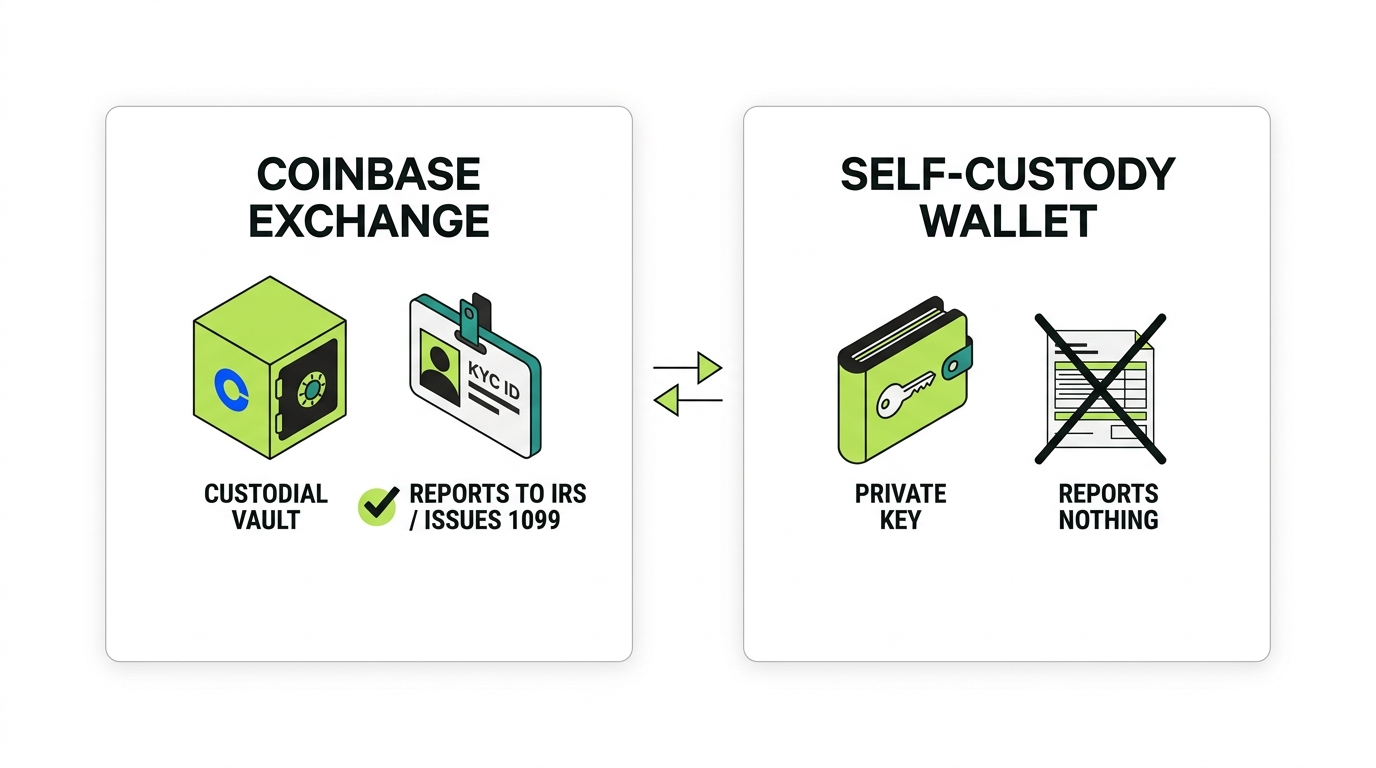
Coinbase is the largest US-based centralized cryptocurrency exchange, where you buy, sell, and trade crypto, earn staking rewards, and access advanced products like Coinbase Advanced and derivatives. Because it is centralized and custodial, the tax situation is fundamentally different from a self-custody wallet, and understanding that difference is the foundation of getting your Coinbase taxes right.
Coinbase Exchange Overview
The main Coinbase app is where most users buy crypto with dollars, sell, convert between assets, and hold balances in custody. Coinbase runs KYC to verify your identity, keeps a record of the trades that happen on its platform, and as a broker reports certain activity to the IRS and provides tax documents through its Tax Center. This is the opposite of a self-custody wallet, where no company keeps your books.
Coinbase Advanced
Coinbase Advanced is the professional trading interface with order books, maker and taker fees, and far higher trade volume. The tax rules are the same as spot, but the sheer number of disposals makes accurate reconciliation a much bigger job, which is why active Advanced traders see the largest and most confusing proceeds totals.
Coinbase Wallet
Coinbase Wallet is a separate, self-custody application. It is not the exchange. It holds your private keys, connects to DeFi and on-chain apps, and reports nothing to the IRS. For taxes, the exchange and the wallet are different worlds, and the assets moving between them must be tracked so basis follows each transfer. We cover the self-custody side in depth in our dedicated Coinbase Wallet guide.
Coinbase Prime
Coinbase Prime is the institutional platform for funds, businesses, and large holders, with custody, trading, and reporting built for scale. The same tax principles apply, but institutional users typically have additional reporting obligations and entity-level considerations that warrant professional guidance.
An exchange like Coinbase hands you a 1099-DA full of proceeds. It is the opening line of your tax story, not the conclusion.
Do You Owe Taxes On Coinbase?
Yes, if you had taxable events. Buying and holding is not taxable, but selling, trading, spending, and earning crypto are.
IRS Property Rules
The IRS treats virtual currency as property under Notice 2014-21. That classification is why every disposal can trigger a capital gain or loss and why earning crypto is ordinary income. Coinbase does not change these rules, it simply reports some of the activity that triggers them.
Capital Gains
Capital gains apply when you dispose of crypto: selling it for dollars, trading it for another token, converting it to a stablecoin, or spending it. Your gain or loss equals proceeds minus cost basis. Hold an asset one year or less and the gain is short-term, taxed at ordinary rates. Hold it longer than a year and the gain is long-term, taxed at the lower 0, 15, or 20 percent rates.
Ordinary Income
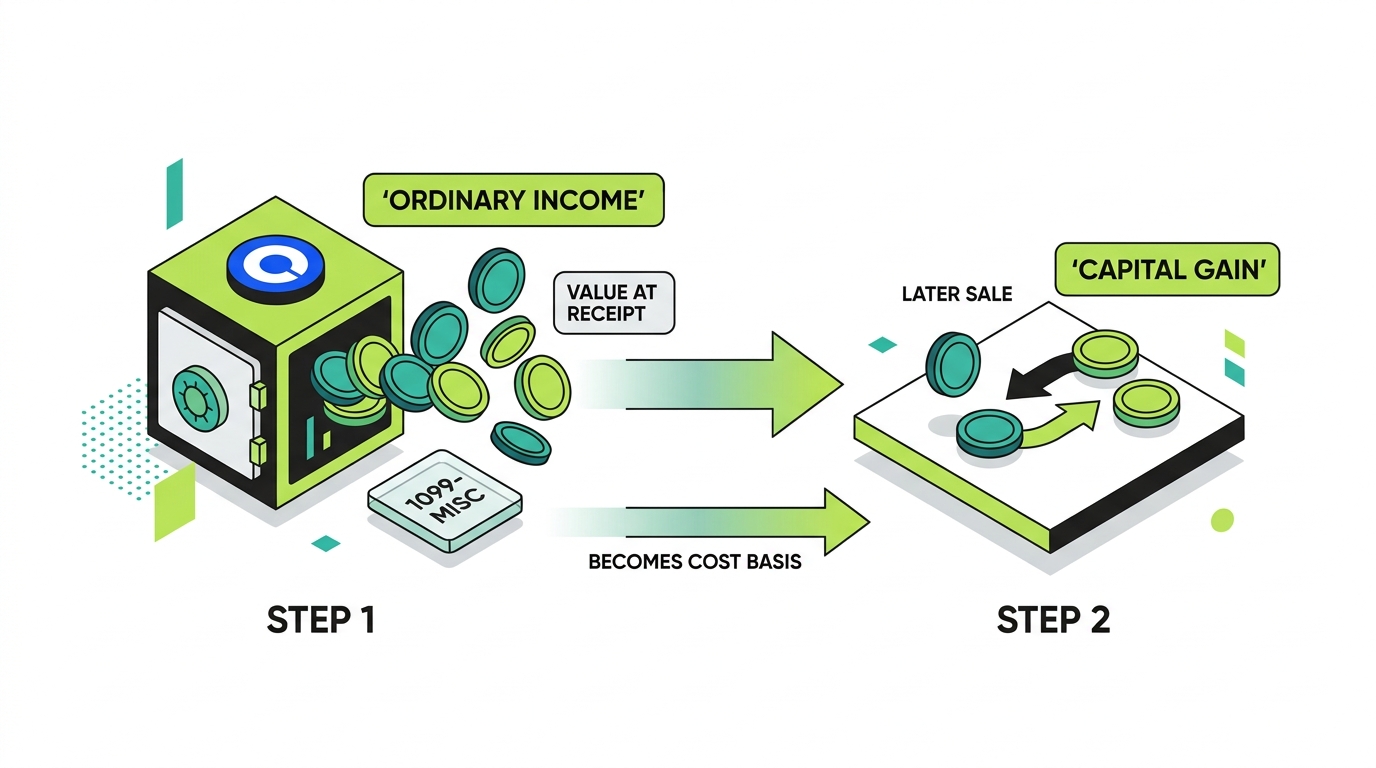
Income events apply when you earn crypto: staking rewards, learn-and-earn grants, and other reward income are ordinary income at fair market value when you gain control of them. That value also becomes your cost basis for a later sale.
Taxable Events
A taxable event is any moment you dispose of or earn crypto. Selling, trading, converting, spending, and earning all qualify. Buying with dollars, holding, and transferring between your own accounts do not. Most Coinbase tax mistakes come from misjudging which bucket an action falls into.
Does Coinbase Report To The IRS?
Yes. As a centralized, KYC-verified broker, Coinbase reports to the IRS, and that reporting is expanding.
1099-DA
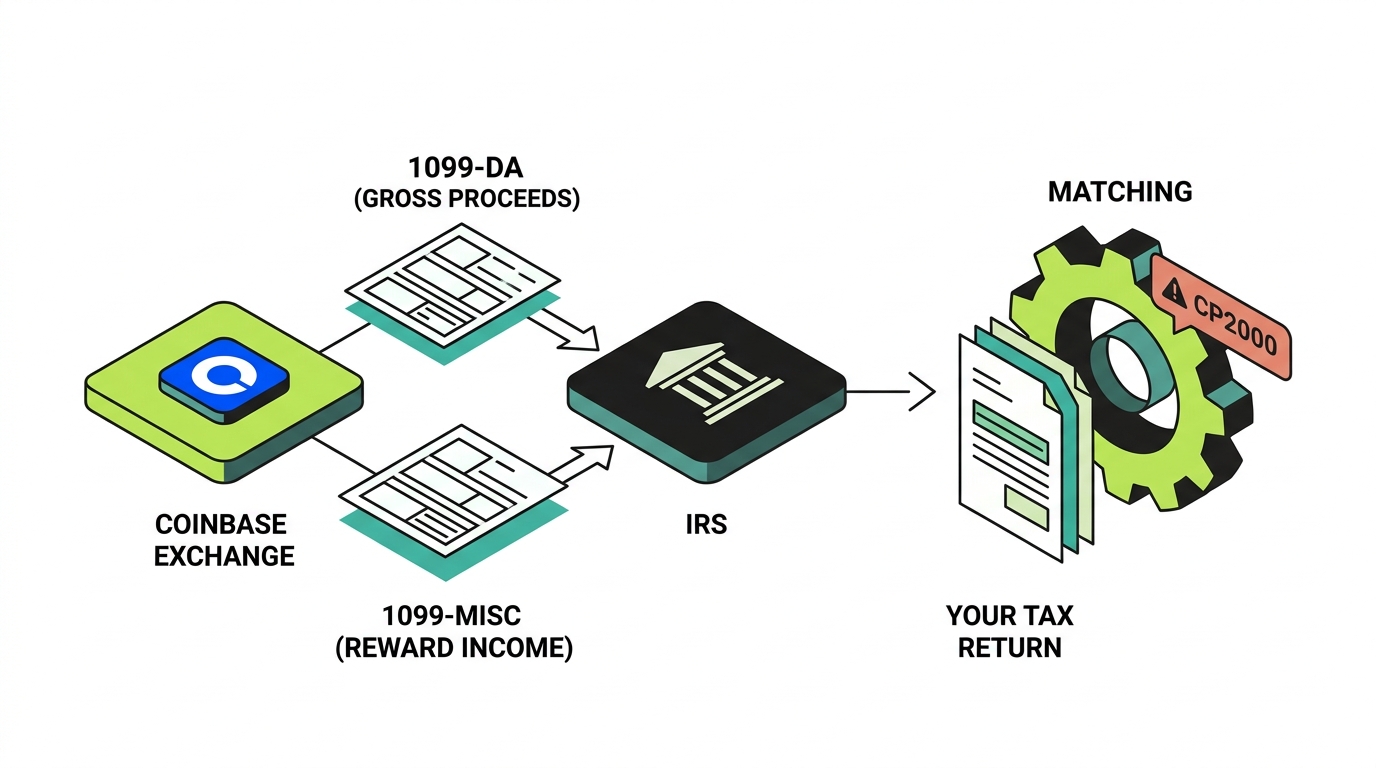
Form 1099-DA is the new digital asset broker reporting form. Starting with the 2025 tax year, Coinbase provides 1099-DA for reportable sales and dispositions, reporting gross proceeds. For 2025, brokers generally report proceeds while full cost basis reporting is still phasing in. This single fact, proceeds without complete basis, drives the entire reconciliation challenge covered later.
1099-MISC
Separately, Coinbase may issue Form 1099-MISC to report certain income such as rewards when reporting thresholds are met. Even without a form, reward income is taxable, so you report it from your own records regardless of whether a 1099-MISC arrives.
IRS Matching Programs
The IRS runs automated matching that compares broker-reported proceeds to what taxpayers file. If your return omits Coinbase activity or does not reconcile with the reported proceeds, that mismatch can trigger an automated notice such as a CP2000. The defense is a return that ties cleanly to the 1099-DA proceeds while reflecting your true basis.
What Coinbase Reports
Coinbase reports qualifying digital asset sales and dispositions through IRS-required tax forms including Form 1099-DA and, in some cases, Form 1099-MISC, and provides those documents through its Tax Center. The reporting is tied to your verified identity, so the IRS receives information linked directly to you. What Coinbase cannot report is the history that happened off its platform: purchases on other exchanges, self-custody and on-chain activity, and the original basis of assets you transferred in.
Understanding Coinbase 1099-DA
This is the most important section in the guide, because the 1099-DA is where Coinbase users panic, overpay, or underreport. Read it carefully.
What Is Form 1099-DA?
Form 1099-DA is the IRS form brokers use to report digital asset sales and dispositions. It tells the IRS the gross proceeds from your activity on the platform and, over time, more basis information. It is an information return, not a bill, and not a finished calculation of what you owe. We break the form down box by box in our dedicated Coinbase 1099-DA guide.
Why Proceeds Look So High
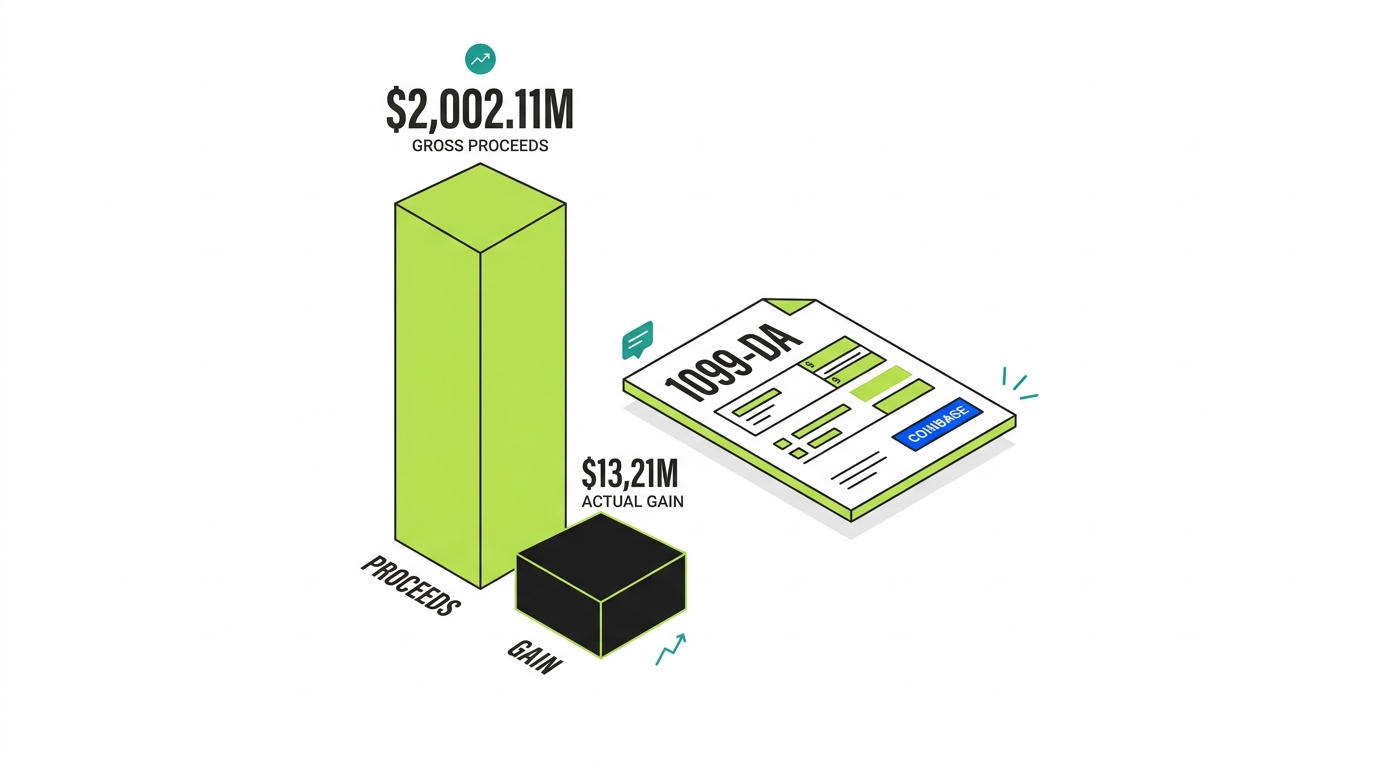
The proceeds figure is the total of everything you sold for, summed across every disposal, before subtracting what you paid. If you traded the same capital in and out many times, each trade adds its full proceeds to the total. That is how an account that netted a small profit can report enormous proceeds. The number reflects activity volume, not profit.
This matters most for Coinbase Advanced traders and anyone who used crypto-to-crypto conversions, because each leg of a round trip counts. Buy, sell, buy again, sell again, and the same dollars get reported as proceeds four times. A buy-and-hold investor who sold once sees proceeds close to their actual sale, while a frequent trader sees a proceeds total many multiples of the capital they ever put in. Neither is wrong, the form is doing exactly what it is designed to do. The mistake is reading the proceeds line as if it were the gain line.
Proceeds vs Gain Example
Why Cost Basis May Be Missing
For 2025, Coinbase generally reports proceeds, and it cannot report basis for assets you bought elsewhere and transferred in. So the form may show large proceeds paired with little or no basis. Left unreconciled, tax software or a naive reading treats the missing basis as zero, which overstates your gain dramatically and inflates your tax bill.
Covered vs Noncovered Assets
Covered assets are those for which the broker is required to track and report basis, generally tied to when the rules took effect and whether the asset was acquired on the platform. Noncovered assets are those where basis is not broker-reported, often because they came in from elsewhere. For noncovered assets, supplying the correct basis is entirely your job, and Coinbase may flag these so you know the basis figure is yours to establish.
How To Reconcile A 1099-DA
Reconciliation means pairing the proceeds Coinbase reports with your true cost basis for each disposal, accounting for transferred-in assets, removing duplication, and producing a Form 8949 that shows real gains and losses while tying to the reported proceeds total. This is the heart of exchange tax work, and it is exactly what most ranking articles skip. If your form shows blank or zero basis, start with our 1099-DA cost basis fix guide.
Your 1099-DA tells the IRS what you sold for. Your job is to tell the IRS what you actually made.
Coinbase Transactions That Are Taxable
These are the events that create a tax bill.
Selling Crypto
Selling crypto for dollars or stablecoins is a taxable disposal. Gain or loss equals proceeds minus cost basis.
Crypto-to-Crypto Trades
Trading or converting one cryptocurrency for another is a taxable disposal of the crypto you gave up, even though no dollars change hands. Coinbase makes conversions easy with one tap, which is exactly why these are the most commonly overlooked taxable events.
Stablecoin Transactions
Converting crypto into a stablecoin like USDC or USDT is a disposal of the crypto you converted, so it is taxable. Stablecoins are still property, and moving into them does not make the underlying sale tax free.
Spending Crypto
Spending crypto on goods or services, including through a Coinbase card, is treated as a sale of that crypto at fair market value, triggering a gain or loss.
Advanced Trades
Every disposal on Coinbase Advanced is taxable just like spot, but the volume is far higher. Each trade is a separate gain or loss event that must be captured and reconciled.
Derivative Transactions
Settlement and closing of derivatives positions produces realized profit or loss that is a taxable result of the activity. We cover the nuances in the derivatives section.

Coinbase Transactions That Are Not Taxable
Not every action is a taxable event. These generally are not.
Buying Crypto
Buying crypto with US dollars is not taxable. It sets your cost basis, which is what you paid including fees.
Holding Crypto
Holding crypto on Coinbase is never taxable, no matter how much the value changes. Unrealized gains are not taxed until you dispose of the asset.
Transfers Between Wallets
Withdrawing crypto from Coinbase to a wallet you own, including Coinbase Wallet, is a transfer, not a sale, so it is not taxable. Your basis must follow the asset, because once it leaves Coinbase the exchange stops tracking it.
Moving Assets To Coinbase
Moving crypto into Coinbase from another exchange or wallet you control is a transfer, not a sale, so it is not taxable. The risk is purely about basis following the asset, because Coinbase will not know what you originally paid.
Coinbase Staking Taxes
Staking is a common source of ordinary income for Coinbase users across ETH, SOL, ADA, ATOM, and more.
Reward Income
Staking rewards are ordinary income at fair market value when you gain control of them, consistent with IRS guidance in Revenue Ruling 2023-14. Tracking the value at each reward point across the year is tedious but necessary.
1099-MISC Reporting
Coinbase may report reward income on Form 1099-MISC. Whether or not you receive one, the income is taxable and you report it from your records.
Basis Treatment
The amount you report as income becomes your cost basis in the reward assets. Report rewards once as income when received, then again as a capital gain or loss when sold, not twice as income.
Selling Reward Assets
When you later sell or trade your staking rewards, you report a separate capital gain or loss equal to the sale value minus the basis you established when you earned them.
Staking Example
Coinbase Advanced Taxes
Coinbase Advanced is where high-volume traders generate the most complexity, and it is a major content gap that most ranking pages ignore.
Trading Fees
Maker and taker fees are part of your cost of acquiring or disposing of crypto. Fees generally increase your basis when buying and reduce your proceeds when selling, which lowers your gain. Capturing fees correctly across thousands of trades is one reason software reconciliation beats manual calculation.
High-Frequency Trading
High-frequency activity can generate thousands of taxable disposals in a year. The only practical path is to export the complete trade history and run it through crypto tax software, because manual calculation is not realistic at that volume.
Short-Term Gains
Most Advanced trading produces short-term gains, taxed at ordinary income rates, because positions are held briefly. Separating short-term from long-term lots correctly is essential, since the rate difference is significant.
Recordkeeping
The defining challenge of Advanced trading is recordkeeping. Export everything, reconcile the proceeds to the 1099-DA, and keep the transaction-level detail, because a summary number alone cannot be defended in an audit.
Coinbase Derivatives Taxes
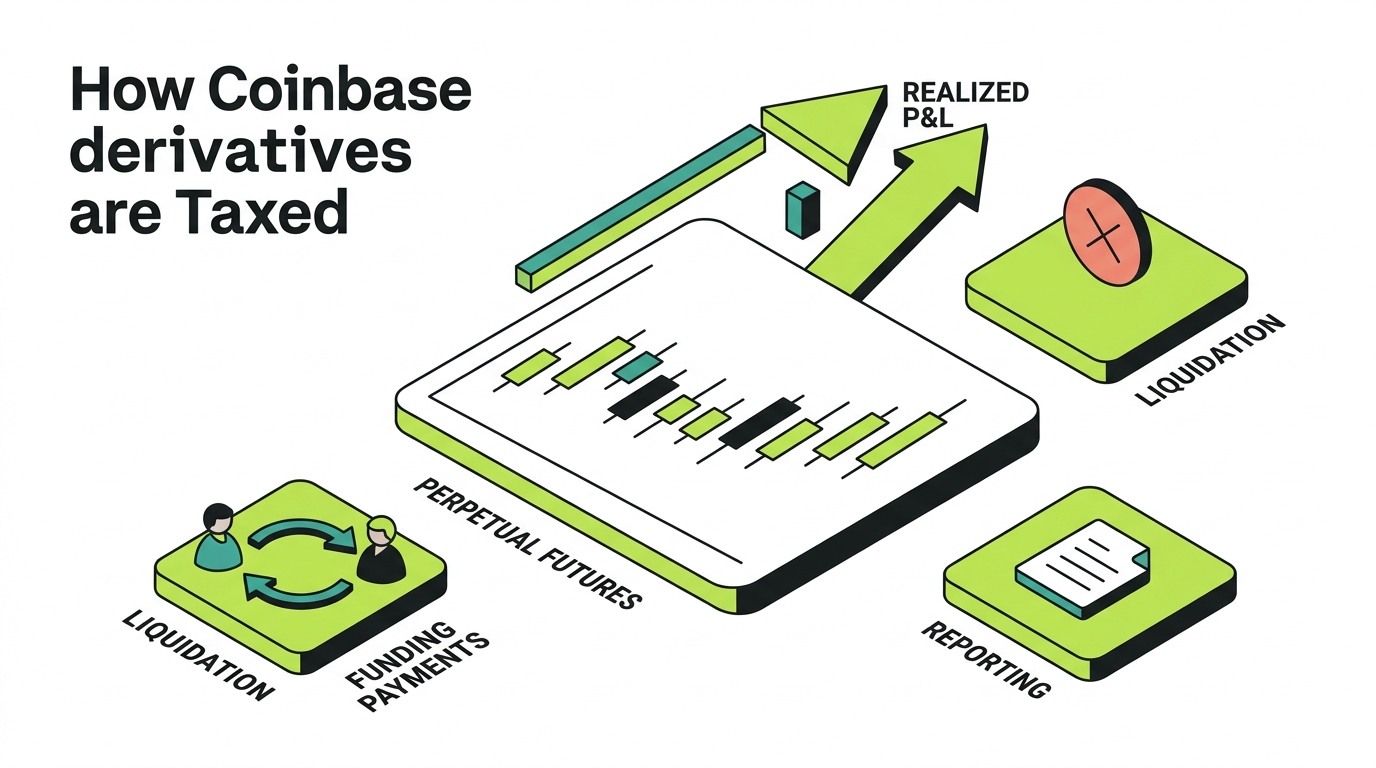
Coinbase derivatives are a major content gap that almost nobody covers well, yet they create some of the most complex reporting.
Perpetual Futures
Perpetual futures let you take leveraged positions without an expiry date. The borrowed exposure itself is not income, but the closing and settlement of positions produces realized gains and losses that are taxable.
Realized P&L
Your taxable result from derivatives is the realized profit and loss across your positions, including the effect of funding payments over the life of each position. Document every open, close, and settlement so the realized result is accurate.
Liquidations
A liquidation is a forced close of a position, so it is a taxable event with a gain or loss, often at an unfavorable price. Liquidations frequently produce losses, which are still deductible, so capture them rather than ignoring the position.
Reporting Considerations
The exact federal treatment of crypto derivatives can be complex and depends on the product and your situation. Track every position, funding payment, and liquidation, and have a professional confirm the correct characterization rather than guessing.
Base Network Taxes
Base is perhaps the biggest future tax opportunity tied to Coinbase, because Coinbase built Base and most guides ignore it entirely.
What Is Base?
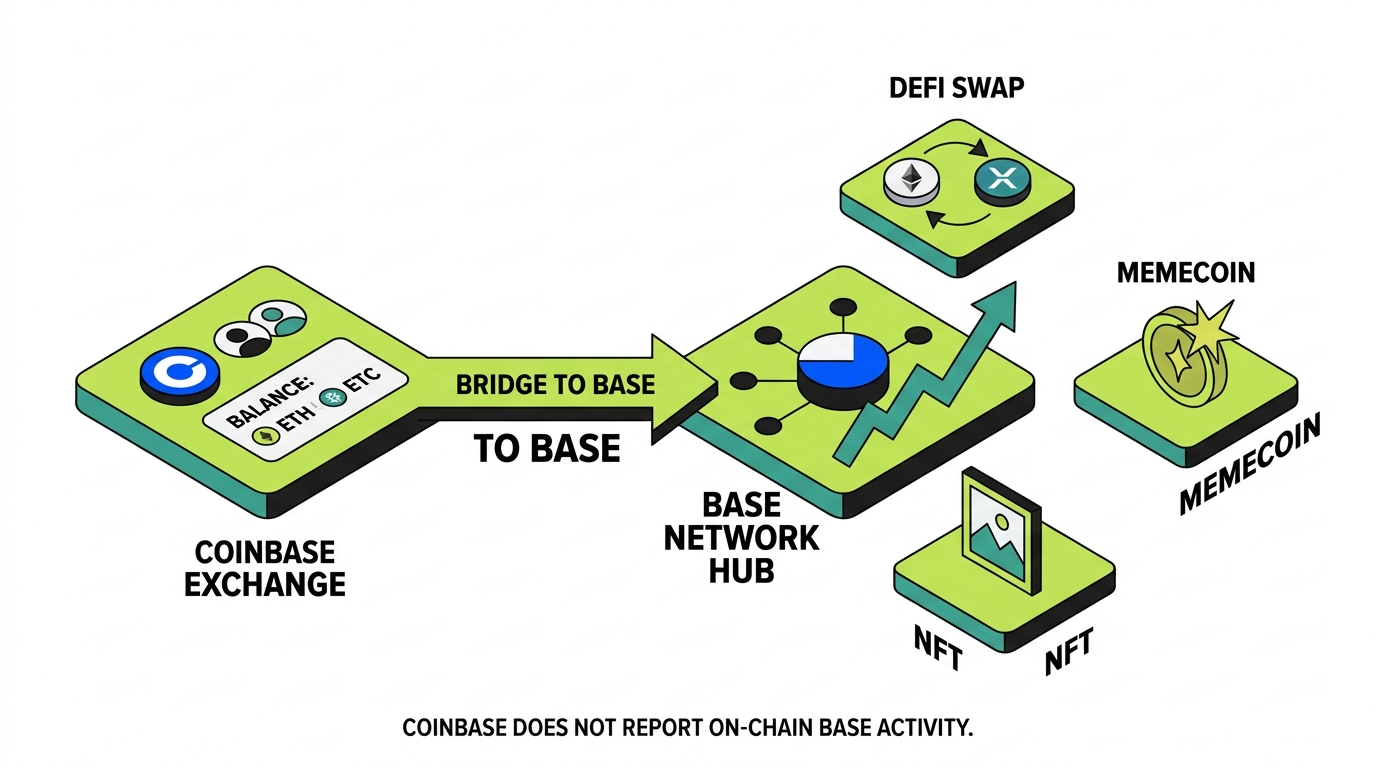
Base is an Ethereum layer-2 network incubated by Coinbase. It is on-chain, so activity on Base happens in self-custody wallets and decentralized apps, and Coinbase does not report it for you. Everything you do on Base is your responsibility to track and report.
Bridging To Base
Bridging crypto from Coinbase or Ethereum to Base is generally a transfer of your own assets, not a sale, so the bridge itself is usually not taxable. The critical part is that basis must follow the asset across the bridge, or a later sale on Base will show as zero basis.
Base DeFi
Swaps, liquidity provision, lending, and yield on Base apps like Aerodrome are taxable events. A token swap is a disposal, liquidity and yield can create income and disposals, and each must be captured from on-chain data.
Base NFTs
Buying, selling, and minting NFTs on Base are taxable like any other crypto disposal or acquisition. Selling an NFT is a capital gain or loss, and royalties or mint rewards can be income.
Base Memecoins
Base memecoin trading generates a taxable disposal on every swap. High-volume memecoin activity can create a large number of taxable events with messy basis, making reconciliation essential.
Coinbase Wallet Transfers and Cost Basis
This is the core problem for most Coinbase users, because crypto rarely stays in one place.
Coinbase to Wallet
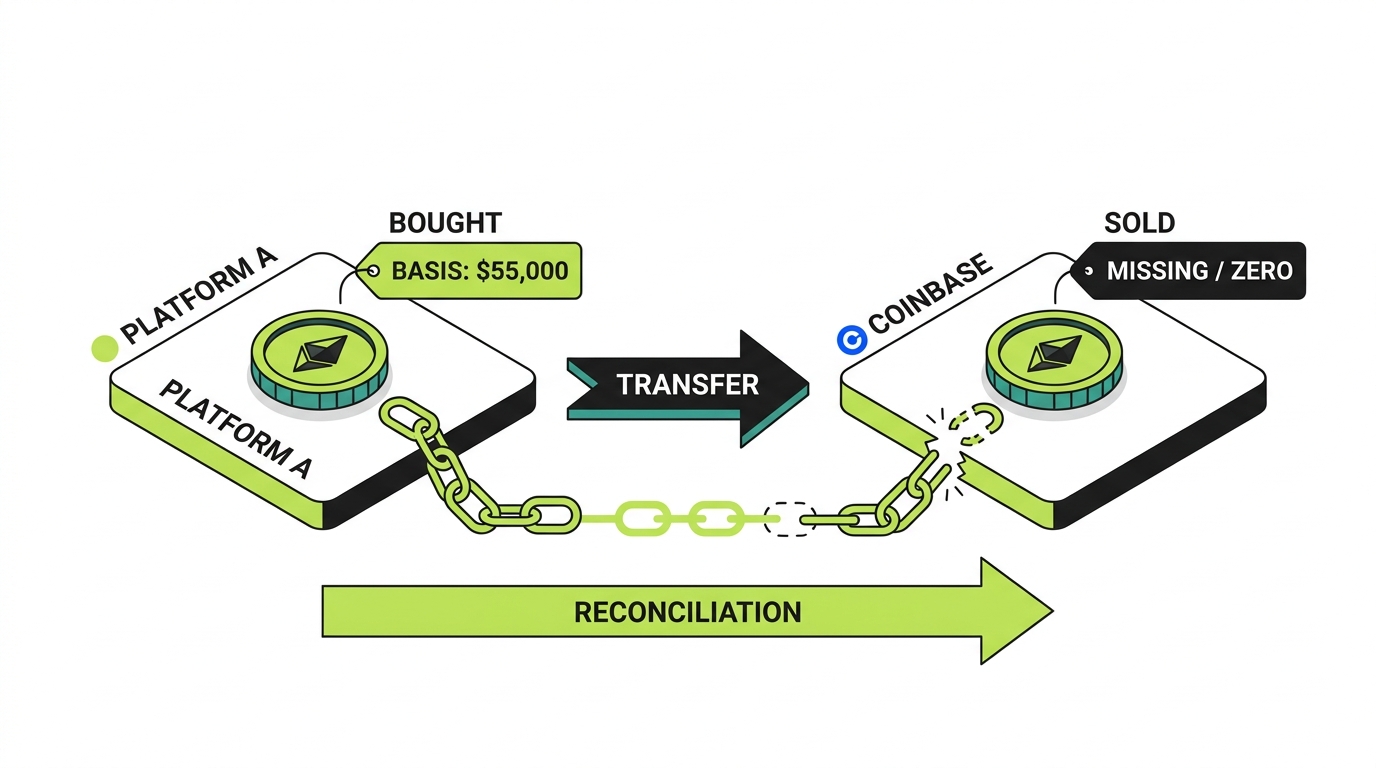
When you move crypto from Coinbase to a wallet you control, the basis must travel with it. Coinbase stops tracking the asset once it leaves, so a later disposal elsewhere depends on you carrying the original basis forward.
Wallet to Coinbase
When you move crypto into Coinbase from a wallet, Coinbase does not know what you originally paid. If you then sell, the 1099-DA may show proceeds with missing or noncovered basis, which is the classic source of an overstated gain.
External Exchanges
Crypto bought on Kraken, Gemini, Binance.US, or another exchange and then sold on Coinbase has its basis on the original platform and its disposal on Coinbase. Only by combining both histories do you get an accurate gain.
Missing Acquisition Records
For assets bought years ago or across platforms that no longer have your records, you must reconstruct the original acquisition price. Without it, the basis defaults toward zero and the gain is overstated. Reconstructing and documenting that basis is a central part of reconciliation.
Basis treated as zero
The Coinbase 1099-DA shows 80,000 dollars in proceeds with missing basis. Tax software treats the basis as zero, so the entire 80,000 dollars looks like gain and the tax bill is dramatically overstated.
Real basis traced to the asset
The original 55,000 dollar basis from Kraken is traced to the asset and the transfer into Coinbase is matched, not double counted. The Form 8949 ties to the 1099-DA proceeds while showing the real 25,000 dollar gain.
How To Calculate Coinbase Cost Basis
Cost basis is what you paid for an asset including fees, and it is the number that turns proceeds into a real gain.
FIFO
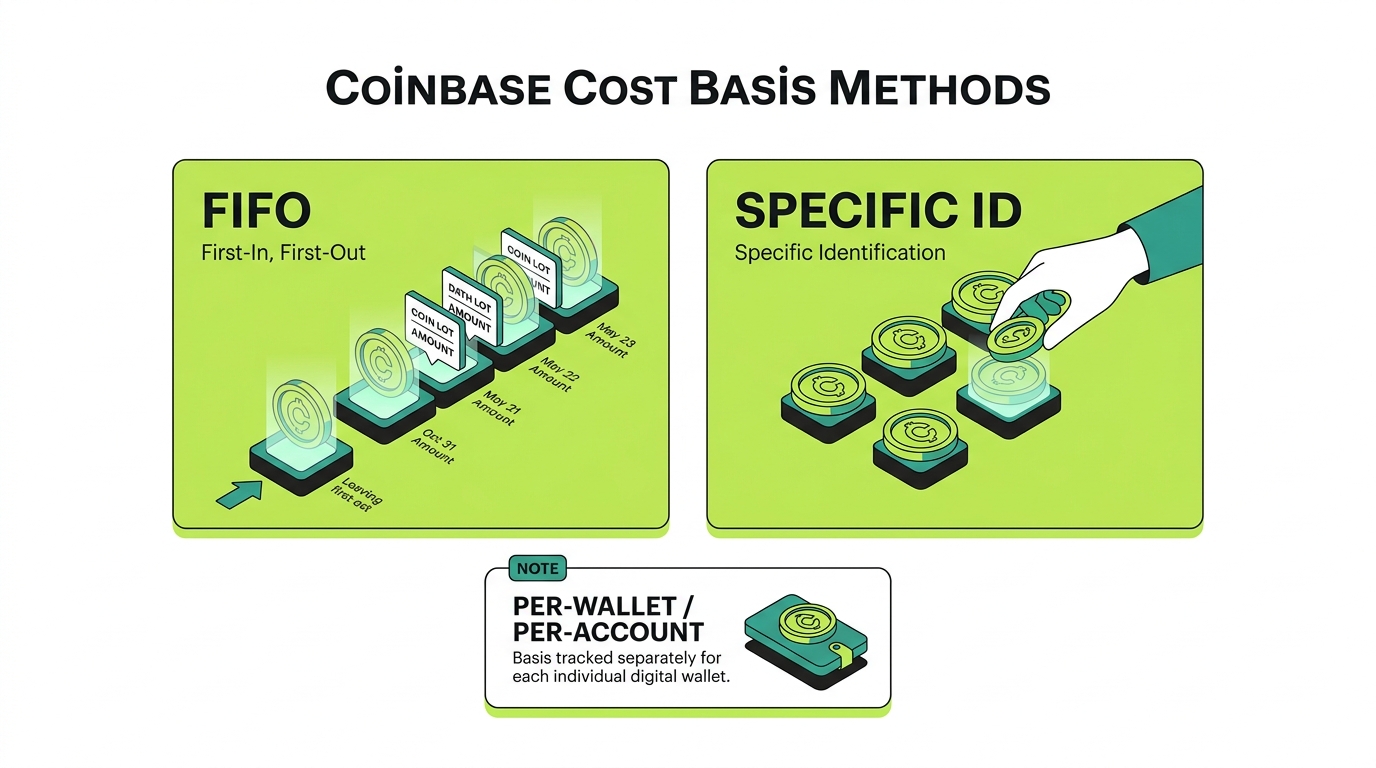
First In, First Out assumes the earliest coins you bought are the first ones sold. It is the common default and is simple, but in a rising market it often produces larger taxable gains than other methods.
Specific Identification
Specific Identification lets you choose which lots you sell, if your records support it, which can minimize gains by selling higher-basis lots first. It requires detailed, contemporaneous records to hold up.
Wallet-Level Tracking
Under Revenue Procedure 2024-28, taxpayers track basis on a per-wallet and per-account basis rather than universally across all holdings, effective starting January 1, 2025. This makes where each asset lives, and the basis attached to it, more important than ever.
Transfer Reconciliation
The hardest part is reconciling transfers so basis follows each asset across exchanges and wallets. This is the step that connects everything into an accurate gain, and it is the foundation of digital asset reconciliation.
How To Download Coinbase Tax Reports
Coinbase provides tax documents and reports through its Tax Center, and pulling the right data is the first practical step.
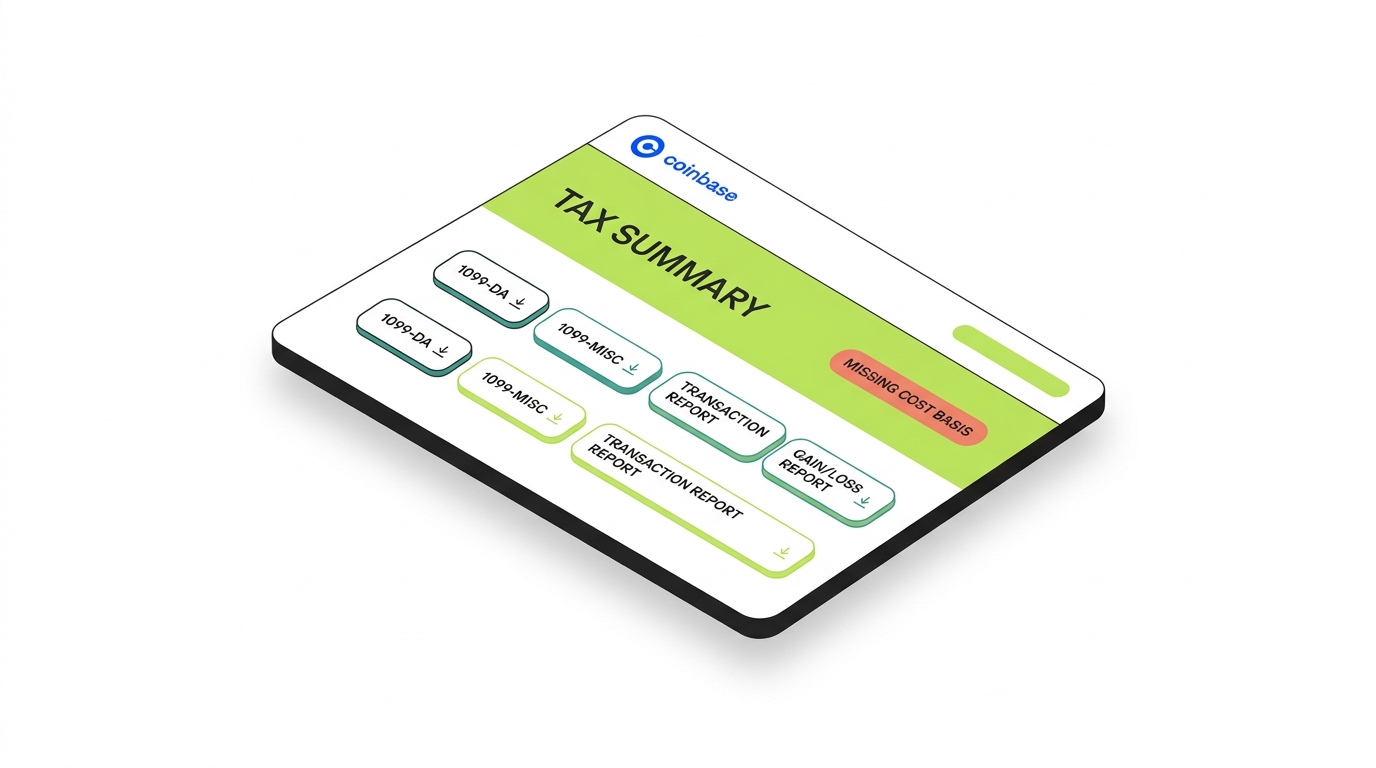
Tax Center
The Tax Center provides a tax summary of your activity, access to any 1099 forms, and downloadable reports. It is the starting point, but the summary alone is not enough for accurate reconciliation. Here is how to get into it.
On desktop:
- Sign in to your account at Coinbase.com.
- Click your profile icon in the top right corner.
- Select “Taxes” from the dropdown menu (or go directly to the Coinbase Taxes section).
- Open the “Documents” tab. This is where your 1099 forms, gain/loss summaries, and report generators live.
On the mobile app:
- Open the Coinbase app and tap the menu (the three lines).
- Tap “Taxes,” then “Documents.”
- From here you can view your forms and generate reports.
Note: the Tax Center reflects activity on Coinbase.com only. It does not include Coinbase Wallet (self-custody) or the deprecated Coinbase Pro. Those need to be pulled separately and reconciled in.
Transaction Reports
Download the complete transaction history, not just the summary. Transaction-level data is what software imports rely on, and it is essential for reconciling transferred-in assets and noncovered basis.
To download it:
- From the Tax Center, open the “Documents” tab.
- Find the “Transaction History” or raw transaction report option (this is separate from the gain/loss summary).
- Choose the tax year you need, then set a custom date range of January 1 to December 31 for that year to capture everything.
- Click “Generate Report” and download the CSV file.
- Save the raw CSV. This is the file you hand to tax software or a reconciliation specialist, because it contains the line-by-line buys, sells, conversions, transfers, and rewards.
ProTip: generate the report for the full calendar year even if you think you only traded for part of it. Transfers and rewards often land in months you forget about, and a partial-year export is how line items go missing.
Gain/Loss Reports
Coinbase offers gain and loss reports that estimate your results, but they reflect only what Coinbase knows. For assets with off-platform basis, these reports can be inaccurate until reconciled with your full history.
To download one:
- From the Tax Center “Documents” tab, locate the “Gain/Loss” report.
- Select the tax year.
- Download the report (CSV or PDF, depending on what Coinbase offers for your account).
- Treat the numbers as an estimate, not a filing-ready figure. Any asset you transferred into Coinbase from another exchange or wallet may show a missing or zero cost basis, which inflates the gain.
Note: starting with the 2025 tax year, Form 8949 is no longer available directly through the Coinbase retail Tax Center. If you need a completed 8949, you will either reconcile through tax software or work with a specialist who produces it from your transaction history.
1099 Downloads
Download every 1099-DA and 1099-MISC Coinbase issues. These are the forms the IRS already has, so your return must reconcile to them, and keeping copies is part of your audit defense.
To download them:
- Go to the Tax Center “Documents” tab.
- Any 1099 forms issued to you for the tax year appear here. Coinbase typically posts 1099-MISC by mid-February.
- Download each form (1099-DA for gross proceeds from sales and dispositions, 1099-MISC for $600 or more in reward and incentive income).
- Save a copy of every form alongside your transaction history. If a form will not download, enable pop-up downloads in your browser and retry.
Warning: the 1099-DA reports gross proceeds, not your gain, and for 2025 it may not include cost basis on assets you transferred in. The number looking large is normal. Your job is to reconcile to it, not to ignore it.
Coinbase One Card Bitcoin Rewards And Taxes
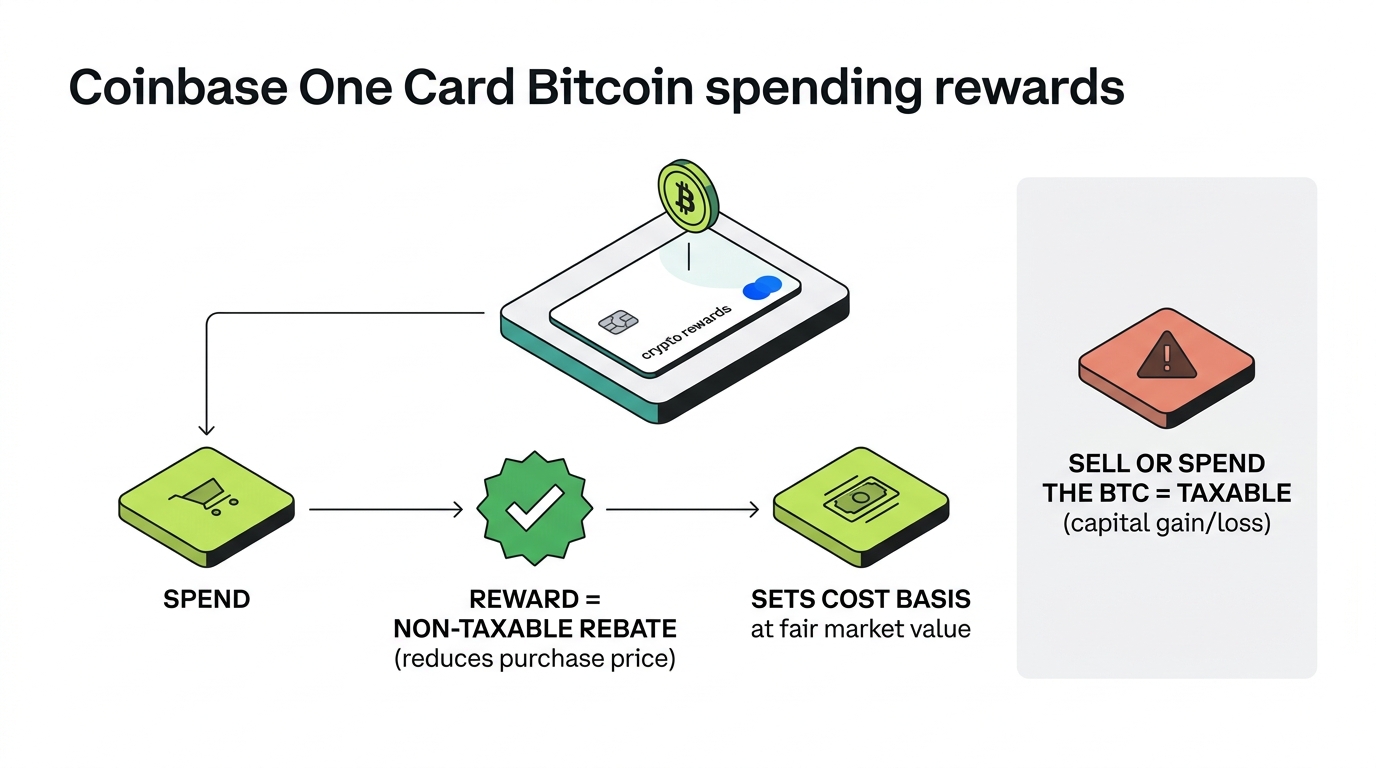
The Coinbase One Card pays bitcoin rewards on your spending, and the most common question is whether those rewards are taxable income. For everyday spend-based rewards, the answer is generally no, and the reason is worth understanding.
Why Spend-Based Rewards Are Not Income
The IRS has long treated credit and debit card rewards earned on spending the same way it treats cash back, points, and airline miles: as a rebate, not income. A rebate is considered a reduction in the purchase price of what you bought, not money you earned. Getting bitcoin back for spending follows that same logic, so you do not report the receipt of those rewards as ordinary income.
The Catch: Receiving Bitcoin Sets A Cost Basis
Here is the part people miss. The reward is not taxed when you receive it, but you are receiving an actual crypto asset, and that asset gets a cost basis equal to its fair market value in dollars on the day it lands in your account. That basis matters later.
When you eventually sell, convert, or spend that reward bitcoin, that is a disposal, and a disposal is a taxable event. You report a capital gain or loss measured from the value when you received it to the value when you disposed of it. So the reward itself is not income, but the bitcoin it gave you is still property the IRS tracks.
Reward earned, then sold
You spend through the year and earn 100 dollars worth of bitcoin in card rewards. You owe nothing on that 100 dollars when you receive it, because it is a rebate. Your cost basis in that bitcoin is 100 dollars. Months later you sell it for 120 dollars. You now report a 20 dollar capital gain, measured from your 100 dollar basis to the 120 dollar sale price.
When Card-Related Rewards Are Taxable
The rebate treatment applies to rewards tied to spending. Rewards that are not tied to spending are a different story. A sign-up bonus you get just for opening an account, or a referral bonus for bringing in a friend, is generally treated as ordinary income because you did not have to spend to earn it. If those incentives total $600 or more, Coinbase may report them on a 1099-MISC, and you owe income tax on them whether or not you receive the form.
Best Coinbase Tax Software
Software helps import and calculate, but no tool fully solves missing basis and cross-platform reconciliation on its own. These are the common options.
CoinTracker
CoinTracker integrates closely with Coinbase and is a popular choice for importing activity and generating tax reports. It handles standard activity well but still needs accurate transfer reconciliation.
Koinly
Koinly supports a wide range of exchanges and wallets and is strong at consolidating multi-platform histories. It is a frequent pick for users with activity across many venues.
CoinLedger
CoinLedger focuses on straightforward imports and report generation, with a clean workflow for filing-ready output once your data is clean.
TokenTax
TokenTax pairs software with professional services, which can help users with complex situations who want more hands-on support.
ZenLedger
ZenLedger covers exchange and DeFi activity and is used by individuals and professionals for consolidating crypto tax data.
Summ
Summ is built for the reconciliation-first approach, aimed at producing a clean, accurate picture of complete crypto history before filing rather than trusting a single exchange export.
Common Coinbase Tax Mistakes
These are the errors that cost Coinbase users the most money and the most audit risk.
Trusting 1099-DA Alone
Treating the 1099-DA proceeds as your gain is the single biggest mistake. Proceeds are not profit, and filing off the raw number either overstates your tax or, if misread, underreports it.
Missing Cost Basis
Letting transferred-in assets default to zero basis overstates gains dramatically. Establishing the real basis for every asset is the core of accurate Coinbase reporting.
Ignoring Wallet Activity
Forgetting that crypto moved to Coinbase Wallet, MetaMask, or Ledger is part of the same tax picture leads to broken basis chains and inaccurate gains.
Ignoring Staking Rewards
Failing to report staking and reward income as ordinary income when received, or double counting it later, are both common and both wrong.
Ignoring Base Transactions
Assuming Coinbase reports your Base activity. It does not. On-chain Base swaps, NFTs, and memecoins are taxable and entirely your responsibility.
Duplicate Imports
Importing the same activity twice, often by combining a 1099 with a transaction export, double counts proceeds and creates phantom gains. Clean deduplication is part of reconciliation.
How To Prepare For A Coinbase Tax Audit
If the IRS questions your return, documentation is everything. This is a major content gap, and it is where reconciliation pays off.
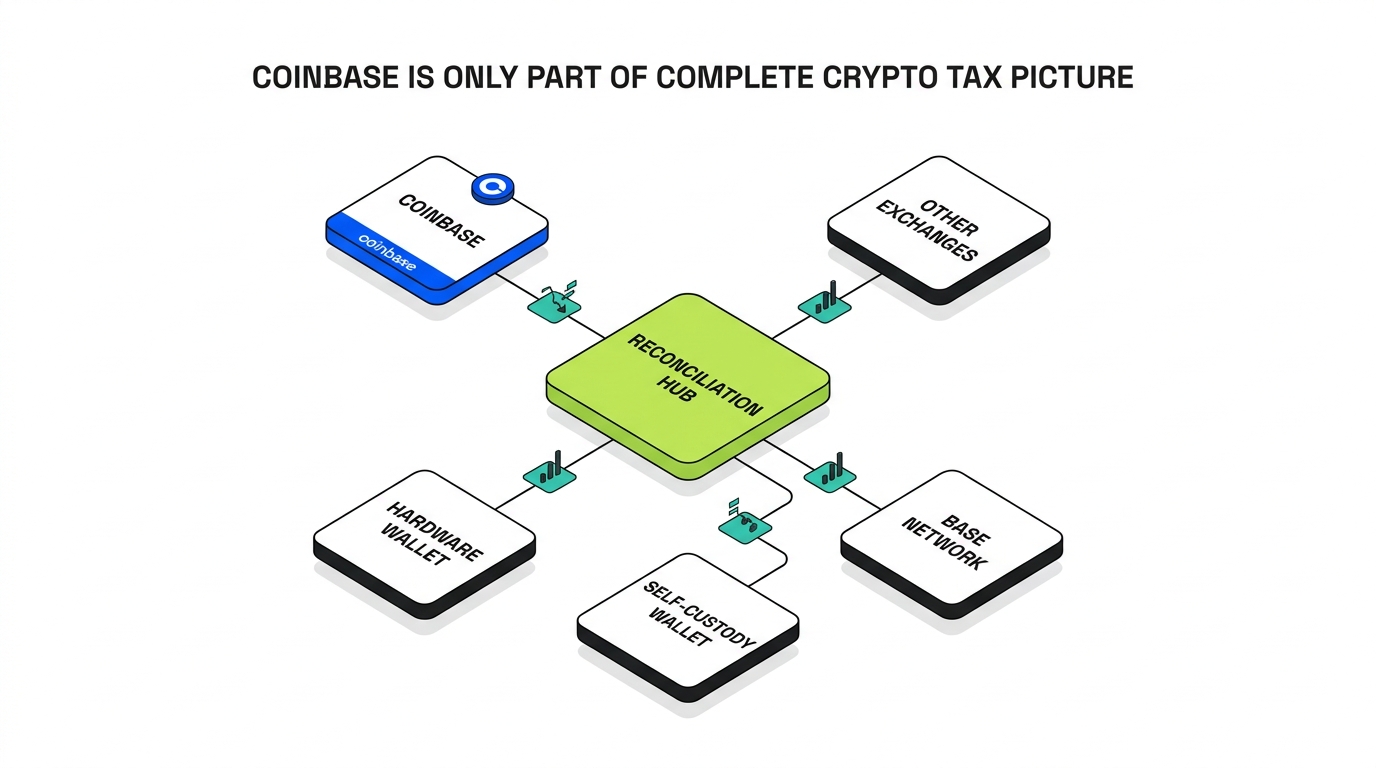
Exchange Records
Keep complete Coinbase transaction histories and every 1099 form. These tie your return to what the IRS already received and are the first thing an examiner will check.
Wallet Records
Maintain records of every wallet you control and the on-chain activity in them, including Coinbase Wallet and any Base addresses. Self-custody activity is invisible to Coinbase but still part of your tax picture.
Transfer Documentation
Document every transfer in and out of Coinbase with the basis that traveled with each asset. Transfers are where basis breaks, so transfer records are the backbone of an audit defense.
Cost Basis Support
Keep the original purchase records for assets bought elsewhere, so you can prove the basis you used. For noncovered assets, this documentation is the only thing standing between you and a zero-basis assessment.
Form 8949 Reconciliation
Be able to show a Form 8949 that reconciles your real gains and losses to the proceeds Coinbase reported. A return that ties cleanly to the 1099-DA, with documented basis, is the strongest position in an audit.
An audit is won or lost on records. Reconciliation is not just about paying the right tax, it is about being able to prove it.
Where Count On Sheep Fits
Coinbase reports your transactions. It does not know your complete crypto history. That gap, between what an exchange reports and what actually happened across every platform you used, is exactly the problem Count On Sheep solves.
Count On Sheep provides CPA-ready Digital Asset Reconciliation for Coinbase users:
- We connect your Coinbase activity with every other exchange, wallet, and on-chain network you have used, including Base.
- We trace cost basis across transfers so noncovered assets get their real basis instead of defaulting to zero.
- We deduplicate and reconcile so your Form 8949 ties to the proceeds on your 1099-DA.
- We produce a clean, accurate, defensible picture of your complete crypto history before your return is prepared.
Count On Sheep is the reconciliation layer that sits underneath filing. We are not a tax filing service and we do not replace your CPA, we make sure the numbers your CPA files are right.
Coinbase Tax FAQ
The questions below cover the most common Coinbase tax situations. For your specific circumstances, talk to a professional who can review your complete history.
Does Coinbase report to the IRS?
Yes. Coinbase reports certain customer transactions and income to the IRS, including reportable digital asset sales on Form 1099-DA for tax year 2025. Coinbase also sends a copy to the customer. You must still report taxable Coinbase activity accurately even if you do not receive a form.
The IRS Form 1099-DA page identifies the form as the information return for digital asset proceeds. Coinbase’s tax information guide explains which Coinbase activity may generate a tax form.
- Download every Coinbase tax form for the year.
- Export the complete transaction history, including Coinbase Advanced activity.
- Match the reported proceeds to your dispositions.
- Add cost basis from wallets and other exchanges before preparing Form 8949.
Receiving no form does not make a taxable sale, exchange, reward, or other income event exempt from reporting. Your federal reporting obligation depends on what happened, not whether Coinbase issued a form.
What tax forms does Coinbase send?
Coinbase may send Form 1099-DA for reportable digital asset sales or exchanges and Form 1099-MISC for qualifying rewards or other income. The form you receive depends on your activity and applicable reporting rules. A Coinbase tax form is an information report, not a complete calculation of your tax liability.
The IRS publishes official instructions for Form 1099-DA and Form 1099-MISC. Coinbase describes the forms available to eligible customers in its tax information guide.
If you sold bitcoin through Coinbase and also received qualifying reward income, Coinbase may provide both a 1099-DA for reportable dispositions and a 1099-MISC for reportable income. The amounts serve different purposes and should not be added together as one capital gain.
Form availability and reporting thresholds depend on the transaction type, tax year, and taxpayer circumstances. Coinbase Wallet and other self-custody activity generally do not appear in the Coinbase exchange tax documents, so those records must be gathered separately.
Why is my Coinbase 1099-DA so high?
Your Coinbase 1099-DA can look high because it reports gross proceeds from reportable sales and exchanges, not your taxable profit. Each disposal adds its full proceeds to the annual total, even when the gain is small or the trade produced a loss. Cost basis must be applied separately to calculate gain or loss.
The IRS instructions for Form 1099-DA define the proceeds reported for digital asset dispositions. Gain or loss is calculated separately using proceeds and adjusted basis, then reported on Form 8949.
You buy bitcoin for $95,000, sell it for $100,000, then reinvest and sell again for $102,000 after buying at $100,000. The two sales create $202,000 of gross proceeds, but the combined gain before other adjustments is only $7,000.
A high proceeds total is not automatically correct. Duplicate transactions, an incorrect taxpayer identification number, or activity that is not yours should be investigated with Coinbase. Do not change an accurate gross-proceeds figure merely because it looks large.
Why is my Coinbase cost basis missing?
Coinbase cost basis is often missing because the asset was purchased in another exchange or wallet before it reached Coinbase. Coinbase can see the later sale but may not have the original purchase record, fees, or acquisition date. You must reconstruct and document that basis to calculate the correct gain or loss.
The IRS digital asset reporting guidance explains that taxpayers need records showing the units, dates, fair market values, and basis of their digital asset transactions. Coinbase also explains missing information in its tax information guide.
- Identify the deposit that arrived at Coinbase.
- Match it to the withdrawal from your wallet or previous exchange.
- Find the original acquisition date, purchase price, and related fees.
- Carry that basis through the non-taxable transfer to the Coinbase sale.
- Keep the source records with the completed reconciliation.
Do not invent basis when records are incomplete. Older purchases, gifts, inheritances, mining, staking, and assets acquired through business activity can follow different basis rules. A qualified tax professional should determine the defensible treatment for your facts.
How do I reconcile Coinbase with Coinbase Wallet or another exchange?
Reconcile Coinbase with Coinbase Wallet or another exchange by combining every account and wallet history, matching transfers, and carrying each asset’s acquisition date and cost basis to its next location. A transfer between accounts you own is generally not a sale, but later sales cannot be calculated correctly unless the basis follows the asset.
IRS digital asset guidance requires records sufficient to establish positions taken on a tax return. Coinbase’s transaction history guidance explains how customers can access Coinbase reports, while wallet and outside-exchange records must be collected from those separate systems.
Suppose you buy 1 ETH for $2,000 on another exchange, transfer it to Coinbase Wallet, then send it to Coinbase and sell it for $3,000.
- Import or collect records from all three locations.
- Match the two transfers by asset, amount, time, and transaction ID.
- Carry the $2,000 basis and original acquisition date through both transfers.
- Match the Coinbase sale to $3,000 of proceeds.
- Report the resulting $1,000 gain before any other applicable adjustments.
A transfer is generally non-taxable only when you retain ownership. Sending crypto to another person, swapping assets during a bridge or DeFi interaction, paying a fee with crypto, or disposing of a wrapped asset may create a reportable event depending on the facts.
Reviewed by Garrett Taylor, CPA #133092. Updated September 14, 2026.
For missing basis across Coinbase, wallets, and other exchanges, Count On Sheep’s crypto tax service can reconcile the complete history before you or your licensed tax professional files.
Official sources for these Coinbase tax answers
- IRS: Digital assets
- IRS: About Form 1099-DA
- IRS: Instructions for Form 1099-DA
- IRS: About Form 1099-MISC
- IRS: About Form 8949
- Coinbase: Tax information
- Coinbase: Reporting tools
Related Reading
- Kraken Tax Guide (2026)
- Gemini Tax Guide (2026)
- Binance.US Tax Guide (2026)
- Coinbase Wallet Tax Guide (2026)
- MetaMask Tax Guide (2026)
- Phantom Wallet Tax Guide (2026)
- How Is Crypto Taxed in the US (2026)
- Form 1099-DA Explained (2026)
- How to File Crypto Taxes with Form 8949 and Schedule D
- Per-Wallet Crypto Cost Basis and Rev. Proc. 2024-28
- Crypto Income Tax: Staking, Mining and Airdrops (2026)
- FIFO vs HIFO vs Specific ID for Crypto Taxes
- Crypto Tax Loss Harvesting and the Wash Sale Rule (2026)
- NFT and DeFi Taxes: Liquidity Pools, Staking and Lending
Official IRS Resources
For the primary source rules behind this guide, see the IRS directly: